

Living in Florence: the ultimate expat guide
Everything you need to know for a successful life in Florence.
Florence, the capital of Tuscany, offers a unique blend of Renaissance heritage, artistic excellence, and modern Italian living. With a population of approximately 362,000 residents and nearly 1 million in its metropolitan area, the city combines the intimacy of a walkable historic center with the amenities of a regional hub. The city's compact size, world-class cultural institutions, and strategic location in central Italy make it particularly appealing for those seeking an authentic Italian lifestyle with strong international connections.
5 Good Reasons to Move to Florence
- Cultural immersion: Home to the Uffizi Gallery and over 70 museums, Florence offers unparalleled access to Renaissance art and history in daily life.
- Strategic location: Positioned in the heart of Tuscany, with easy access to Rome (1.5 hours by train), Pisa Airport, and the Chianti wine region.
- Fashion and design hub: Global headquarters of Gucci, Ferragamo, and other luxury brands, plus prestigious fashion academies like Polimoda.
- Quality of life: Tuscan cuisine, mild Mediterranean climate, and a walkable historic center create an exceptional daily lifestyle.
- Strong expat community: A well-established international community with English-speaking services, international schools, and networking opportunities.
Working in Florence: Opportunities in Fashion, Tourism, and Beyond
Florence's economy blends traditional craftsmanship with modern industry, creating diverse opportunities for skilled professionals. The city serves as the economic heart of Tuscany, a region that contributes over 7.5% of Italy's total exports. While tourism remains a major employer, the fashion sector, pharmaceuticals, and engineering provide year-round professional opportunities.
Key Employment Sectors
The fashion and luxury goods industry dominates Florence's economy, with major houses including Gucci, Salvatore Ferragamo, Emilio Pucci, and Roberto Cavalli headquartered here. The sector encompasses design, manufacturing, leather goods production, and retail, employing thousands across the metropolitan area. Tourism and hospitality generate significant employment, with Florence welcoming approximately 13 million overnight stays annually. The city also hosts a growing pharmaceuticals sector and traditional mechanical engineering industries in the greater Florence-Prato-Pistoia industrial district.
Work Permits and Employment Data
Non-EU citizens require a work visa to be employed in Italy. The EU Blue Card offers a streamlined path for highly qualified workers, requiring a minimum annual salary of approximately EUR 33,500 and either a three-year university degree or five years of relevant professional experience. Processing typically takes 90 days, and the permit allows family members to work immediately upon arrival.
National Unemployment Rate (2025) | 6.5% |
Average Monthly Net Salary (Florence) | EUR 1,732 |
Top Sectors | Fashion, Tourism, Pharmaceuticals, Engineering |
Sources: OECD Employment Outlook 2025, Numbeo 2025

Working in Florence
It's easy to fall in love with Florence, so it's not surprising that the city is one of the most popular destinations for expatriates. A ...
Higher Education in Florence: Renaissance Roots Meet Modern Academia
Florence hosts one of Italy's oldest and most respected university systems, attracting students from around the world. The city's academic institutions combine centuries of scholarly tradition with contemporary research, particularly in arts, humanities, design, and life sciences.
University of Florence
The University of Florence (Università degli Studi di Firenze), founded in 1321 and formally recognized in 1924, ranks among the top 200 universities globally according to QS World Rankings 2025. With approximately 50,000 students across 21 departments and 10 schools, the university offers programs in Italian and English at undergraduate and postgraduate levels. Tuition fees for international students are remarkably affordable, starting from approximately EUR 156 per year for the first installment, with total annual fees calculated based on family income through the ISEE system. Scholarships through the Regional Agency for the Right to University Education (ARDSU) can cover tuition entirely for qualifying students.
Fashion and Design Academies
Florence is renowned for specialized fashion and design education. Polimoda offers internationally recognized fashion degrees, while the European Institute of Design (IED) and Istituto Marangoni provide programs in fashion design, marketing, and business. The University of Florence Design Campus in Calenzano focuses on industrial and artistic design. These institutions attract students worldwide seeking careers in Italy's luxury fashion industry.
Study Abroad Programs
Numerous American and international study abroad programs operate in Florence, including ISI Florence, Florence University of the Arts, and the American University of Florence. These programs typically offer semester or full-year options with courses taught in English, providing pathways for international students to experience Italian academic life.
Sources: University of Florence, Invest in Tuscany
Retiring in Florence: Visas, Healthcare, and Lifestyle
Florence attracts retirees seeking world-class culture, excellent healthcare, and a relaxed Mediterranean lifestyle. Italy offers specific visa pathways for financially independent individuals, along with tax incentives that can make retirement here surprisingly affordable.
The Elective Residence Visa
Non-EU retirees typically apply for Italy's Elective Residence Visa (Residenza Elettiva), designed for financially independent individuals who will not work in Italy. The minimum income requirement for 2025 is approximately EUR 31,000 per year for a single applicant, increasing to EUR 38,000 for couples, plus 20% additional per dependent. This income must come from passive sources such as pensions, rental income, or investment dividends. Applicants must also demonstrate suitable accommodation in Italy (a rental contract or property deed—not Airbnb) and private health insurance with minimum EUR 30,000 coverage.
Healthcare for Retirees
Elective Residence Visa holders can voluntarily enroll in Italy's National Health Service (SSN) for approximately EUR 2,000 annually, gaining access to the same healthcare as Italian citizens. Italy's healthcare system ranks highly internationally, with Tuscany's facilities considered among Italy's best. Many retirees maintain supplementary private insurance for faster specialist access and English-speaking practitioners.
Tax Considerations
Italy offers a flat tax regime for new residents, potentially capping taxes on foreign income at EUR 100,000 annually for qualifying high-net-worth individuals. Standard retirees become Italian tax residents after spending more than 183 days per year in Italy, making them subject to Italian taxes on worldwide income. Double taxation treaties with many countries help prevent being taxed twice on pension income.
Practical Considerations
Learning basic Italian significantly enhances daily life and integration. Florence's walkable center suits retirees who prefer pedestrian living, while the surrounding Tuscan countryside offers quieter alternatives with lower costs. After five years of legal residence, retirees can apply for permanent residency; Italian citizenship becomes possible after ten years.
Sources: The Italian Lawyer, Global Citizen Solutions
Schools for Expat Children: International and Bilingual Options
Florence offers several excellent schooling options for expat families, from fully international curricula to bilingual Italian-English programs. While the Italian public school system is free and well-regarded, most expat families with shorter stays or limited Italian proficiency choose private international options.
International Schools
The International School of Florence (ISF), founded in 1952, is one of Europe's oldest international schools. Accredited by both the Council of International Schools (CIS) and Middle States Association, ISF enrolls approximately 540 students representing over 44 nationalities. The school offers the IB Primary Years Programme and IB Diploma Programme from preschool through grade 12. Annual tuition ranges from EUR 13,950 to EUR 24,040 depending on grade level. The Canadian School of Florence follows the Ontario curriculum with Italian integration, operating campuses in Fiesole for junior and middle school students and a senior school near central Florence.
Bilingual and Italian Schools
The Florence Bilingual School provides dual-immersion Italian-English education from kindergarten through middle school, with tuition around EUR 9,500 annually. The Bilingual International School Borgo San Lorenzo offers similar programming in the surrounding area. For families planning long-term residency, Italian public schools (scuole statali) are free and provide excellent education, though instruction is entirely in Italian.
Enrollment Considerations
International schools typically require applications several months in advance, with peak enrollment periods in spring for the following academic year. Many schools request previous school records, standardized test results, and interviews. Waiting lists are common at popular institutions, particularly for entry at kindergarten and middle school levels.
Sources: U.S. Department of State, International Schools Database
Finding a Home in Florence: Neighborhoods and Rental Prices
Florence's housing market reflects its popularity among both residents and visitors, with the historic center commanding premium prices. Rental availability fluctuates seasonally, with competition highest in September when university students arrive. Long-term rental contracts (contratto di locazione) typically require documentation including proof of income, tax identification (codice fiscale), and sometimes a guarantor.
Popular Neighborhoods for Expats
Oltrarno (including Santo Spirito and San Frediano) lies south of the Arno River and is considered the most authentic Florentine neighborhood. Known for artisan workshops, wine bars, and the Pitti Palace, it offers a quieter atmosphere while remaining walkable to central attractions. Santa Croce provides a lively mix of restaurants, nightlife, and the famous Sant'Ambrogio market, appealing to younger professionals and families seeking authentic local life. San Niccolò, nestled beneath Piazzale Michelangelo, offers upscale living with stunning views but commands higher rents. San Marco near the university provides excellent public transport connections and more affordable options.
Rental Prices (2025)
Rental costs vary significantly by location and property condition. The historic center commands the highest prices, while areas like Isolotto, Gavinana, and Rifredi offer more affordable alternatives with good transport links.
1-bedroom apartment (city center) | EUR 800 – 1,400/month |
1-bedroom apartment (outside center) | EUR 550 – 1,000/month |
3-bedroom apartment (city center) | EUR 1,300 – 2,750/month |
3-bedroom apartment (outside center) | EUR 950 – 1,900/month |
Sources: Numbeo 2025
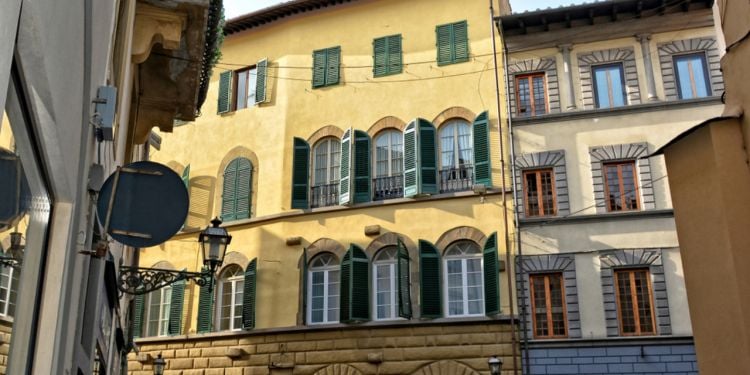
Accommodation in Florence
Florence is world-famous for works of art by Michelangelo and Botticelli, as well as architectural spectacles such as the Duomo and the Ponte ...
Culture, Leisure, and Things to Do in Florence
Living in Florence means daily immersion in one of the world's richest cultural environments. Beyond the famous museums, the city offers vibrant neighborhood life, seasonal festivals, and easy access to the Tuscan countryside for wine tours, hiking, and weekend escapes.
Museums and Galleries
The Uffizi Gallery houses the world's premier collection of Italian Renaissance art, including Botticelli's Birth of Venus and works by Michelangelo, Leonardo, and Caravaggio. In 2024, the Uffizi Galleries welcomed nearly 5.3 million visitors. The Galleria dell'Accademia is home to Michelangelo's David. Residents benefit from annual museum passes (EUR 80 for unlimited Uffizi access) and free admission on the first Sunday of each month from October through March. The Pitti Palace complex offers five museums plus the magnificent Boboli Gardens, perfect for afternoon strolls.
Events and Festivals
Florence's calendar includes Pitti Immagine Uomo, the world-renowned men's fashion fair held twice yearly at Fortezza da Basso. Calcio Storico, a violent Renaissance-era football match, takes place each June in Piazza Santa Croce. The city celebrates its patron saint with fireworks over the Arno on June 24th. Wine enthusiasts enjoy Chianti Classico Collection in February during Tuscan wine preview week.
Parks and Recreation
The Cascine Park, Florence's largest green space, stretches along the Arno River and hosts markets, festivals, and jogging paths. Piazzale Michelangelo offers panoramic sunset views over the city. Fitness club memberships average EUR 70 monthly. The surrounding Tuscan hills provide excellent hiking and cycling, while the Chianti region lies just 30 minutes south for wine tasting and countryside dining.
Nightlife and Dining
Santo Spirito and Santa Croce anchor Florence's nightlife, with wine bars, craft cocktail spots, and late-night pizzerias. A meal at a mid-range restaurant costs approximately EUR 40 per person including wine, while excellent street food like lampredotto sandwiches costs just a few euros.
Sources: Uffizi Galleries, Visit Tuscany
Daily Life in Florence: Transport, Healthcare, and Practicalities
Daily life in Florence revolves around the city's walkable historic center, strong café culture, and distinct Italian rhythms. Most shops and offices observe a lunch break (typically 1:00-3:30 PM), and dinner is eaten late by international standards (8:00-9:30 PM). Understanding these patterns helps newcomers integrate smoothly into local life.
Getting Around
Florence's compact historic center is best navigated on foot—you can cross it in about 15 minutes. Public transport is managed by Autolinee Toscane (formerly ATAF), operating buses and a growing tram network. A single ticket costs EUR 1.70 (valid for 90 minutes on buses and trams), while monthly passes cost approximately EUR 38. The T1 tram line connects Scandicci to the SMN train station and continues to Careggi hospital, while the T2 line runs from the airport to Piazza San Marco via the station—the cheapest and fastest airport connection. A third line is under construction through 2026. Tickets must be validated upon boarding; fines for unvalidated tickets reach EUR 50.
Healthcare Access
Italy's Servizio Sanitario Nazionale (SSN) provides universal healthcare to legal residents. To access public healthcare, register with your local Azienda Sanitaria Locale (ASL) after obtaining residency and your codice fiscale (tax code). You'll choose a general practitioner (medico di base) who serves as your first point of contact for non-emergency care. Co-payments (ticket sanitario) for specialist visits and diagnostics rarely exceed EUR 50. EU citizens can use their European Health Insurance Card (EHIC) for temporary stays. Non-EU residents may need private insurance initially; voluntary SSN enrollment costs approximately EUR 2,000 annually.
Daily Essentials
Pharmacies (farmacia) display green crosses and provide first-line health advice for minor ailments. Supermarket chains including Coop, Conad, and Esselunga offer comprehensive grocery shopping, while local markets like Sant'Ambrogio and San Lorenzo provide fresh produce. Mobile phone plans with unlimited calls and 10GB+ data cost approximately EUR 10 monthly.
Sources: Visit Florence, Italian Citizenship Assistance
Cost of Living in Florence: Monthly Budgets and Expenses
Florence's cost of living is moderate by Western European standards—lower than London or Paris, but higher than southern Italian cities. Housing represents the largest expense, particularly in the historic center. Groceries and dining remain relatively affordable compared to northern Europe, especially when shopping at local markets and neighborhood trattorias.
Monthly Budget for a Single Person
A single professional can live comfortably in Florence on approximately EUR 1,800–2,500 monthly, depending on housing choices and lifestyle. Students and those willing to share accommodation can manage on less.
Rent (1-bedroom, city center) | EUR 1,000 |
Utilities (electricity, heating, water) | EUR 200 |
Groceries | EUR 250–300 |
Public transport (monthly pass) | EUR 38 |
Mobile phone + Internet | EUR 40 |
Dining and entertainment | EUR 200–300 |
Monthly Budget for a Family of Four
Families should budget approximately EUR 3,500–5,000 monthly, with international school fees adding significantly to expenses if applicable.
Rent (3-bedroom, city center) | EUR 1,800 |
Utilities | EUR 280 |
Groceries | EUR 500–600 |
International school (per child, monthly) | EUR 1,200–2,000 |
Private preschool/kindergarten (monthly) | EUR 450–800 |
Transport, phone, internet | EUR 120 |
Sources: Numbeo 2025, International Schools Database
In Short
Florence offers a rare combination: the cultural riches of a world-class city within a walkable, human-scale environment. Whether you're drawn by career opportunities in fashion and design, world-renowned universities, the prospect of raising children amid Renaissance masterpieces, or simply the dream of retiring among Tuscan hills—this city delivers. The cost of living remains reasonable for Western Europe, the healthcare system provides excellent coverage, and the established expat community ensures you won't navigate the transition alone. The pace of life encourages long lunches, evening passeggiata, and genuine connection with neighbors. Ready to explore your move? Join thousands of fellow expats on the Expat.com Florence forum to ask questions, share experiences, and connect with those who've already made Florence home.
We do our best to provide accurate and up to date information. However, if you have noticed any inaccuracies in this content, please contact us.


Essential services for your expat journey