

Living in Hanover: the ultimate expat guide
Everything you need to know for a successful life in Hanover.
Hanover, the capital of Lower Saxony, is a cosmopolitan city that seamlessly blends business excellence with quality of life. With a population of approximately 540,000 residents and a metropolitan area of over 1.16 million, this northern German hub offers a welcoming environment for international newcomers. The city earned recognition as a UNESCO City of Music and serves as one of Europe's most important trade fair locations, hosting world-renowned events like the Hannover Messe.
5 Good Reasons to Move to Hanover
- Affordable living – Rent is approximately 35% lower than Berlin and significantly cheaper than Munich or Frankfurt.
- Strong job market – Home to global companies like Volkswagen Commercial Vehicles, Continental, and TUI Group.
- Excellent transportation – Central location with outstanding rail connections and an international airport.
- Green spaces – The famous Herrenhausen Gardens and Maschsee lake offer exceptional recreational opportunities.
- Quality education – Top-ranked universities including Leibniz University and Hannover Medical School.
Working in Hanover: Opportunities in Industry and Services
Hanover's economy is built on a diverse foundation of manufacturing, services, and trade fair activities. The city is home to major international corporations and offers excellent career prospects for skilled professionals, particularly in engineering, IT, and healthcare sectors.
Key Industries and Major Employers
The automotive sector dominates local employment, with Volkswagen Commercial Vehicles employing around 14,200 workers at its Stöcken plant. Continental AG, founded in Hanover in 1871, maintains its global headquarters here with approximately 7,500 employees. The tourism giant TUI Group, the world's largest travel company, is also headquartered in the city. Other significant employers include Talanx (insurance), Sennheiser (audio equipment), Bahlsen (food), and Rossmann (retail).
Work Permits and Visa Requirements
Non-EU citizens seeking employment typically need an EU Blue Card or a standard work permit. The EU Blue Card requires a recognized university degree and a job offer with a minimum gross annual salary of €48,300 (2025). For shortage occupations including IT specialists, engineers, and medical professionals, the threshold is lower at €43,759.80. Citizens of Australia, Canada, Japan, New Zealand, the UK, and the USA can enter Germany visa-free and apply for permits after arrival.
The following table provides an overview of the Hanover labor market:
Regional unemployment rate (Lower Saxony) | 5.5% |
Average monthly net salary | €2,543 |
Key sectors | Automotive, Insurance, IT, Tourism, Trade Fairs |
Sources: Numbeo 2025, Bundesagentur für Arbeit
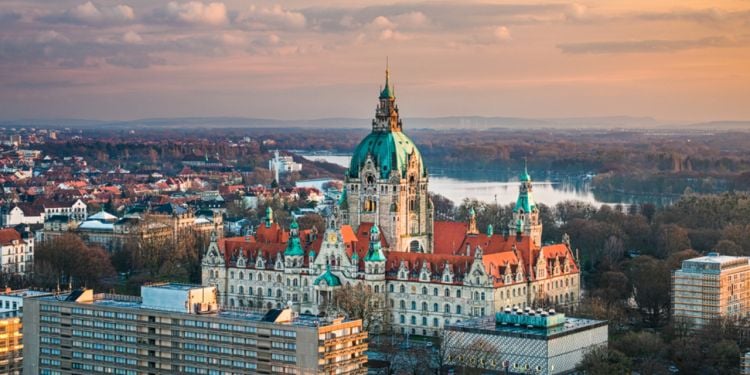
Working in Hanover
Hanover provides many work opportunities in different fields. This means that finding a job in Hanover is relatively straightforward. At the same, ...
Higher Education in Hanover: Universities and International Programs
Hanover is a major university city with approximately 49,000 students enrolled across its higher education institutions. The city offers excellent academic opportunities, particularly in engineering, medicine, and natural sciences, with many programs available in English.
Leibniz University Hannover
Leibniz Universität Hannover (LUH) is the largest institution, hosting over 30,000 students from more than 119 countries. As a member of the prestigious TU9 alliance of leading German technical universities, LUH offers 83 degree programs across nine faculties. Public universities in Germany charge no tuition fees—students pay only a semester contribution of approximately €435, which includes a public transport pass. The university excels in mechanical engineering, quantum physics, and production technology. Application deadlines are typically July 15 for winter semester and January 15 for summer semester.
Hannover Medical School (MHH)
The Medizinische Hochschule Hannover is Germany's only exclusively medical university, founded in 1965. With approximately 3,800 students, MHH offers programs in human medicine, dentistry, biochemistry, and health sciences. It ranks among the top medical institutions in Germany and is renowned for transplant medicine and biomedical research.
Other Institutions
The Hochschule Hannover (University of Applied Sciences) offers practice-oriented programs in technology, business, and design. Additionally, GISMA Business School provides international MBA and master's programs taught entirely in English.
Sources: Leibniz University Hannover, Hannover Medical School
Schools for Expat Children: International and Bilingual Options
Families relocating to Hanover will find quality educational options ranging from German public schools to international institutions offering English-language curricula. The German school system begins with Grundschule (primary school) for ages 6-10, followed by secondary education.
International School Hannover Region (ISHR)
The International School Hannover Region is the primary choice for expatriate families. Founded in 1996, this co-educational day school serves students from ages 3 to 19 (3K through Grade 12). The school offers the complete International Baccalaureate (IB) Continuum, including the Primary Years Programme (PYP), Middle Years Programme (MYP), and IB Diploma. With over 600 students representing more than 65 nationalities, ISHR provides a truly multicultural environment. Classes are taught in English, with German language instruction beginning in Grade 1. The school is accredited by the Council of International Schools (CIS) and the New England Association of Schools and Colleges (NEASC).
Tuition Fees and Enrollment
The following table outlines annual tuition fees at ISHR for the 2025/2026 academic year:
Pre & Junior Kindergarten | €11,540/year |
Primary (Grades 1-5) | €16,440 – €16,610/year |
Secondary (Grades 6-10) | €18,220 – €18,950/year |
IB Diploma (Grades 11-12) | €20,100/year |
Sources: International School Hannover Region
German Public Schools
German public schools are free and offer high-quality education. Children are required to attend school from age 6. While instruction is in German, many schools offer bilingual programs or intensive German language support for newcomers. Private German schools with bilingual options, such as KIBS (Kids International Bilingual School), provide alternative pathways.
Housing in Hanover: Neighborhoods and Rental Market
Finding accommodation in Hanover is considerably easier and more affordable than in major German cities like Munich or Berlin. The rental market offers a variety of options, from modern apartments in the city center to family homes in quieter suburbs. Starting your housing search early is advisable, especially at the beginning of university semesters when competition increases.
Popular Neighborhoods for Expats
Südstadt is a favorite among young families, offering excellent schools, parks, and proximity to Maschsee lake. The area has good subway connections and a lively atmosphere with cafés and restaurants. List and Oststadt are upscale residential districts with beautiful Wilhelminian-era architecture and tree-lined streets. Nordstadt, close to Leibniz University, is popular with students and academics, offering affordable rents and a vibrant multicultural community. Linden has become an up-and-coming area with a creative, alternative scene, good public transport, and lower rents. For families seeking more space, Kirchrode and Döhren offer quieter suburban living with green spaces and good schools.
Rental Prices
The following table shows average monthly rents in Hanover:
1-bedroom apartment (city center) | €700 – €1,000 |
1-bedroom apartment (outside center) | €550 – €800 |
3-bedroom apartment (city center) | €1,100 – €1,700 |
3-bedroom apartment (outside center) | €800 – €1,500 |
Sources: Numbeo 2025
Renting Process
When viewing apartments, prepare documents including your residence permit, employment contract or recent payslips, and potentially a SCHUFA credit report. Most landlords require a security deposit of two to three months' rent. Be aware of the distinction between Kaltmiete (cold rent, excluding utilities) and Warmmiete (warm rent, including heating and building costs).
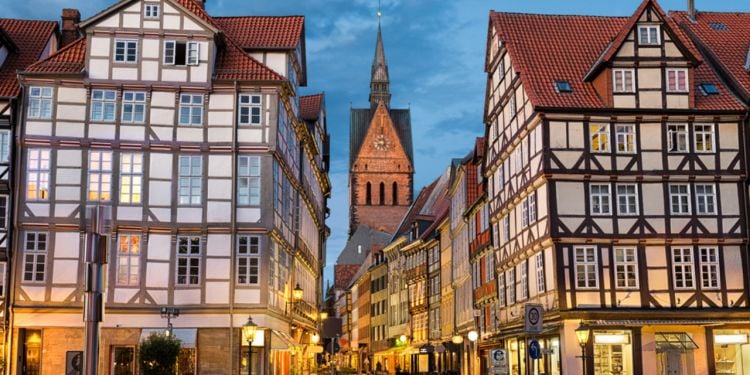
Accommodation in Hanover
Hanover is the capital and the largest city in Lower Saxony. With a population of over half a million, Hanover is the thirteenth largest city in ...
Leisure, Culture and Things to Do in Hanover
Despite being often overlooked by tourists, Hanover offers a rich cultural life and abundant recreational opportunities. From baroque gardens to modern art museums, the city caters to diverse interests while maintaining a relaxed, livable atmosphere.
Parks and Gardens
The Herrenhausen Gardens are Hanover's crown jewel, attracting over 600,000 visitors annually. This ensemble of baroque, botanical, and landscape gardens spans 135 hectares and includes the Großer Garten (Great Garden), one of Europe's best-preserved baroque gardens with the spectacular Great Fountain reaching 80 meters. The Berggarten houses one of Europe's most diverse orchid collections. Entry to the Great Garden and Berggarten costs €10 in summer, €8 in winter. The Georgengarten and Welfengarten are free English-style parks perfect for jogging or picnics. Maschsee, an artificial lake completed in 1936, offers swimming, sailing, and lakeside walks, plus the popular Maschseefest summer festival.
Museums and Culture
The Sprengel Museum is one of Germany's finest modern art collections, featuring works by Picasso, Klee, and Ernst. The Herrenhausen Palace Museum, reconstructed in 2013, explores the history of the House of Hanover. The Wilhelm Busch Museum specializes in caricature and satirical art, while the Niedersächsisches Landesmuseum covers natural history, ethnology, and fine art. The city's State Opera and numerous theaters offer world-class performances throughout the year.
Events and Nightlife
Annual highlights include the Kleines Fest im Großen Garten (Small Festival in the Great Garden), an international fireworks competition at Herrenhausen, Maschseefest in August, and various Christmas markets. Nightlife centers on Südstadt with its bars and clubs, while Linden offers a more alternative scene. The Hanover Zoo, Germany's fifth oldest (founded 1865), features unique themed landscapes and conservation programs.
Sources: Hannover Tourism, Herrenhausen Gardens
Daily Life in Hanover: Transportation and Lifestyle
Hanover offers an excellent quality of life with efficient infrastructure, safe neighborhoods, and a balanced pace that distinguishes it from larger German cities. The city is known for being particularly welcoming to newcomers, with over 22% of residents being foreign nationals, creating a genuinely multicultural atmosphere.
Public Transportation
The ÜSTRA transport network provides comprehensive coverage across the city and surrounding region. The system includes 12 Stadtbahn (light rail) lines serving 201 stations, plus 38 bus routes. Trains and buses run every 10-20 minutes during the day and continue until late evening. The central hub is Kröpcke, an underground station in the city center where most lines intersect. A single ticket costs approximately €3.40, while a monthly pass for zone A (city center) is around €58. The nationwide Deutschlandticket at €49/month allows unlimited regional travel throughout Germany. The S-Bahn suburban rail connects to the airport and surrounding communities, while Hannover Hauptbahnhof (central station) offers ICE high-speed connections to Berlin (1.5 hours), Hamburg (1.5 hours), and Frankfurt (2.5 hours).
Getting Around
Hanover is bicycle-friendly with designated cycling routes throughout the city. Bike rental stations are available at the main railway station. For drivers, the city has wide streets and excellent parking facilities, though the historic center is largely pedestrianized. The Red Thread (Roter Faden), a 4.2 km painted line on the pavement, guides visitors to 36 major attractions—a uniquely Hanoverian feature.
Everyday Life
Shops typically open Monday to Saturday, with supermarkets operating from 7:00 to 22:00. Sundays are quiet with most businesses closed, except bakeries and some cafés. The city's Markthalle (market hall) near the Old Town Hall offers fresh produce, international foods, and local specialties. Germans value punctuality and clear communication, and basic German knowledge will significantly enhance daily interactions, though English is widely spoken in professional settings.
Cost of Living in Hanover: Budgeting for Singles and Families
Hanover is notably more affordable than major German cities, making it attractive for expatriates seeking good value without sacrificing quality of life. Costs are approximately 35% lower than in Berlin for rent and 15-20% lower overall compared to Munich.
Monthly Budget for a Single Person
The following table provides estimated monthly expenses for a single person living in Hanover:
Expense Category | City Center | Outside Center |
Rent (1-bedroom) | €834 | €613 |
Utilities (electricity, heating, water) | €200 | €200 |
Groceries | €250 | €250 |
Public transport (monthly pass) | €58 | €58 |
Health insurance | €110 | €110 |
Internet & mobile | €65 | €65 |
Total (excluding leisure) | €1,517 | €1,296 |
Sources: Numbeo 2025
Monthly Budget for a Family of Four
The following table shows estimated monthly costs for a family of four:
Expense Category | City Center | Outside Center |
Rent (3-bedroom) | €1,350 | €1,056 |
Utilities | €306 | €306 |
Groceries | €600 | €600 |
Transport (2 adults) | €116 | €116 |
International school (2 children) | €2,750 | €2,750 |
Health insurance (family) | €350 | €350 |
Internet & mobile | €80 | €80 |
Total | €5,552 | €5,258 |
Note: Families using German public schools (free) will have significantly lower education costs.
Sources: Numbeo 2025, ISHR
In Short
Hanover stands out as an excellent choice for expatriates seeking a high quality of life without the premium costs of Germany's larger cities. The city combines the advantages of a major economic center—global employers, world-class universities, and outstanding infrastructure—with affordable housing, green spaces, and a genuinely welcoming international community. Whether you're drawn by career opportunities at companies like Volkswagen or Continental, the tuition-free universities, or simply the prospect of a balanced lifestyle in one of Europe's most livable cities, Hanover delivers. Connect with fellow expatriates and get personalized advice by joining the Hanover forum on Expat.com.
We do our best to provide accurate and up to date information. However, if you have noticed any inaccuracies in this content, please contact us.


Essential services for your expat journey