Living in Cologne: the ultimate expat guide
Everything you need to know for a successful life in Cologne.
Cologne (Köln) is Germany's fourth-largest city and a dynamic metropolis on the Rhine River. With a population exceeding 1 million residents and over 4.5 million people in the greater metropolitan area, it serves as the economic and cultural heart of the Rhineland region in North Rhine-Westphalia. The city seamlessly blends 2,000 years of history with modern innovation, from its iconic Gothic cathedral to cutting-edge media studios and tech startups. Cologne offers excellent transport links, a thriving job market, world-class universities, and a famously welcoming local culture known for its open-mindedness and joie de vivre.
5 Good Reasons to Move to Cologne
- Thriving job market — As a hub for media, insurance, IT, and automotive industries, Cologne offers diverse career opportunities with major employers like RTL, WDR, Ford Europe, and AXA.
- Excellent connectivity — Central European location with Cologne Bonn Airport, major rail connections, and the €58/month Deutschlandticket for unlimited regional transport across Germany.
- Affordable compared to Munich or Frankfurt — Lower rental costs than Germany's most expensive cities while offering comparable career opportunities and quality of life.
- World-famous cultural scene — Home to the legendary Cologne Carnival, over 30 museums, vibrant nightlife, and the UNESCO-listed Cologne Cathedral.
- International community — Nearly one in four residents has an international background, creating a welcoming environment for newcomers from around the world.
Working in Cologne: Career Opportunities and Employment
Cologne offers a robust job market with opportunities across multiple sectors. The city is Germany's media capital, headquarters for the insurance industry, and a significant automotive manufacturing center. North Rhine-Westphalia hosts over a third of Germany's top 100 corporations, making it the country's strongest economic region.
Key Industries and Major Employers
The media and broadcasting sector employs between 30,000 and 40,000 people in Cologne, with major players including Westdeutscher Rundfunk (WDR), RTL Television, and numerous production companies. The insurance industry has deep roots here, with over 110 insurers and reinsurers based in the city, including DEVK, Gothaer, AXA, and Zurich. Ford Europe maintains its headquarters here, supported by over 130 automotive suppliers including Toyota, Mazda, and Volvo offices. The IT, healthcare, and chemical sectors also offer significant employment.
Work Permits and the EU Blue Card
Non-EU citizens typically require a work visa or EU Blue Card. The Blue Card requires a recognized university degree and a job offer with a minimum gross annual salary of €48,300 (2025). For shortage occupations such as IT, engineering, healthcare, and STEM fields, the threshold is reduced to €43,759.80. Recent graduates (within three years) also qualify for the lower threshold.
The following table summarizes Cologne's employment landscape:
Unemployment Rate (Cologne region) | 3.3% (2023) |
Average Gross Annual Salary | ~€52,000 |
Key Sectors | Media, Insurance, Automotive, IT, Healthcare |
Sources: EURES, Make it in Germany
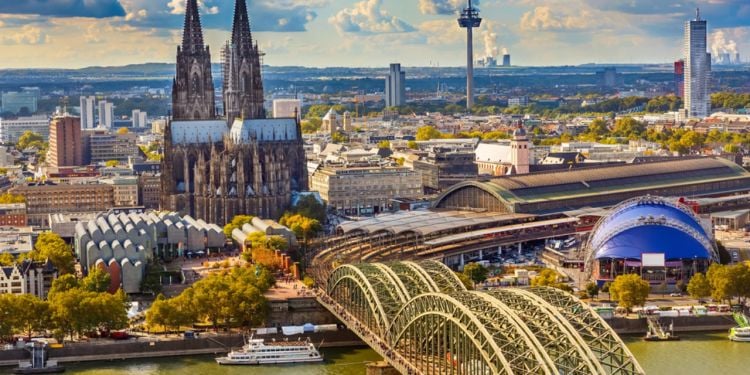
Working in Cologne
Cologne is one of Germany's leading destinations for professional expats after Berlin, Hamburg, Frankfurt, and Munich. That is because the city ...
Higher Education and Universities in Cologne
Cologne is a major academic center with several renowned institutions attracting students from around the world. Public universities in Germany do not charge tuition fees, making higher education highly accessible for international students.
University of Cologne (Universität zu Köln)
Founded in 1388, the University of Cologne is one of Europe's oldest and largest universities. It ranks #157 globally in the THE World University Rankings 2025 and #14 in Germany. The university offers over 200 degree programs across six faculties, including English-taught master's programs in business, economics, and sciences. There is no tuition fee — students pay only a semester contribution of approximately €335.65 (winter semester 2025/26), which includes a Germany-wide public transport ticket. The acceptance rate for international students is around 20%.
TH Köln (Technical University of Cologne)
TH Köln is Germany's largest university of applied sciences, offering practice-oriented programs in engineering, design, IT, and social sciences. Like the University of Cologne, it charges no tuition — only a semester fee of approximately €303.30. Both institutions require German language proficiency (typically DSH-2 or TestDaF 4) for most programs, though several English-taught courses are available.
Admission and Living Costs
International students must demonstrate financial resources of at least €992 per month (€11,904 per year) for visa purposes. This typically requires a blocked bank account. Non-EU students may work up to 140 full days or 280 half days per year. Student dormitory rooms cost between €280 and €480 per month, while private rooms in shared apartments range from €350 to €700.
Sources: University of Cologne, TH Köln
Retiring in Cologne: A Comfortable European Option
Germany offers a stable environment for retirees, with excellent healthcare, efficient public services, and a high quality of life. Cologne's central location, cultural offerings, and relatively moderate cost of living make it an attractive choice for those seeking an active retirement in the heart of Europe.
Retirement Visa Requirements
Non-EU retirees can apply for a residence permit for personal reasons under German immigration law. Key requirements include proof of sufficient financial resources to cover living expenses without employment (typically €1,000–€1,500 per month minimum), comprehensive health insurance valid in Germany, and proof of accommodation. Applicants must demonstrate they will not require public welfare benefits. The permit is typically issued for one year initially and can be renewed.
Healthcare and Quality of Life
Germany's healthcare system is among the best in Europe. Retirees must have private health insurance or demonstrate eligibility for the statutory public system. Monthly premiums for private insurance typically range from €300 to €600 depending on age and coverage. Cologne has numerous hospitals and clinics, including the University Hospital Cologne, one of Germany's largest medical centers. The city's compact layout, excellent public transport, and abundance of parks make it comfortable for older residents.
Cost Considerations for Retirees
A retired couple can live comfortably in Cologne on a budget of €2,500 to €3,500 per month, including rent for a modest apartment outside the city center. Germany has bilateral tax treaties with many countries, including the US, UK, Canada, and Australia, which may prevent double taxation on pension income. Consulting with a tax advisor familiar with both German and home-country regulations is recommended.
Sources: Make it in Germany, Germany Visa
Schools and Education for Expat Children
Cologne offers various schooling options for expatriate families, from German public schools to private international institutions. The German public education system is free and compulsory, while international schools follow globally recognized curricula such as the International Baccalaureate (IB) or British A-levels.
International Schools
The Cologne International School (CIS) is the city's leading international institution, located on a modern 19,000 m² campus in the Butzweilerhof district. It serves approximately 475 students from over 45 nationalities from grades 1 through 12. The school offers bilingual German-English education following the IB Primary Years Programme and IB Diploma Programme. Annual tuition fees range from €19,585 to €23,690 depending on grade level (2025/2026). The school also offers boarding facilities for students aged 15 and above.
Other options in the region include St. George's British International School with tuition starting at approximately €11,900 per year, and the Bonn International School located 30 minutes south of Cologne.
German Public Schools
Public schooling is free and follows the North Rhine-Westphalia curriculum. Children typically begin Grundschule (primary school) at age 6 and after grade 4 transition to secondary education: Gymnasium (academic track leading to Abitur), Realschule (intermediate), or Hauptschule (vocational). Many schools offer integration classes for non-German speakers. Registration requires proof of residence and immunization records.
The following table summarizes schooling options:
Cologne International School (IB) | €19,585–€23,690/year |
St. George's British International School | From €11,900/year |
German Public Schools | Free |
Sources: International Schools Database, World Schools
Housing and Neighbourhoods in Cologne
Cologne's rental market is competitive, with demand outpacing supply, especially in central areas. The average rent is approximately €15.49 per square meter, with rents having increased by 3.3% year-over-year as of 2025. Understanding the local rental terminology — Kaltmiete (base rent excluding utilities) and Warmmiete (rent including heating) — is essential.
Popular Neighbourhoods for Expats
Ehrenfeld is a trendy district popular with young professionals and creatives, known for its vibrant arts scene, cafes, and multicultural atmosphere. Lindenthal is one of the most coveted residential areas, with elegant tree-lined streets, proximity to the University of Cologne, and family-friendly parks including the Stadtwald. Nippes attracts students and trend-setters with its car-free zones, boutique shopping, and the Cologne Zoo. Südstadt offers a lively pub and restaurant scene, while Mülheim on the east bank provides affordable, multicultural living near the Rhine.
Rental Prices and Procedures
Expect to pay between €1,200 and €1,500 per month for a one-bedroom apartment in the city center, and €1,800 to €2,500 for a three-bedroom unit centrally. Outer districts offer lower prices — around €900 to €1,200 for one bedroom. Landlords typically require a security deposit equivalent to three months' cold rent, plus documentation including proof of income, a Schufa credit report, and references from previous landlords. After moving in, you must register your address (Anmeldung) at the local Bürgeramt within two weeks.
1-Bedroom (City Center) | €1,200–€1,500/month |
3-Bedroom (City Center) | €1,800–€2,500/month |
1-Bedroom (Outer Districts) | €900–€1,200/month |
Sources: Investropa, Numbeo
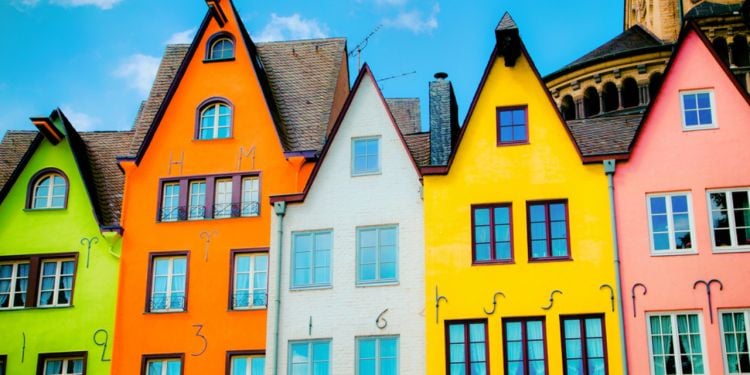
Accommodation in Cologne
Cologne is one of Germany's top destinations for visitors and expats. It is the largest city in the North Rhine-Westphalia and the fourth city, ...
Leisure, Culture and Things to Do in Cologne
Cologne offers a rich cultural landscape with over 30 museums, hundreds of galleries, historic churches, and one of Europe's most famous carnivals. Whether you enjoy world-class art, outdoor activities along the Rhine, or vibrant nightlife, the city delivers year-round entertainment.
Must-See Attractions
The Cologne Cathedral (Kölner Dom) is a UNESCO World Heritage Site and Germany's most visited landmark, attracting 6 million visitors annually. Its twin Gothic spires dominate the skyline, and climbing the south tower offers panoramic city views. The Museum Ludwig houses one of Europe's finest collections of modern art, including works by Picasso, Warhol, and Lichtenstein. The Chocolate Museum (Schokoladenmuseum) on the Rhine takes visitors through the history of chocolate production. The Roman-Germanic Museum showcases Cologne's origins as a Roman settlement with impressive mosaics and artifacts.
The Legendary Cologne Carnival (Kölner Karneval)
Carnival is Cologne's defining cultural event, often called the "fifth season." The festivities officially begin at 11:11 a.m. on November 11 and culminate in the six-day street carnival before Lent, attracting over 2 million visitors. The Rose Monday parade stretches 8 kilometers through the city center, with elaborate floats, costumed participants, and 300 tons of sweets thrown to spectators. Key traditions include shouting "Kölle Alaaf!" (Cologne above all) and wearing creative costumes.
Nightlife and Sports
The Belgian Quarter and Südstadt districts are hotspots for bars, restaurants, and clubs. Traditional Brauhäuser (brewhouses) like Früh, Gaffel, and Päffgen serve local Kölsch beer in a convivial atmosphere. Football fans can watch 1. FC Köln play at the RheinEnergieStadion, while the Lanxess Arena hosts major concerts and sporting events. The Rhine promenade and Stadtwald park offer jogging, cycling, and outdoor relaxation.
Sources: Cologne Tourism, Wikipedia
Daily Life in Cologne: Transport and Lifestyle
Daily life in Cologne is characterized by excellent public transport, a relaxed Rhineland mentality, and a strong café and pub culture. The city is highly walkable and bike-friendly, with the Rhine promenade offering popular routes for jogging and cycling.
Public Transportation
Cologne's public transport is operated by Kölner Verkehrs-Betriebe (KVB) and includes trams (Straßenbahn), U-Bahn (underground/light rail), and buses, all integrated within the VRS (Verkehrsverbund Rhein-Sieg) regional network. The Deutschlandticket costs €58 per month (2025) and provides unlimited travel on all local and regional public transport throughout Germany — an exceptional value for commuters. The price will increase to €63 per month from January 2026. Single tickets within Cologne cost approximately €3.20 for short journeys. The S-Bahn connects Cologne to the nearby Cologne Bonn Airport (CGN) in about 15 minutes from the main station (Köln Hauptbahnhof).
Lifestyle and Local Culture
Cologne is famous for its Kölsch beer, served in small 200ml glasses by waiters called Köbes in traditional brewhouses (Brauhäuser). The city has the highest number of pubs per capita in Germany. The local dialect, also called Kölsch, reflects the city's distinct identity. Residents are known for their openness and the phrase "Kölle Alaaf!" — a declaration of love for the city heard year-round but especially during Carnival. Shopping options range from high-end boutiques on Schildergasse to trendy independent stores in the Belgian Quarter. Weekly markets throughout the city offer fresh produce and local specialties.
Sources: KVB, Deutsche Bahn
Cost of Living in Cologne
Cologne offers a moderate cost of living compared to Munich, Frankfurt, or Hamburg, while providing comparable job opportunities and amenities. A single person can expect monthly expenses of approximately €1,050 to €1,800 excluding rent, while a family of four should budget €3,000 to €4,500 depending on lifestyle choices.
Monthly Budget for a Single Person
The table below outlines typical monthly expenses for a single person living in Cologne:
Category | Low Estimate | High Estimate |
Rent (1-bedroom, center) | €1,200 | €1,500 |
Utilities (electricity, heating, water) | €150 | €250 |
Groceries | €200 | €350 |
Public Transport (Deutschlandticket) | €58 | €58 |
Health Insurance | €110 | €200 |
Leisure and Dining Out | €150 | €400 |
Total (excluding rent) | €668 | €1,258 |
Monthly Budget for a Family of Four
Category | Low Estimate | High Estimate |
Rent (3-bedroom, center) | €1,800 | €2,500 |
Utilities | €250 | €400 |
Groceries | €500 | €800 |
Public Transport (2 adults) | €116 | €116 |
Health Insurance (family) | €400 | €700 |
International School (1 child) | €1,630 | €1,975 |
Leisure and Dining | €300 | €600 |
Total | €4,996 | €7,091 |
Sources: Numbeo, Germany Visa
In Short
Cologne is a city that welcomes newcomers with open arms. Its thriving economy in media, insurance, and technology offers real career opportunities, while tuition-free universities attract students from around the globe. The cost of living, though not cheap, remains more affordable than Germany's most expensive cities. What truly sets Cologne apart is its spirit — a Rhineland warmth embodied in traditional brewhouses, the legendary Carnival celebrations, and the locals' genuine openness to diversity. Whether you're drawn by career prospects, academic pursuits, or simply the promise of a rich cultural life along the Rhine, Cologne delivers. Connect with fellow expats and get practical advice on the Expat.com Cologne forum to start your journey today.
We do our best to provide accurate and up to date information. However, if you have noticed any inaccuracies in this content, please contact us.


Essential services for your expat journey