

Living in Marseille: the ultimate expat guide
Everything you need to know for a successful life in Marseille.
Marseille, France's second-largest city and oldest settlement, sits on the stunning Mediterranean coastline in the Provence-Alpes-Côte d'Azur region. With a population of approximately 870,000 in the city proper and 1.6 million in the metropolitan area, this vibrant port city offers a unique blend of ancient history, cultural diversity, and modern economic opportunities. Founded by Greek traders around 600 BC, Marseille has evolved into a dynamic hub where tradition meets innovation, attracting professionals, students, and retirees from around the world.
Why Marseille Stands Out
The city enjoys a remarkable 300 days of sunshine per year and a Mediterranean climate that makes outdoor living a year-round pleasure. From the iconic Vieux-Port (Old Port) to the stunning Calanques National Park, Marseille combines urban energy with natural beauty in ways few European cities can match.
5 Good Reasons to Move to Marseille
- Affordability: Housing and living costs are significantly lower than major cities like London, Sydney, or Toronto, while offering comparable quality of life.
- Climate: Enjoy hot, dry summers and mild winters with abundant sunshine, perfect for beach lovers and outdoor enthusiasts.
- Strategic Location: Gateway to the Mediterranean with easy access to Nice, Barcelona, and the French Riviera, plus an international airport.
- Cultural Richness: A cosmopolitan melting pot with world-class museums, diverse cuisine, and a thriving arts scene.
- Economic Growth: France's leading port city with expanding sectors in maritime industries, technology, and research.
Working in Marseille: Jobs, Industries, and Work Permits
Marseille's economy is anchored by its historic role as France's premier port and gateway to the Mediterranean, Africa, and the Middle East. The city offers diverse employment opportunities across maritime industries, technology, tourism, healthcare, and research. For non-EU citizens, understanding work permit requirements is essential before relocating.
Key Employment Sectors
The Port of Marseille Fos is one of Europe's largest industrial-port complexes, employing thousands in logistics, shipping, and maritime services. Major companies like CMA CGM, a global shipping leader headquartered here, anchor the maritime sector. The city is also developing as a smart port hub, integrating digital technologies, AI, and green energy initiatives. Tourism and hospitality provide significant employment, with the city welcoming over 5 million visitors annually. Healthcare and research sectors are strong, with the Aix-Marseille University and numerous research institutes driving innovation.
Work Permits and Visas
EU, EEA, and Swiss citizens can work in France without permits. Non-EU citizens require a long-stay visa (VLS-TS) and work authorization. Employers must typically prove no suitable EU candidate exists, though professions on the métiers en tension (shortage list) are exempt from this requirement. The Talent Passport visa offers a streamlined path for highly skilled professionals, valid up to 4 years.
The table below summarizes key employment indicators for Marseille:
Unemployment Rate (City) | ~15% (2021) |
Average Net Monthly Salary | €2,107 |
Key Sectors | Maritime, Tourism, Healthcare, Tech |
Sources: INSEE, Numbeo 2025
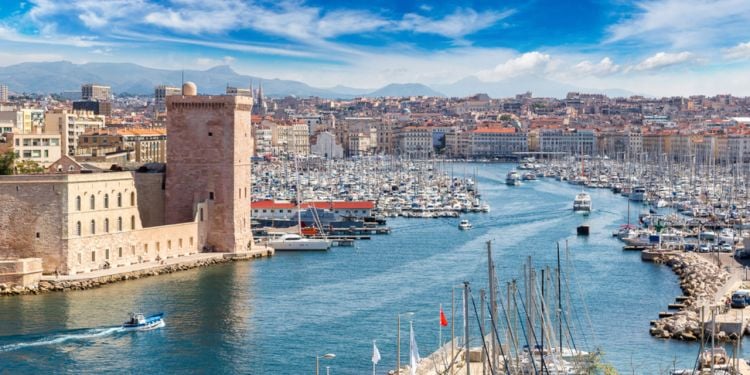
Working in Marseille
Also known as the "cité phocéenne", Marseille is France's second-largest city and the capital of Provence. Known for ...
Higher Education and Universities in Marseille
Marseille hosts one of France's largest and most prestigious universities, offering excellent opportunities for international students. The city's academic institutions combine world-class research with diverse program offerings in multiple languages.
Aix-Marseille University (AMU)
Aix-Marseille University, formed in 2012 from three historic institutions, is the largest French-speaking university with approximately 80,000 students, including 12,000 international students from 128 countries. The university ranks among the top 150 globally according to the Shanghai Ranking and within the top 7 in France. AMU offers over 600 degree programs across five major sectors: Arts and Humanities, Law and Political Science, Economics and Management, Health, and Sciences and Technology. The university achieved the highest level of the Bienvenue en France label in 2024, recognizing excellence in services for international students.
Tuition Fees and Admission
EU/EEA students pay standard French public university fees: approximately €170 for Bachelor's and €243 for Master's programs annually, plus the CVEC (student contribution) of around €100. Non-EU students may pay differentiated fees (€2,770 for Bachelor's, €3,770 for Master's), though AMU offers a 75% automatic exemption for many nationalities. Applications for non-EU students typically go through Campus France. English-taught programs are available, particularly at Master's and doctoral levels.
Sources: Aix-Marseille University
Retiring in Marseille: Healthcare, Visas, and Quality of Life
Marseille has emerged as an attractive retirement destination, offering Mediterranean climate, excellent healthcare, cultural richness, and lower costs than northern European cities. France's world-renowned healthcare system and retiree-friendly visa options make long-term settlement accessible.
Visa Options for Retirees
Non-EU retirees typically apply for the Long Stay Visitor Visa (VLS-TS Visiteur), which allows residence without employment. Applicants must demonstrate sufficient financial means—approximately €1,500 per month minimum from pensions, investments, or savings. The visa is initially valid for one year and renewable annually. After 5 years of continuous residence, permanent residency becomes available. Application is made through the France-Visas portal and local French consulate, requiring proof of income, health insurance, and accommodation.
Healthcare Access
France's healthcare system consistently ranks among the world's best. After 3 months of residence, expats can apply for coverage under Assurance Maladie (PUMA), France's universal healthcare. This covers 70-100% of medical costs at fixed national rates. Most retirees supplement with private mutuelle (top-up insurance), costing approximately €50-150 monthly, to cover remaining expenses. Marseille has several major hospitals, including Hôpital de la Timone, one of Europe's largest medical centers. Many healthcare professionals speak English. The Doctolib platform makes booking appointments straightforward.
Sources: France-Visas, Assurance Maladie
Schools for Children: International and Local Education Options
Families relocating to Marseille will find a range of educational options, from the French public system to international schools offering English-language curricula. The French education system is highly regarded and provides free public schooling, while private international schools cater specifically to expat families.
International Schools
Marseille and the surrounding area offer several international schools with British, American, or IB curricula. The International Bilingual School of Provence (IBS), located near Aix-en-Provence, offers the International Baccalaureate (IB), Cambridge IGCSEs, and French national curriculum for ages 2-18. Annual tuition ranges from €11,100 to €20,350 for day students. The International School of Marseille provides French-British bilingual education for ages 2-11, with fees around €8,550 to €8,750 annually. CIPEC International School in Luynes offers bilingual French-English education in a countryside setting. Esclaibes International School Marseille follows a Montessori approach for ages 1-16, with fees starting around €7,400.
French Public Schools
The French public education system is free and compulsory from ages 3-16. Schools follow the national curriculum, with instruction in French. Children typically integrate quickly, especially at younger ages. For high school students, public lycées offer both general and vocational tracks leading to the Baccalauréat, equivalent to A-levels or high school diploma. Registration requires proof of residence and immunization records.
Sources: International Schools Database, French Ministry of Education
Housing and Neighborhoods: Where to Live in Marseille
Marseille's housing market offers diverse options across its 16 arrondissements (districts), from historic apartments near the Old Port to family homes in quieter suburbs. Rents are considerably lower than in major English-speaking cities, making Marseille an attractive option for expats seeking Mediterranean living on a budget.
Popular Neighborhoods for Expats
The Vieux-Port and Le Panier (1st-2nd arrondissements) offer historic charm with cafes, restaurants, and cultural attractions within walking distance. Expect smaller apartments in character buildings with harbor views. The 6th and 7th arrondissements (including Castellane and Périer) are among the most upscale areas, popular with families for their quieter streets and proximity to beaches. Prado and Bonneveine (8th) offer beach access and green spaces. The 13th and 14th arrondissements provide more affordable options, though farther from the center.
Rental Costs and Procedures
Average rents vary significantly by location and apartment condition. The table below shows typical monthly rents:
1-Bedroom (City Center) | €670 – €850 |
1-Bedroom (Outside Center) | €500 – €700 |
3-Bedroom (City Center) | €1,000 – €1,500 |
3-Bedroom (Outside Center) | €1,000 – €1,400 |
Landlords typically require proof of income (3x monthly rent), a security deposit (1-2 months' rent), and a French guarantor or guarantor service. Utilities average €150-200 monthly.
Sources: Numbeo 2025
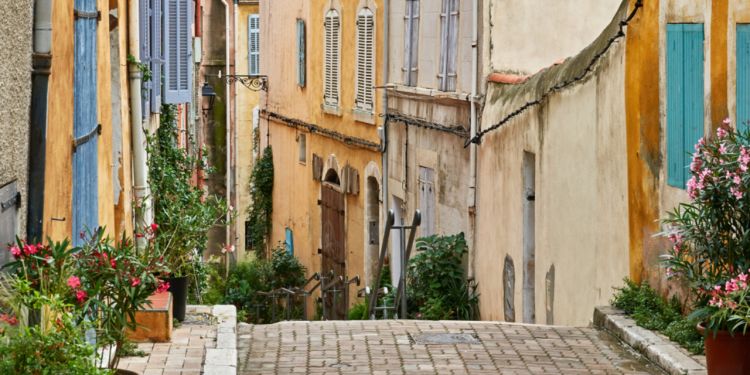
Accommodation in Marseille
Marseille, also referred to as "la Cité Phocéenne", is situated on the southeastern coast of France. This ...
Leisure, Culture, and Things to Do in Marseille
Marseille offers an exceptional quality of life with world-class museums, stunning natural landscapes, vibrant nightlife, and year-round outdoor activities. The city's cultural scene has flourished since its designation as European Capital of Culture in 2013.
Museums and Cultural Attractions
The MuCEM (Museum of European and Mediterranean Civilisations) is Marseille's architectural and cultural crown jewel, attracting nearly 2 million visitors annually. Designed by Rudy Ricciotti, its distinctive latticed exterior houses exhibitions on Mediterranean history and culture. Connected by footbridges to the historic Fort Saint-Jean, the complex offers spectacular harbor views. Entry costs €11 (reduced €7.50). The Palais Longchamp houses the Fine Arts Museum and Natural History Museum in a grand 19th-century setting with stunning fountains. Notre-Dame de la Garde, perched on the city's highest point, offers panoramic views and stands as Marseille's most beloved landmark.
Outdoor Activities and Nature
The Calanques National Park, stretching between Marseille and Cassis, features dramatic limestone cliffs plunging into turquoise waters. Hiking trails and boat trips provide access to secluded coves. City beaches like Plage du Prado offer easy access to swimming and water sports. The Frioul Islands and Château d'If (famous from "The Count of Monte Cristo") are short boat rides from the Old Port.
Nightlife and Entertainment
The Cours Julien and Noailles neighborhoods buzz with bars, live music venues, and cafes. The Orange Vélodrome stadium hosts major sporting events and concerts. Summer festivals include outdoor concerts at Fort Saint-Jean and the Plan B festival at MuCEM.
Sources: Marseille Tourism, MuCEM
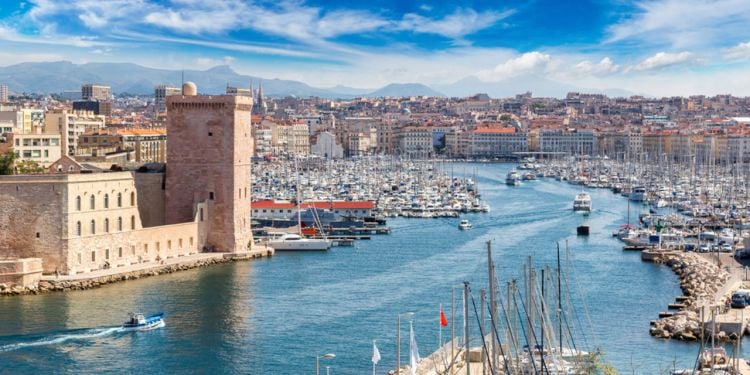
Things to see and to do in Marseille
Marseille boasts a rich historical and cultural heritage. Its port and maritime activities have made it a vibrant, diverse hub, home to a blend of ...
Daily Life in Marseille: Getting Around and Local Culture
Daily life in Marseille blends Mediterranean relaxation with urban energy. The city's excellent public transport, outdoor lifestyle, and diverse culinary scene make settling in relatively straightforward for newcomers willing to embrace local rhythms.
Public Transportation
The RTM (Régie des Transports Métropolitains) operates Marseille's comprehensive public transport network, including 2 metro lines, 3 tramway lines, over 80 bus routes, and ferry services across the Old Port and to coastal destinations. A single ticket costs €1.70 (€2.00 if purchased from the bus driver) and is valid for 60 minutes of unlimited transfers. Monthly passes cost €40 for the central zone, reduced to €20 with employer subsidies. As of September 2025, children under 11 and adults 65+ travel free on the entire network. The metro runs from approximately 5:30 AM to 9:30 PM on weekdays, with extended hours on weekends. The RTM app provides real-time schedules and mobile ticketing.
Lifestyle and Culture
Marseille operates on a relaxed Mediterranean schedule. Many shops close for lunch between 12:30-2:00 PM and may close early on Saturdays. Sundays are traditionally quiet, with most businesses closed. The famous marchés (markets), including the daily fish market at the Old Port and the Noailles market, are essential for fresh produce and local specialties like bouillabaisse and pastis. Learning basic French significantly eases daily interactions, though English is increasingly spoken in tourist areas and by younger residents.
Sources: RTM, La Métropole Mobilité
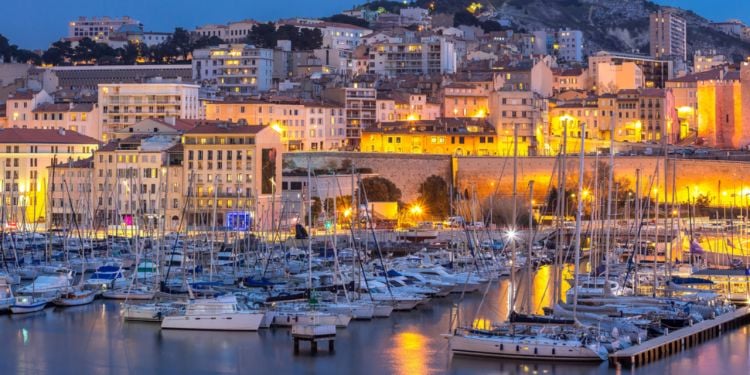
Getting around Marseille
Marseille, the second most densely populated city in France, has its transport services managed by the Régie des transports ...
Cost of Living in Marseille: Monthly Budgets and Expenses
Marseille offers a lower cost of living compared to many major English-speaking cities, while maintaining access to excellent healthcare, culture, and quality of life. Understanding typical expenses helps expats plan their budgets effectively.
Monthly Budget for a Single Person
The following table outlines estimated monthly costs for a single person living in Marseille:
Expense Category | City Center | Outside Center |
Rent (1-bedroom) | €670 | €550 |
Utilities | €170 | €170 |
Groceries | €300 | €300 |
Transport (monthly pass) | €40 | €40 |
Health Insurance (top-up) | €50 | €50 |
Dining/Entertainment | €200 | €200 |
Total | €1,430 | €1,310 |
Monthly Budget for a Family of Four
Expense Category | City Center | Outside Center |
Rent (3-bedroom) | €1,180 | €1,130 |
Utilities | €220 | €220 |
Groceries | €700 | €700 |
Transport | €80 | €80 |
International School (1 child) | €750 | €750 |
Health Insurance | €150 | €150 |
Dining/Entertainment | €400 | €400 |
Total | €3,480 | €3,430 |
Sources: Numbeo 2025
In Short
Marseille offers expats an exceptional combination of Mediterranean lifestyle, economic opportunity, and cultural richness at costs well below major global cities. With 300 days of sunshine, world-class museums like MuCEM, the stunning Calanques National Park, and France's leading port economy, the city welcomes professionals, students, families, and retirees alike. The excellent public transport network, accessible healthcare system, and diverse international schools make settling in manageable, while the vibrant food scene, outdoor lifestyle, and cosmopolitan atmosphere ensure there's always something new to discover. Whether you're drawn by career opportunities in maritime industries and tech, affordable Mediterranean living, or simply the allure of France's oldest city, Marseille rewards those who embrace its unique energy.
Connect with fellow expats, ask questions, and share experiences on the Expat.com Marseille forum.
We do our best to provide accurate and up to date information. However, if you have noticed any inaccuracies in this content, please contact us.


Essential services for your expat journey