

Living in Nottingham: the ultimate expat guide
Everything you need to know for a successful life in Nottingham.
Nottingham sits at the heart of England's East Midlands, a city where medieval history meets modern innovation. With a population of approximately 330,000 in the city proper and over 730,000 in the greater urban area, Nottingham offers the amenities of a major city while maintaining an accessible, community-focused atmosphere. Famous worldwide as the home of the Robin Hood legend, the city has transformed from its industrial roots into a thriving centre for education, healthcare, and creative industries.
The city boasts two major universities attracting over 60,000 students annually, creating a youthful energy that fuels its cultural scene and nightlife. Nottingham's cost of living remains significantly lower than London—approximately 35-40% cheaper—making it an attractive destination for those seeking quality of life without breaking the bank.
Five Good Reasons to Move to Nottingham
- Affordable living costs – Housing and daily expenses are considerably lower than in London, Birmingham, or Manchester while offering similar amenities.
- Excellent transport links – Direct trains to London St Pancras take just 90 minutes, with easy access to the M1 motorway and East Midlands Airport.
- Award-winning public transport – The city's integrated tram and bus network is one of the best in the UK outside London.
- Thriving cultural scene – UNESCO City of Literature status, world-class theatres, and a renowned independent food and drink scene.
- Green spaces – Over 800 acres of parkland including Wollaton Park and proximity to Sherwood Forest and the Peak District.
Working in Nottingham: Career Opportunities and Job Market
Nottingham's economy has successfully transitioned from traditional manufacturing to a diverse mix of sectors including healthcare, life sciences, financial services, digital technology, and education. The city serves as a regional hub for the East Midlands, with the 7th largest metropolitan economy in the UK.
Key Employment Sectors
The healthcare and care economy represents one of Nottingham's strongest employment sectors, anchored by the Queen's Medical Centre—one of Europe's largest teaching hospitals. The life sciences sector is significant, with pharmaceutical company Boots headquartered in nearby Beeston. Financial services employ thousands through companies like Capital One and Experian. The city's two universities are major employers themselves, while the digital and creative industries continue to grow, particularly around the Creative Quarter in the Lace Market.
Work Permits and Visa Requirements
Non-UK residents seeking employment typically require a Skilled Worker visa. From July 2025, the minimum salary threshold is £41,700 per year, and roles must be at RQF Level 6 (degree-level equivalent). Employers must hold a valid sponsor licence. The visa application fee ranges from £769 to £1,751, plus an Immigration Health Surcharge of £1,035 per year. After five years of continuous residence, visa holders may apply for Indefinite Leave to Remain.
The table below shows key employment indicators for Nottingham.
Average salary (Nottingham) | £40,400 per year |
UK average salary | £45,800 per year |
Unemployment rate | 5.7% |
Employment rate | 72.0% |
Sources: Plumplot UK Salary Data 2024, Office for National Statistics
Higher Education: Universities and International Programs
Nottingham is one of the UK's premier university cities, home to two major institutions that together educate over 60,000 students from more than 150 countries. The strong academic presence shapes the city's culture, economy, and housing market.
University of Nottingham
The University of Nottingham is a prestigious Russell Group institution ranked #97 in the QS World University Rankings 2025. Founded in 1881 and granted Royal Charter in 1948, it offers over 300 undergraduate and 200 postgraduate programs across its beautiful parkland campuses. Popular fields include Business, Engineering, Computer Science, Medicine, and Law. The university has satellite campuses in China and Malaysia.
International undergraduate tuition fees range from £20,500 to £27,200 per year, while postgraduate programs cost between £22,600 and £36,400 annually. The main intake is September, with some programs offering January entry.
Nottingham Trent University (NTU)
Nottingham Trent University ranks #1 in the UK for employability (Uni Compare 2025) and is known for its career-focused, practical approach to education. With over 40,000 students across five campuses, NTU offers strong programs in Business, Art and Design, Law, and Computer Science. The university has invested £450 million in facilities over the past decade.
International undergraduate fees range from £17,150 to £18,700 per year, with postgraduate programs costing £17,000 to £21,150. NTU offers over 1,000 scholarships annually to international students.
Admission Requirements
International students typically need strong secondary school results (equivalent to UK A-levels) for undergraduate admission and a bachelor's degree for postgraduate study. English language requirements are generally IELTS 6.0-7.0 depending on the program. Applications for undergraduate programs are submitted through UCAS.
Sources: University of Nottingham, Nottingham Trent University
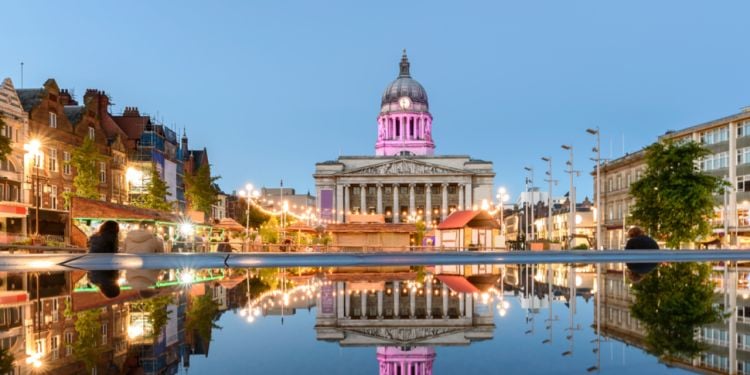
Study in Nottingham
Nottingham is a vibrant city full of activities, from nightclubs, pubs and restaurants to art galleries and museums, all easily accessible with an ...
Schools for Children: Education Options in Nottingham
Nottingham offers diverse schooling options for families, including state schools, independent schools, and specialist institutions. The UK education system follows the National Curriculum, with children attending school from age 5 (Reception) through to 18.
State Schools
The majority of families in Nottingham use the state school system, which is free of charge. The city has numerous primary schools (ages 4-11) and secondary schools (ages 11-16), with some offering sixth form for ages 16-18. School places are allocated based on catchment areas, so your residential address significantly impacts which schools your children can attend. Applications are made through Nottingham City Council for city schools or Nottinghamshire County Council for surrounding areas.
Independent Schools
For families seeking private education, Nottingham has several well-regarded independent schools. Nottingham High School, founded in 1513, is a co-educational day school for ages 4-18 with termly fees of approximately £4,300 to £6,300. Nottingham Girls' High School, part of the Girls' Day School Trust, educates girls aged 3-19 with fees ranging from £1,900 to £5,200 per term. Trent College in nearby Long Eaton offers both day and boarding options for ages 3-18 with an authentic British boarding experience.
International Curriculum Options
While Nottingham does not have dedicated American or International Baccalaureate schools within the city centre, several independent schools in the wider region offer internationally recognised qualifications. Families seeking specific curricula may consider schools in nearby cities or boarding options. State schools welcome international families, and many have experience supporting children with English as an additional language.
Sources: Nottingham High School, Nottingham Girls' High School, Nottingham City Council
Housing and Neighbourhoods: Finding Your Home in Nottingham
Nottingham's housing market offers excellent value compared to other major UK cities. Whether you prefer a city-centre apartment or a family home in the suburbs, the range of options suits various budgets and lifestyles.
Popular Areas for Expats
West Bridgford is one of Nottingham's most affluent areas, located just across the River Trent from the city centre. It offers excellent schools, independent shops, and a village-like atmosphere with rental yields around 3%. Beeston is popular with families and professionals working at the nearby University of Nottingham, Boots headquarters, and the Science Park—well-connected by tram with average yields of 4%. The City Centre suits young professionals seeking convenience, with modern apartments and easy access to amenities. Lenton and the Arboretum area are popular with students and offer more affordable options.
Rental Prices
The average monthly private rent in Nottingham reached £998 in September 2025, representing a 7.1% increase from the previous year. This remains significantly below the UK average of £1,354. Rental procedures typically require a deposit (usually 5 weeks' rent), references, and proof of income or employment.
The table below shows typical rental costs by property type.
1-bedroom apartment | £700 – £900 per month |
2-bedroom apartment | £850 – £1,100 per month |
3-bedroom house | £1,100 – £1,450 per month |
Average house price | £193,000 |
Leisure, Culture and Things to Do in Nottingham
Nottingham punches well above its weight in cultural offerings, sporting heritage, and entertainment options. From medieval history to contemporary arts, the city provides endless opportunities for exploration and enjoyment.
Museums and Heritage
Nottingham Castle, perched dramatically on Castle Rock, underwent a £31 million renovation and now houses museums, art galleries, and the interactive Robin Hood Adventures experience. The underground caves and Mortimer's Hole offer a glimpse into the city's geological past. Wollaton Hall, the stunning Elizabethan mansion famous as Wayne Manor in The Dark Knight Rises, houses the Natural History Museum and sits within 500 acres of deer park—all free to enter. The National Justice Museum in the historic Lace Market explores 800 years of crime and punishment in the former courthouse and gaol. The City of Caves provides access to Nottingham's unique network of over 800 sandstone caves beneath the streets.
Parks and Nature
Wollaton Park offers 500 acres of parkland with free-roaming deer, perfect for walks and picnics. Sherwood Forest, home of the legendary Robin Hood, lies just north of the city with ancient oak woodland and the famous Major Oak. Highfields Park near the university features a boating lake and croquet lawn, while the Arboretum was the city's first public park, opened in 1852.
Sports and Entertainment
Nottingham is officially the "Home of English Sport", with two professional football clubs (Nottingham Forest and Notts County—the world's oldest league club), international cricket at Trent Bridge, the National Ice Centre, and the National Water Sports Centre at Holme Pierrepont. The Theatre Royal and Nottingham Playhouse host West End touring productions, while Rock City and Motorpoint Arena bring major music acts to the city.
Sources: Visit Nottinghamshire, Nottingham Castle
Daily Life: Getting Around and Living in Nottingham
Daily life in Nottingham combines the convenience of a major city with a relaxed pace that distinguishes it from larger metropolitan areas. The city is compact and walkable, with efficient public transport connecting suburbs to the centre.
Public Transport
Nottingham's public transport network is among the best in the UK outside London. The Nottingham Express Transit (NET) tram system covers 32 km across two lines, connecting key areas including the universities, Queen's Medical Centre, and park-and-ride facilities. Adult single tram fares are £3.30, with all-day tickets at £5.40. Student passes offer significant discounts.
Nottingham City Transport (NCT) operates an extensive bus network with a £2 single fare cap remaining in place until December 2025. The Robin Hood Card allows seamless travel across both bus and tram networks. Annual bus passes cost approximately £299 for students.
Nottingham railway station provides direct connections to London St Pancras (90 minutes), Birmingham, Sheffield, and Leeds. East Midlands Airport is just 13 miles away, offering flights across Europe and beyond.
Lifestyle and Culture
Nottingham enjoys a reputation for its independent food and drink scene, with the Lace Market and Hockley areas packed with independent restaurants, bars, and cafes. The city holds UNESCO City of Literature status, celebrating its connection to authors like D.H. Lawrence and Lord Byron. The famous Goose Fair, one of Europe's oldest travelling fairs, has run since around 1284.
Healthcare is provided through the National Health Service (NHS), with the Queen's Medical Centre serving as the main hospital. Registering with a local GP practice is essential upon arrival.
Cost of Living: What to Budget in Nottingham
Nottingham consistently ranks as one of the most affordable major cities in the UK, with living costs approximately 35-40% lower than London. This makes it an attractive option for those seeking good quality of life without excessive expenses.
Monthly Budget: Single Person
A single person can expect to spend approximately £1,400 to £1,800 per month including rent for a one-bedroom apartment. The table below breaks down typical monthly costs.
Expense | Monthly Cost (GBP) |
Rent (1-bedroom) | £700 – £900 |
Utilities (electricity, heating, water) | £100 – £150 |
Groceries | £180 – £250 |
Transport (monthly pass) | £60 – £100 |
Mobile phone | £15 – £30 |
Internet | £25 – £40 |
Leisure and dining | £150 – £250 |
Monthly Budget: Family of Four
A family of four should budget approximately £3,200 to £4,200 per month including rent for a 3-bedroom property.
Expense | Monthly Cost (GBP) |
Rent (3-bedroom house) | £1,100 – £1,450 |
Utilities | £180 – £250 |
Groceries | £500 – £650 |
Transport | £150 – £200 |
Private school fees (if applicable) | £1,400 – £2,100 |
Healthcare/Insurance | £0 (NHS) or £100+ |
Leisure and activities | £300 – £400 |
Sources: Numbeo Cost of Living Data, Office for National Statistics
In Short
Nottingham offers an exceptional quality of life for newcomers seeking an affordable, culturally rich destination in the heart of England. With living costs significantly lower than London, excellent transport links, two world-class universities, and a thriving job market in healthcare, technology, and creative industries, the city welcomes expats from all backgrounds. From exploring Robin Hood's legendary haunts to enjoying Premier League football, from wandering through deer parks to discovering underground caves, Nottingham combines historical charm with modern convenience. The city's compact size means you can walk between most attractions, while efficient tram and bus networks connect you to the wider region. Whether you're a student, professional, or family, Nottingham provides the perfect base to build your new life in the UK.
Connect with fellow expats and get insider tips on the Expat.com Nottingham forum.
We do our best to provide accurate and up to date information. However, if you have noticed any inaccuracies in this content, please contact us.


Essential services for your expat journey