

Living in Guangzhou: the ultimate expat guide
Everything you need to know for a successful life in Guangzhou.
Guangzhou, the capital of Guangdong Province, stands as China's third-largest city and a dynamic hub where 2,000 years of trading history meets cutting-edge innovation. With a population exceeding 18 million, this Pearl River Delta metropolis offers expatriates a unique blend of Cantonese culture, world-class infrastructure, and thriving business opportunities. As the historic starting point of the Maritime Silk Road, Guangzhou has long welcomed international visitors and today hosts a substantial expat community drawn by its robust economy and relatively lower cost of living compared to Beijing or Shanghai.
5 Good Reasons to Move to Guangzhou
- Strategic location – Direct access to Hong Kong (under 1 hour by high-speed rail), Macau, and the Greater Bay Area economic zone.
- Lower cost of living – Approximately 20-30% more affordable than Shanghai while offering comparable amenities and career opportunities.
- World-renowned cuisine – Birthplace of Cantonese cuisine, offering authentic dim sum, roast meats, and an incredible food scene.
- Excellent transportation – One of China's most extensive metro systems with 19 lines and over 750 km of track.
- Business hub – Home to the Canton Fair, China's oldest and largest trade fair, attracting 500,000 overseas buyers annually.
Working in Guangzhou: Opportunities in China's Manufacturing Powerhouse
Guangzhou offers diverse employment opportunities for expatriates within Guangdong Province's USD 1.97 trillion economy – the largest of any Chinese province for 36 consecutive years. The city serves as a major hub for manufacturing, trade, technology, and services, with particular strength in industries that continue to attract international talent.
Key Industries and Employment Sectors
The regional economy focuses heavily on advanced manufacturing, including new energy vehicles (25% of China's national output), industrial robotics (50% of national production), and consumer electronics. Major employers include automotive companies, technology firms, trading companies, and international schools. The biannual Canton Fair drives significant demand for trade, logistics, and business services professionals. Additionally, Guangzhou's designation as a pilot city for foreign-owned hospitals has opened new opportunities in healthcare.
Work Permits and Visas
Foreign nationals require a Z Visa (work visa) to be legally employed in China. The process typically takes 2-3 months and requires employer sponsorship. Applicants need a valid job offer, bachelor's degree, minimum 2 years of relevant work experience, health clearance, and clean criminal record. China's work permit system classifies foreigners into three tiers: Class A (high-end talent, 85+ points), Class B (professional talent, 60+ points), and Class C (general workers). Since December 2024, physical work permits have been replaced by integrated electronic Social Security Cards.
Employment Indicators
Average Monthly Salary (local) | CNY 9,000-11,000 (USD 1,250-1,530) |
Urban Unemployment Rate (national) | 5.1% (October 2025) |
Key Sectors | Manufacturing, Trade, Technology, Finance, Education |
Sources: Guangzhou Statistics Bureau 2024, National Bureau of Statistics of China
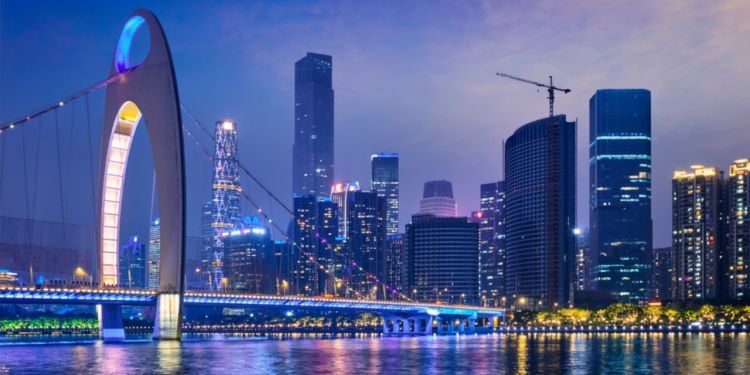
Finding work in Guangzhou
Guangzhou – formerly known as Canton – is the capital of Guangdong province. It's the country's third largest city (after ...
Higher Education in Guangzhou: World-Class Universities for International Students
Guangzhou hosts some of China's most prestigious universities, offering international students diverse academic programs in English and Chinese. The city's higher education institutions attract over 3,200 international students from more than 100 countries, with programs ranging from undergraduate degrees to doctoral research.
Top Universities for International Students
Sun Yat-sen University (SYSU) stands as the region's flagship institution, ranked #276 globally in QS World University Rankings 2026 and #7 in Nature Index 2024 among global universities for research output. Founded in 1924, SYSU operates five campuses across Guangzhou, Zhuhai, and Shenzhen, offering programs in sciences, engineering, medicine, humanities, and social sciences. International tuition fees range from CNY 20,000-45,000 per year depending on the program.
Jinan University, established for overseas Chinese students, offers extensive English-taught programs and strong business and economics faculties. South China University of Technology excels in engineering and technology fields, while Guangzhou Medical University provides internationally recognized medical programs.
Scholarships and Admission
International students can apply for the Chinese Government Scholarship (CSC), which covers tuition, accommodation, and living expenses. University-specific scholarships and provincial Guangdong Government Scholarships are also available. Admission typically requires high school transcripts, language proficiency (HSK 4+ for Chinese-taught programs or IELTS 6.0+ for English programs), and relevant entrance examinations. Applications open in November with deadlines typically in April. Students must obtain an X1 Visa for studies exceeding 180 days.
Sources: Sun Yat-sen University Office of International Students, QS World University Rankings
International Schools in Guangzhou: Quality Education for Expat Families
Guangzhou ranks among the world's top 10 most expensive cities for international schooling, but offers excellent educational options for expatriate families. With 30 international schools serving foreign passport holders, parents can choose from American, British, Canadian, and IB curricula to suit their children's educational needs.
Leading International Schools
The American International School of Guangzhou (AISG), founded in 1981, provides IB Continuum education from Pre-K to Grade 12 across two campuses, serving over 1,000 students from 40+ nationalities. Annual tuition ranges from CNY 204,000 to CNY 270,000 (USD 28,000-37,000) depending on grade level. The British School of Guangzhou, part of the Nord Anglia network, offers British curriculum education for ages 2-18, with fees between CNY 131,000 and CNY 190,000 annually.
Other notable options include BASIS International School Guangzhou (American curriculum, CNY 213,200 first year), Canadian International School of Guangzhou (Alberta curriculum with 100% university admission rate), and ISA Tianhe International School (IB programs from CNY 174,500). Most schools are concentrated in the Tianhe, Huangpu, and Panyu districts.
Enrollment and Requirements
International schools in Guangzhou are restricted to foreign passport holders, including students from Hong Kong, Macau, and Taiwan. Applications typically require passport copies, previous school records, immunization certificates, and entrance assessments. The academic year runs from August to June, with rolling admissions available at most schools. Many families choose housing locations based on proximity to their preferred school to minimize commuting time.
Sources: U.S. Department of State, International Schools Database
Housing in Guangzhou: Neighborhoods and Rental Guide for Expats
Finding the right accommodation in Guangzhou requires understanding the city's diverse districts, each offering distinct advantages for expatriate residents. Housing options range from modern high-rise apartments in the CBD to spacious villas in suburban compounds, with prices varying significantly by location and amenities.
Popular Expat Neighborhoods
Tianhe District represents Guangzhou's modern heart, featuring the Zhujiang New Town CBD with upscale shopping, international restaurants, and convenient metro access. This area attracts business professionals seeking proximity to corporate offices, though rents are the city's highest. Liede, within Tianhe, offers imported grocery stores and Western eateries, making it particularly popular with expatriates.
Haizhu District, south of Tianhe across the Pearl River, provides quieter residential areas at more affordable prices while maintaining excellent transportation links. Yuexiu District, the historic center, offers character-filled older apartments and luxury options on Ersha Island – favored by executives with access to top international schools. Panyu District suits families seeking suburban living with parks, mountains, and proximity to schools like Clifford School and international institutions in the area.
Rental Prices and Procedures
The following table shows typical monthly rental costs across Guangzhou based on location and apartment size.
1-Bedroom (City Center) | CNY 3,600-7,000 (USD 500-970) |
1-Bedroom (Outside Center) | CNY 1,850-4,000 (USD 255-555) |
3-Bedroom (City Center) | CNY 7,850-12,000 (USD 1,090-1,665) |
3-Bedroom (Outside Center) | CNY 4,100-7,000 (USD 570-970) |
Rental contracts typically require 6-12 months minimum, with 2-3 months' deposit plus first month's rent upfront. Foreigners must register their address with the local Public Security Bureau within 24 hours of moving in. Working with a real estate agency is recommended for navigating the market.
Sources: Numbeo 2025, Expat Arrivals
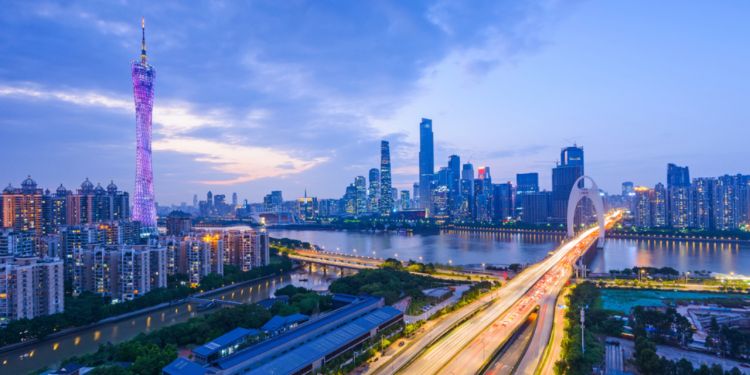
Accommodation in Guangzhou
Guangzhou is a populous city, and the housing supply is as great as the demand. Its population is over 13 million people, including a large number of ...
Leisure, Culture, and Things to Do in Guangzhou
Guangzhou offers expatriates an exceptional variety of cultural, recreational, and entertainment options that reflect both its ancient heritage and modern development. From world-class museums to scenic mountain trails, the city provides endless opportunities for exploration and relaxation.
Iconic Landmarks and Cultural Sites
Canton Tower, the city's 600-meter landmark nicknamed "Slim Waist," offers observation decks, a rotating restaurant, and thrilling attractions including a bubble tram and sky drop ride. Tickets range from CNY 150-398. The Chen Clan Ancestral Hall (Chen Clan Academy) showcases exquisite Lingnan architecture with intricate wood and stone carvings, earning recognition as a masterpiece of traditional Chinese craftsmanship. Shamian Island presents 19th-century European colonial architecture, providing a serene escape with cafés and tree-lined promenades.
For history enthusiasts, the Museum of the Western Han Dynasty Mausoleum of the Nanyue King displays remarkable artifacts from Guangzhou's ancient past, while the Guangdong Museum (free entry with reservation) features Lingnan arts and Maritime Silk Road relics. Yuexiu Park, the city's largest urban green space, houses the iconic Five Rams Statue – the symbol of Guangzhou.
Recreation and Entertainment
Chimelong Safari Park and Chimelong Paradise in Panyu District offer world-class family entertainment, featuring Asia's largest safari park and thrilling roller coasters. Evening Pearl River cruises (departing Tianzi Wharf) showcase the illuminated skyline including Canton Tower and Haixinsha Island. For outdoor enthusiasts, Baiyun Mountain provides hiking trails with panoramic city views. Nightlife centers on Party Pier (a converted brewery district), Zhujiang New Town's upscale bars, and the vibrant Tianhe area. The Guangzhou Opera House, designed by Zaha Hadid, hosts international performances and tours.
Sources: Tripadvisor, China Discovery
Daily Life in Guangzhou: Transportation, Culture, and Practical Tips
Daily life in Guangzhou blends traditional Cantonese customs with modern conveniences, offering expatriates an authentic Chinese experience supported by world-class infrastructure. Understanding local transportation options and cultural practices will help you navigate this dynamic metropolis efficiently.
Getting Around: Metro and Transportation
The Guangzhou Metro ranks as China's third-largest rapid transit system, with 19 lines spanning over 750 kilometers and 309 stations as of 2025. Lines 10 and 12 opened in June 2025, further expanding coverage. Operating hours run approximately 6:00 AM to midnight, with fares starting at CNY 2 and reaching CNY 8-14 for longer journeys. The Yang Cheng Tong card provides 5% discounts and works across metro, buses, and ferries. Taxis are readily available (base fare CNY 12), while ride-hailing apps like Didi offer convenient alternatives. The metro connects to Baiyun International Airport via Line 3 and all major railway stations.
Cultural Considerations and Lifestyle
Cantonese culture emphasizes food and family, with dim sum breakfasts (yum cha) representing an important social tradition. English proficiency remains limited outside international hotels and tourist areas, so learning basic Mandarin or Cantonese phrases proves invaluable. Mobile payment via WeChat Pay and Alipay dominates daily transactions – cash is rarely used. The subtropical climate brings hot, humid summers (May-October) with temperatures reaching 35°C and mild winters averaging 13-20°C. Most expatriates appreciate the city's safety, efficient public services, and the genuine warmth of local Cantonese people toward foreigners.
Cost of Living in Guangzhou: Budget Planning for Expats
Guangzhou offers a notably lower cost of living compared to Shanghai or Beijing while providing comparable quality of life. Planning your budget carefully will help ensure a comfortable expatriate experience in this southern Chinese metropolis.
Monthly Budget: Single Person
The following estimates reflect typical monthly expenses for a single expatriate living a comfortable lifestyle in central Guangzhou.
Category | Monthly Cost (CNY) | Monthly Cost (USD) |
Rent (1-bed, city center) | 3,600-5,000 | 500-695 |
Utilities (electricity, water, gas) | 450 | 62 |
Internet and mobile | 190 | 26 |
Groceries | 1,500-2,500 | 208-347 |
Transportation (metro pass) | 160 | 22 |
Dining out (moderate) | 1,200-2,000 | 167-278 |
Total (Single Person) | 7,100-10,300 | 985-1,430 |
Monthly Budget: Family of Four
Families with children should anticipate higher expenses, particularly for housing and education.
Category | Monthly Cost (CNY) | Monthly Cost (USD) |
Rent (3-bed, city center) | 7,850-12,000 | 1,090-1,665 |
Utilities | 700 | 97 |
Groceries | 4,000-5,500 | 555-764 |
International school (1 child/month) | 17,000-22,500 | 2,360-3,125 |
Transportation | 500 | 69 |
Health insurance (family) | 3,000-5,000 | 417-694 |
Total (Family of 4) | 33,050-45,700 | 4,590-6,350 |
Sources: Numbeo November 2025, International Schools Database
In Short
Guangzhou stands as an exceptional destination for expatriates seeking authentic Chinese culture combined with modern comforts. The city's 2,000-year trading legacy continues today through the Canton Fair and thriving international business community. With a cost of living approximately 20-30% lower than Shanghai, excellent metro connectivity, world-class Cantonese cuisine, and proximity to Hong Kong and the Greater Bay Area, Guangzhou offers remarkable value for professionals and families alike. The warmth of Cantonese hospitality, combined with practical advantages like efficient infrastructure and diverse housing options, makes this Pearl River metropolis an increasingly popular choice for those building their lives abroad in China.
Ready to connect with fellow expatriates in Guangzhou? Join the Expat.com Guangzhou forum to ask questions, share experiences, and build your network in this dynamic city.
We do our best to provide accurate and up to date information. However, if you have noticed any inaccuracies in this content, please contact us.


Essential services for your expat journey



