

Living in Cluj-Napoca: the ultimate expat guide
Everything you need to know for a successful life in Cluj-Napoca.
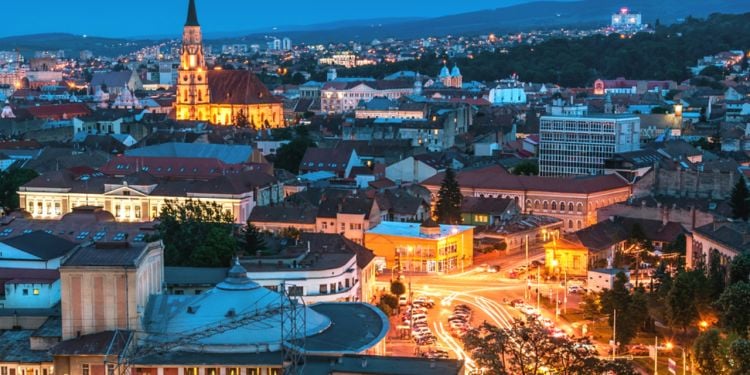
Cluj-Napoca, often simply called Cluj, is Romania's second-largest city and the unofficial capital of Transylvania. Nestled in the heart of this historic region, the city combines a rich multicultural heritage with a dynamic, forward-looking economy. With a population of approximately 320,000 residents (over 400,000 in the metropolitan area), Cluj has emerged as Romania's leading tech hub and one of Central Europe's most exciting destinations for expatriates. The city blends Austro-Hungarian architecture, medieval landmarks, and modern infrastructure, offering a high quality of life at a fraction of Western European costs.
5 good reasons to move to Cluj-Napoca
- Thriving tech ecosystem – Cluj is known as the "Silicon Valley of Eastern Europe," home to over 1,300 IT companies and 15,000 tech professionals.
- Affordable cost of living – Enjoy European quality of life at significantly lower costs than Western capitals.
- Safe and welcoming – Consistently rated as one of Romania's safest cities with friendly, English-speaking locals.
- Rich cultural scene – Host to major festivals including TIFF (Transylvania International Film Festival) and Jazz in the Park.
- Gateway to nature – Surrounded by the Carpathian Mountains, with easy access to hiking trails, ski resorts, and medieval towns.
Working in Cluj-Napoca
Cluj-Napoca has transformed into Romania's most dynamic job market, particularly for skilled professionals. The city's economy is driven by the IT and technology sector, which accounts for a significant portion of local employment. Major international companies including Bosch, NTT Data, Endava, and Betfair have established operations here, alongside hundreds of local startups and scale-ups.
Key industries and opportunities
Beyond technology, Cluj offers opportunities in business services, healthcare, education, and manufacturing. The presence of major universities ensures a steady stream of qualified graduates, making the city attractive for companies seeking skilled talent. English proficiency is high among younger professionals, and many companies operate entirely in English.
Work permits and regulations
EU/EEA citizens can work in Romania without a permit, though registration is required for stays exceeding 90 days. Non-EU nationals must obtain a work permit sponsored by their employer, followed by a long-stay visa (D-type). The process typically takes 30-45 days, and permits are issued for specific positions.
The following table provides key employment indicators for the Cluj-Napoca region:
Regional unemployment rate | 2.5-3% (North-West region, 2024) |
Average net monthly salary (Cluj) | RON 5,843 (~USD 1,250) |
Dominant sectors | IT, business services, manufacturing |
Sources: EURES - European Commission, Numbeo 2025

Working in Cluj Napoca
If you are looking to move to Cluj, the Romanian city might be a perfect choice. With the best quality of life in the country and an economy in ...
Higher Education and Universities in Cluj-Napoca
Cluj-Napoca is Romania's premier university city, home to some of the country's most prestigious institutions. With over 80,000 students enrolled across multiple universities, the city has a vibrant academic atmosphere and extensive international programs taught in English, German, French, and Hungarian.
Major universities
Babeș-Bolyai University (UBB) is Romania's largest and highest-ranked university, with origins dating to 1581. It offers programs across 21 faculties in multiple languages and consistently ranks among the top 800 universities globally (QS Rankings). International tuition fees range from EUR 2,500 to EUR 4,500 per year depending on the program.
Technical University of Cluj-Napoca (UTCN) is the country's leading engineering institution, enrolling nearly 20,000 students. It offers English-taught programs in computer science, automation, artificial intelligence, and cybersecurity. Tuition for international students starts at approximately EUR 3,000 per year.
Admission for international students
Non-EU students typically need to submit proof of English proficiency (IELTS 6.0+ or equivalent), academic transcripts, and apply through the universities' international offices. EU students benefit from simplified procedures and may access Romanian state scholarships. Student visas require enrollment confirmation from the institution.
Other notable institutions include the University of Medicine and Pharmacy "Iuliu Hațieganu" (popular among international medical students) and the University of Agricultural Sciences and Veterinary Medicine.
Sources: Babeș-Bolyai University, Technical University of Cluj-Napoca
Schools and Education for Expat Children
Families relocating to Cluj-Napoca will find a growing selection of international schools offering British, IB, and bilingual curricula. These schools provide continuity for children transitioning from abroad and prepare students for university admission worldwide.
International school options
Transylvania College is the city's most established international school, offering education from nursery through high school. Accredited by the UK Department for Education (BSO status) and a Cambridge International Examinations Centre, it serves students from 35 nationalities. The curriculum follows the National Curriculum of England, leading to IGCSE and A-Level qualifications. Annual fees range from EUR 10,000 to EUR 12,500 depending on grade level.
Royal School in Transylvania exclusively teaches the Cambridge Curriculum in English for students aged 3-18. Yearly tuition ranges from EUR 4,650 (kindergarten) to EUR 13,500 (Years 12-13), with a registration fee of EUR 300.
KEY International School is the only IB candidate school in Transylvania, following the Primary Years Programme (PYP). It offers smaller class sizes and focuses on inquiry-based learning.
Enrollment considerations
Most international schools require application forms, previous school records, and often a personal interview. Spaces can be limited, so early application is recommended. Romanian public schools are free but operate primarily in Romanian, with some Hungarian-language options available.
Sources: Transylvania College, Royal School in Transylvania, KEY International School
Housing and Neighborhoods in Cluj-Napoca
Cluj-Napoca's housing market is one of Romania's most dynamic, with rents comparable to Bucharest. The city offers a mix of renovated historic apartments in the center, communist-era blocks, and modern new developments in expanding neighborhoods.
Popular neighborhoods for expats
Centru (City Center) is ideal for those who want walkability and proximity to restaurants, cafes, and cultural venues. Expect higher rents but unmatched convenience. Zorilor and Andrei Mureșanu are upscale residential areas south of the center, favored by families and professionals. Mărăști and Gheorgheni offer good value with easy transport links. Bună Ziua and Europa are newer developments with modern apartments but require a car for daily activities.
Rental prices and process
Rentals typically require one to two months' deposit plus the first month's rent in advance. Lease agreements usually run for one year and are often in Romanian (request a translation if needed). Utilities are generally paid separately.
The following table shows average monthly rental prices:
1-bedroom apartment (city center) | RON 3,200 (~USD 680) |
1-bedroom apartment (outside center) | RON 2,550 (~USD 540) |
3-bedroom apartment (city center) | RON 5,580 (~USD 1,190) |
3-bedroom apartment (outside center) | RON 3,890 (~USD 830) |
Sources: Numbeo 2025
Accommodation in Cluj Napoca
Cluj Napoca is one of the best cities in Romania in terms of living conditions. Actually, Cluj has developed a lot in this direction, offering a ...
Leisure, Culture and Things to Do
Cluj-Napoca punches above its weight in cultural offerings, with a thriving arts scene, historic landmarks, and a lively nightlife. The city's young population and student energy create a dynamic atmosphere year-round.
Museums and cultural sites
St. Michael's Church dominates Piața Unirii with its stunning Gothic architecture dating to the 14th century. The Ethnographic Museum of Transylvania showcases rural traditions, while the open-air Romulus Vuia Ethnographic Park features traditional wooden buildings from across the region. Art lovers will appreciate the Cluj-Napoca Art Museum in the Baroque Banffy Palace, housing over 12,000 works.
Parks and outdoor activities
Central Park (Parcul Central Simion Bărnuțiu) offers a peaceful retreat with a lake, rowboat rentals, and the historic Casino building. The Alexandru Borza Botanical Garden spans 14 hectares and features Japanese and Roman gardens. Cetățuia Park provides panoramic city views and is a favorite sunset spot.
Festivals and nightlife
The Transylvania International Film Festival (TIFF) in June is Romania's most prestigious cinema event. Jazz in the Park, Electric Castle (nearby), and the Untold Festival draw international crowds. The city center buzzes with bars, cafes, and clubs concentrated around Piața Unirii and Strada Piezișă.
Day trips
The Turda Salt Mine (35 km away) is a spectacular underground attraction. Turda Gorge offers hiking through dramatic limestone cliffs. The fortified churches and medieval towns of Transylvania are within easy reach.
Sources: TripAdvisor, Visit Cluj
Daily Life in Cluj-Napoca
Daily life in Cluj-Napoca blends the convenience of a modern European city with the charm of a historic Transylvanian town. The compact city center is easily walkable, while an efficient public transport system connects outlying neighborhoods.
Getting around
Public transportation is managed by CTP (Compania de Transport Public), operating over 50 bus lines, 7 trolleybus routes, and 3 tram lines across a 321 km network. A single ticket costs RON 3 (~USD 0.65), while monthly passes are approximately RON 100 (~USD 21). The mobile app allows contactless payment and real-time tracking. A metro system is currently under construction, with the first 7.5 km phase expected to open around 2027.
Taxis are affordable (around RON 2.25 per km), and ride-hailing apps like Bolt and Uber operate in the city. Cycling infrastructure has improved, with the Clujbike bike-sharing system offering stations across the city.
Language and communication
While Romanian is the official language, English is widely spoken among younger generations and in professional environments. Basic Romanian phrases are appreciated by locals. High-speed internet is ubiquitous and among the fastest in Europe.
Shopping and services
Major shopping centers include Iulius Mall, Vivo! Cluj-Napoca, and Polus Center. Supermarkets such as Kaufland, Lidl, Carrefour, and Mega Image are found throughout the city. Traditional markets like Piața Mihai Viteazu offer fresh local produce.
Sources: CTP Cluj-Napoca
Cost of Living in Cluj-Napoca
Cluj-Napoca offers a significantly lower cost of living compared to Western European cities while maintaining a high quality of life. However, it is one of Romania's most expensive cities, with housing costs approaching those of Bucharest.
Monthly budget for a single person
The following table estimates monthly expenses for a single person living in Cluj-Napoca:
Rent (1-bedroom, city center) | RON 3,200 (~USD 680) |
Utilities (electricity, heating, water) | RON 710 (~USD 150) |
Groceries | RON 1,200 (~USD 255) |
Transportation (monthly pass) | RON 100 (~USD 21) |
Dining and entertainment | RON 800 (~USD 170) |
Total estimated | RON 6,010 (~USD 1,280) |
Monthly budget for a family of four
Rent (3-bedroom, city center) | RON 5,580 (~USD 1,190) |
Utilities | RON 1,000 (~USD 215) |
Groceries | RON 2,800 (~USD 600) |
International school (1 child) | RON 4,000 (~USD 850/month) |
Transportation and car expenses | RON 800 (~USD 170) |
Dining, entertainment, misc. | RON 1,500 (~USD 320) |
Total estimated | RON 15,680 (~USD 3,345) |
Sources: Numbeo 2025
In Short
Cluj-Napoca is a city on the rise – a place where medieval history meets tech innovation, where affordable living coexists with cultural richness. Whether you're drawn by career opportunities in its booming IT sector, the quality of its universities, or simply the appeal of life in the heart of Transylvania, Cluj offers a welcoming environment for newcomers. The city's safety, English-friendly atmosphere, and growing expat community make the transition smoother. From morning coffee in a cobblestone square to weekend hikes in the Carpathians, Cluj-Napoca delivers a balanced lifestyle that's hard to match elsewhere in Europe.
Ready to connect with others who've made the move? Join the Cluj-Napoca expat forum on Expat.com to ask questions, share experiences, and find your community.
We do our best to provide accurate and up to date information. However, if you have noticed any inaccuracies in this content, please contact us.


Essential services for your expat journey



