

Living in Chiang Mai: the ultimate expat guide
Everything you need to know for a successful life in Chiang Mai.
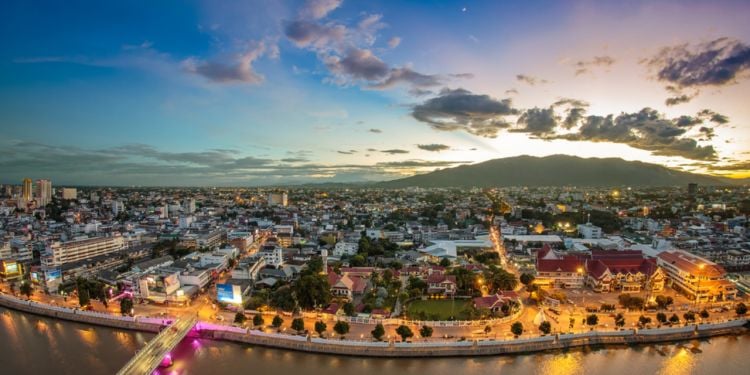
Chiang Mai, often called the Rose of the North, is Thailand's second-largest city and the cultural heart of the northern region. Nestled in a valley surrounded by misty mountains near the foothills of the Himalayas, this ancient Lanna Kingdom capital blends 700 years of history with modern amenities that attract expats from around the world. The city is home to over 300 Buddhist temples, bustling night markets, world-class healthcare, and a thriving digital nomad community. With its lower cost of living compared to Bangkok, excellent infrastructure, and relaxed pace of life, Chiang Mai has become one of Southeast Asia's most popular destinations for retirees, remote workers, and families seeking a balance between adventure and comfort.
5 Good Reasons to Move to Chiang Mai
- Exceptional affordability – Live comfortably on USD 1,000–1,500 per month, with quality housing, food, and healthcare at a fraction of Western costs.
- World-class healthcare – Access JCI-accredited hospitals like Bangkok Hospital Chiang Mai and Chiang Mai Ram with English-speaking staff.
- Rich cultural heritage – Immerse yourself in Lanna traditions, ancient temples, vibrant festivals like Yi Peng and Songkran, and authentic Thai cuisine.
- Natural beauty – Explore nearby national parks, waterfalls, elephant sanctuaries, and mountain trails within easy reach of the city.
- Welcoming expat community – Join a diverse international community with coworking spaces, social groups, and networking events.
Working in Chiang Mai: Employment and Business Opportunities
Chiang Mai has evolved into a major hub for digital nomads and remote workers, though traditional employment opportunities for foreigners remain more limited than in Bangkok. The city's economy is driven by tourism, education, agriculture, and a growing tech startup scene. Foreigners seeking employment must secure a Non-Immigrant B Visa and a valid work permit from the Ministry of Labor.
Key Industries and Employment
The main sectors employing foreigners include English teaching at language schools and international institutions, tourism and hospitality, IT and digital services, and NGO work. Teaching positions typically offer salaries between THB 30,000–50,000 per month (approximately USD 850–1,400). The digital nomad community thrives here, with numerous coworking spaces like CAMP at Maya Mall, Punspace, and Hub53. However, technically working remotely for foreign clients without proper authorization remains a legal gray area.
Work Permit Requirements
To legally work in Thailand, your employer must have a minimum registered capital of THB 2 million per foreign employee and maintain a ratio of 4 Thai employees per 1 foreigner. The work permit application takes approximately 7–10 working days and requires a bachelor's degree or equivalent experience. In 2025, Thailand introduced the e-work permit system, digitalizing the traditional blue book. BOI-promoted companies enjoy relaxed requirements and faster processing through the One Stop Service Center.
The following table summarizes key employment indicators:
Average monthly salary (local) | THB 24,313 (USD 700) |
English teacher salary range | THB 30,000–50,000/month |
Minimum capital per foreign employee | THB 2,000,000 |

Working in Chiang Mai
Chiang Mai's ethnic diversity, breathtaking scenery, and the multitude of festivals and attractions attract more foreigners every year. ...
Higher Education and Universities in Chiang Mai
Chiang Mai is Northern Thailand's educational hub, offering diverse opportunities for international students. The city hosts several reputable universities with English-taught programs across various disciplines, making it an attractive destination for those seeking quality education at affordable costs.
Major Universities
Chiang Mai University (CMU) is the flagship institution, founded in 1964 as Thailand's first provincial university. Ranked #526 in QS World University Rankings 2026, CMU enrolls over 40,000 students across 17 faculties. The university offers 3 international undergraduate programs and 23 international postgraduate programs taught entirely in English. Popular fields include medicine, engineering, agriculture, and social sciences. International tuition ranges from THB 50,000–150,000 per year (USD 1,400–4,200) depending on the program. Applications are processed through the CMU-IPAS system with intakes in August and January.
Other Institutions
Payap University, founded by the Church of Christ in Thailand, offers internationally accredited programs through its International College. Bachelor's programs in English Communication, Hospitality Management, and Information Technology are popular choices. Chiang Mai Rajabhat University (CMRU) provides affordable options with programs in Business Administration, Tourism Management, and International Relations. Maejo University specializes in agriculture and natural resources. For study abroad programs, institutions like USAC and ISEP offer semester exchanges at CMU with comprehensive support services.
International students require a Non-Immigrant ED Visa, valid for 90 days and extendable within Thailand. Health insurance is mandatory, and monthly living costs average THB 15,000–25,000 (USD 420–700) including accommodation.
Retiring in Chiang Mai: Your Golden Years in Northern Thailand
Chiang Mai has emerged as one of the world's premier retirement destinations, attracting retirees from North America, Europe, and Australia with its affordable cost of living, excellent healthcare, and relaxed lifestyle. The combination of modern amenities, cultural richness, and welcoming community makes it ideal for those seeking a fulfilling retirement abroad.
Retirement Visa Requirements
Thailand offers the Non-Immigrant O-A Visa (1-year retirement visa) for those aged 50 and over. Financial requirements include either THB 800,000 (approximately USD 22,000) deposited in a Thai bank account for at least 2 months prior to application, or proof of monthly income of at least THB 65,000 (USD 1,800), or a combination totaling THB 800,000 annually. The visa is renewable indefinitely within Thailand. Health insurance with minimum coverage of THB 400,000 inpatient and THB 40,000 outpatient is required for O-A visas obtained abroad. The O-X Visa offers a 5-year option for nationals of 14 approved countries, requiring THB 3 million in deposits or THB 1.8 million plus THB 1.2 million annual income.
Healthcare and Lifestyle for Retirees
Chiang Mai's healthcare infrastructure rivals Western standards at a fraction of the cost. Bangkok Hospital Chiang Mai and Chiang Mai Ram Hospital are JCI-accredited with English-speaking staff and international patient departments. A routine doctor visit costs THB 500–1,000, while comprehensive health checkups run THB 5,000–15,000. The city offers excellent retirement facilities, including assisted living options and memory care. Social opportunities abound through expat clubs, golf courses, fitness centers, and volunteer organizations. Many retirees find the THB 50,000–80,000/month range provides a very comfortable lifestyle including dining out, travel, and leisure activities.
Sources: Royal Thai Consulate Los Angeles, Siam Legal
Schooling for Children: International Education Options
Chiang Mai offers a growing selection of international schools catering to expatriate families. Parents can choose from American, British, and International Baccalaureate (IB) curricula, with schools ranging from budget-friendly to premium institutions. The academic year typically runs from August to June, with applications recommended several months in advance for popular schools.
Top International Schools
Prem Tinsulanonda International School is Chiang Mai's premier institution, offering all four IB programs from early years through the diploma. Located in a stunning campus with boarding facilities, annual tuition ranges from THB 400,000–700,000 (USD 11,000–19,500). Lanna International School Thailand (LIST) follows the British curriculum with IB options, serving students ages 2–18 with fees from THB 244,000–524,000 per year. Chiang Mai International School (CMIS) offers an American curriculum with Christian values, charging THB 325,400–562,600 annually. American Pacific International School (APIS) provides both American and IB curricula with boarding options available.
Enrollment and Practical Information
Most international schools require entrance assessments, previous school records, and proof of immunizations. Waiting lists are common at top schools, so early application is advised. Additional costs include registration fees (THB 50,000–150,000 one-time), uniforms, transportation, and extracurricular activities. Many schools offer sibling discounts of 5–10%. For younger children, bilingual kindergartens and Montessori schools provide more affordable alternatives with fees starting around THB 100,000–200,000 per year.
Average international school fees | THB 350,000–700,000/year |
Private kindergarten (monthly) | THB 6,500–50,000 |
Sources: International Schools Database, World Schools
Housing and Neighborhoods: Where to Live in Chiang Mai
Chiang Mai offers remarkably affordable housing options for expatriates, from modern condominiums to traditional houses with gardens. Rental prices are significantly lower than Bangkok and most Western cities, allowing for a comfortable lifestyle at modest cost. Long-term leases of 6–12 months typically secure better rates than monthly rentals.
Popular Neighborhoods for Expats
Nimmanhaemin (Nimman) is the trendiest area, favored by digital nomads and younger expats. This walkable neighborhood features cafes, coworking spaces, boutique shops, and nightlife. One-bedroom condos here rent for THB 12,000–20,000/month (USD 340–560). The Old City, surrounded by ancient walls and moats, offers cultural charm with easy access to temples and markets. Rent is slightly lower at THB 8,000–15,000 for a one-bedroom. Santitham, just north of Nimman, provides a quieter, more local atmosphere at budget-friendly prices. Hang Dong and San Sai districts south and north of the city offer larger houses with gardens, popular with families seeking more space.
Rental Costs and Procedures
Rental agreements typically require a 2-month security deposit plus one month's rent in advance. Utilities are usually paid separately, averaging THB 1,500–3,500/month for electricity (higher with air conditioning), water, and internet. Finding housing is straightforward through Facebook groups like "Chiang Mai Rentals" and "Chiang Mai Expats," property websites, or simply walking around neighborhoods looking for "For Rent" signs.
1-bedroom apartment (city center) | THB 10,000–22,000/month |
1-bedroom apartment (outside center) | THB 5,000–13,000/month |
3-bedroom house (city center) | THB 17,000–40,000/month |
3-bedroom house (outside center) | THB 12,000–20,000/month |
Sources: Numbeo 2025, FazWaz Thailand
Accommodation in Chiang Mai
More and more digital nomads, teachers, entrepreneurs, retirees, volunteers, and NGO workers are flocking to the north to make Chiang Mai their home. ...
Leisure, Culture, and Things to Do in Chiang Mai
Chiang Mai offers an exceptional blend of cultural experiences, outdoor adventures, and modern entertainment. Whether you're drawn to ancient temples, mountain trekking, Thai cooking classes, or vibrant nightlife, the city provides endless opportunities for exploration and enrichment.
Temples and Cultural Experiences
With over 300 Buddhist temples, Chiang Mai is a spiritual heartland. Must-visit sites include Wat Phra That Doi Suthep, the iconic hilltop temple overlooking the city, Wat Chedi Luang with its massive 15th-century stupa, Wat Phra Singh showcasing classic Lanna architecture, and Wat Phan Tao, a beautiful teak wood temple. The city hosts spectacular festivals: Yi Peng (Loy Krathong) in November features thousands of floating lanterns, Songkran in April brings epic water fights for Thai New Year, and the Chiang Mai Flower Festival in February celebrates the region's blooms with colorful parades.
Activities and Entertainment
Outdoor enthusiasts can explore Doi Inthanon National Park (Thailand's highest peak), trek to hill tribe villages, visit ethical elephant sanctuaries like Elephant Nature Park, or enjoy whitewater rafting on the Mae Taeng River. Thai cooking classes are incredibly popular, typically costing THB 1,000–1,500 for a half-day including market visits. The Sunday Walking Street transforms the Old City into a massive market with handicrafts, food, and live music. Nightlife centers around Nimmanhaemin Road with rooftop bars, live music venues, and clubs. For family fun, attractions include the Chiang Mai Zoo, Art in Paradise 3D museum, and the Night Safari.
Sources: TripAdvisor Chiang Mai, Chiang Mai Travel Hub
Daily Life in Chiang Mai: Transportation and Lifestyle
Daily life in Chiang Mai moves at a relaxed pace compared to Bangkok's frenetic energy. The city is manageable in size, with most expat-frequented areas easily accessible. English proficiency among locals is basic but improving, especially in tourist areas. The tropical climate brings hot temperatures year-round, with a cool season from November to February when morning temperatures can drop to 15°C (59°F).
Getting Around
The iconic red songthaew (shared pickup truck taxi) is the primary public transport, operating like a hop-on, hop-off bus throughout the city. Standard fare within the city is THB 20–40 per person. Simply flag one down, state your destination, and pay when you exit. Grab, the Southeast Asian ride-hailing app, is widely used for cars and motorbikes, offering transparent pricing and convenience. A typical ride across the city costs THB 80–150. Tuk-tuks are available but require negotiation and typically cost more than songthaews. Many expats rent motorbikes for THB 2,500–4,000/month, though traffic safety requires caution. The city has limited public buses, and there is no mass transit system like Bangkok's BTS.
Practical Considerations
One important consideration is the annual burning season from February to April, when agricultural burning causes severe air pollution with AQI levels often exceeding 200. Many expats travel during this period or invest in air purifiers. Healthcare access is excellent, with private hospitals offering same-day appointments. Banking is straightforward once you have proper documentation, and mobile payment apps like PromptPay are widely accepted. The city has reliable 4G/5G coverage and fast internet (averaging 50–100 Mbps) essential for remote workers.
Sources: Chiang Mai Traveller, TAGTHAi
Cost of Living in Chiang Mai: Budget Breakdown
Chiang Mai consistently ranks among Asia's most affordable cities for expatriates. Living costs are approximately 37% lower than Bangkok and 70–80% lower than major Western cities. Your actual spending will depend on lifestyle choices—eating local food, using public transport, and living outside prime areas significantly reduces expenses.
Monthly Budget: Single Person
A comfortable lifestyle for a single person requires approximately THB 30,000–45,000/month (USD 850–1,250). Budget-conscious expats can live on THB 20,000–25,000 by choosing local food and modest accommodation, while those seeking more comfort might spend THB 50,000–70,000 with Western dining and upscale housing.
Expense Category | Budget | Comfortable |
Rent (1-bedroom) | THB 6,000–8,000 | THB 12,000–18,000 |
Utilities | THB 1,500–2,000 | THB 2,500–3,500 |
Food | THB 6,000–8,000 | THB 10,000–15,000 |
Transport | THB 1,500–2,500 | THB 3,000–5,000 |
Health insurance | THB 2,000–4,000 | THB 4,000–8,000 |
Entertainment/misc | THB 3,000–5,000 | THB 8,000–12,000 |
TOTAL | THB 20,000–29,500 | THB 39,500–61,500 |
Monthly Budget: Family of Four
Expense Category | Budget | Comfortable |
Rent (3-bedroom) | THB 15,000–20,000 | THB 25,000–40,000 |
Utilities | THB 3,000–4,000 | THB 4,000–6,000 |
Food/groceries | THB 15,000–20,000 | THB 25,000–35,000 |
Transport | THB 4,000–6,000 | THB 8,000–12,000 |
International school (2 children) | THB 40,000–60,000 | THB 80,000–120,000 |
Health insurance | THB 8,000–12,000 | THB 15,000–25,000 |
Entertainment/misc | THB 5,000–8,000 | THB 12,000–20,000 |
TOTAL | THB 90,000–130,000 | THB 169,000–258,000 |
Sources: Numbeo 2025, Expats Thailand
In Short
Chiang Mai offers a rare combination of affordability, cultural depth, and modern convenience that few destinations can match. Whether you're a digital nomad seeking an inspiring workspace, a retiree looking for comfortable golden years, or a family wanting to give your children an international experience, this northern Thai gem delivers. The ancient temples, misty mountains, warm hospitality, and delicious cuisine create a quality of life that keeps expats coming back year after year. While challenges exist—notably the annual burning season and bureaucratic hurdles—the rewards of Chiang Mai living far outweigh the difficulties. Ready to explore further? Connect with fellow expats and get personalized advice on the Expat.com Chiang Mai Forum, where a welcoming community is eager to help you make your move.
We do our best to provide accurate and up to date information. However, if you have noticed any inaccuracies in this content, please contact us.


Essential services for your expat journey



