

Living in Ipoh: the ultimate expat guide
Everything you need to know for a successful life in Ipoh.
Ipoh, the capital of Perak state, sits in the scenic Kinta Valley surrounded by dramatic limestone hills and lush tropical forests. With a population of approximately 870,000, this city offers the rare combination of modern amenities, rich cultural heritage, and remarkably low living costs. Located 200 km north of Kuala Lumpur and 150 km southeast of Penang, Ipoh serves as the perfect base for exploring Peninsular Malaysia while enjoying a relaxed, authentic lifestyle that larger cities simply cannot match.
A City of Natural Beauty and Heritage
Once the heart of Malaysia's tin mining industry, Ipoh has reinvented itself as a cultural destination famous for its colonial architecture, vibrant street art scene, and world-renowned cuisine. The city's Old Town features beautifully preserved shophouses and heritage buildings, while the surrounding countryside boasts spectacular cave temples carved into ancient limestone formations. English is widely spoken, making daily life straightforward for newcomers.
5 Good Reasons to Move to Ipoh
- Exceptional affordability – One of Malaysia's most budget-friendly cities, with living costs up to 40% lower than Kuala Lumpur.
- World-class food scene – Famous for Ipoh white coffee, bean sprout chicken, and some of Southeast Asia's best street food.
- Stunning natural environment – Surrounded by limestone hills, caves, hot springs, and easy access to the Cameron Highlands.
- Rich cultural heritage – Colonial architecture, cave temples, museums, and a thriving arts community.
- Excellent connectivity – Just 2.5 hours from Kuala Lumpur by ETS train, with daily flights to Singapore.
Working in Ipoh: Career Opportunities and Employment Landscape
The job market in Ipoh differs significantly from Malaysia's major urban centers. While opportunities exist, the city's economy is more modest than Kuala Lumpur or Penang. However, for remote workers, retirees, or those willing to commute, Ipoh offers an attractive work-life balance at a fraction of the cost of larger cities.
Key Industries and Employers
Ipoh's economy centers on several sectors. Manufacturing remains important, with companies like Carsem (semiconductor packaging) and various electronics firms providing employment. The hospitality and tourism sector has grown substantially, driven by Ipoh's reputation as a weekend destination. Healthcare employs many professionals across both public hospitals and private facilities like KPJ Ipoh Specialist Hospital. Agriculture continues in the surrounding region, while retail and services support the local economy. Major employers include Kuala Lumpur Kepong Berhad (plantations), Hovid Berhad (pharmaceuticals), and various multinational firms with regional offices.
Work Permits and Employment Regulations
Foreign nationals require a valid Employment Pass to work in Malaysia. The most common categories include the Employment Pass Category I (for contracts exceeding 2 years with monthly salary above RM 10,000) and Category II (for contracts up to 2 years with salary between RM 5,000 and RM 9,999). Applications must be submitted by the employer through the Expatriate Services Division (ESD) of the Immigration Department. Processing typically takes 5-7 working days for standard applications.
National Unemployment Rate (2024) | 3.1% – 3.2% |
Average Monthly Salary (Ipoh) | RM 3,900 (approx. USD 880) |
Main Employment Sectors | Manufacturing, Healthcare, Tourism, Retail |
Sources: Department of Statistics Malaysia, Numbeo
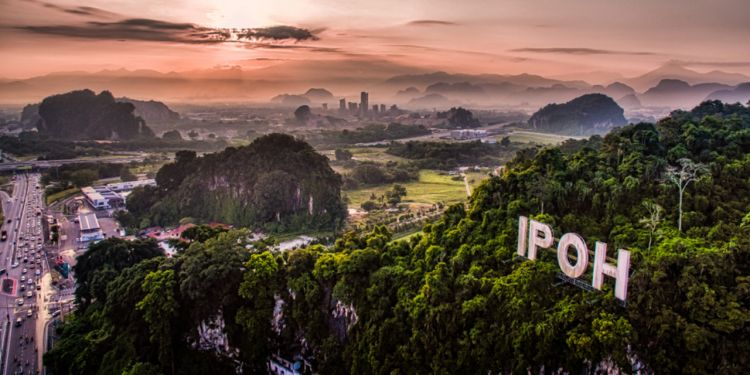
Finding work in Ipoh
Ipoh is the capital of the state of Perak and is often considered a quiet, medium-sized city that offers fewer career or employment opportunities ...
Universities and Higher Education in Ipoh
Ipoh and the surrounding Perak state offer several higher education options for international students. The region provides a more affordable study environment compared to Kuala Lumpur, while maintaining quality academic standards across various disciplines.
Quest International University (QIU)
Quest International University, located in central Ipoh, is a comprehensive private university established in 2011. QIU offers programs across Medicine, Pharmacy, Engineering, Business, and Psychology. The university is particularly known for its medical program, which attracts international students from across Asia and Africa. Tuition fees for undergraduate programs range from approximately RM 20,000 to RM 45,000 per year, with the MBBS program costing around RM 65,000 annually. Accommodation is available at Alpine Village in Sunway City Ipoh, approximately 10 km from campus.
Universiti Tunku Abdul Rahman (UTAR) – Kampar Campus
Located 30 km south of Ipoh in Kampar, UTAR is one of Malaysia's largest private universities. The scenic campus offers programs in Arts and Social Science, Business and Finance, Engineering, Science, and Information Technology. UTAR is recognized for its research output and affordable fees, with undergraduate programs ranging from RM 15,000 to RM 25,000 per year. The university consistently ranks among Malaysia's top private institutions.
UniKL Royal College of Medicine Perak
Universiti Kuala Lumpur Royal College of Medicine Perak (UniKL RCMP) specializes in medical and health sciences education. Located in Ipoh, the college offers nursing, physiotherapy, and medical imaging programs with strong clinical training components at affiliated hospitals.
Admission Requirements
International students must meet English proficiency requirements (IELTS 5.5-6.5 or equivalent), provide academic transcripts, and obtain a Student Pass through the EMGS (Education Malaysia Global Services) system. Processing typically takes 4-8 weeks. Students may work part-time up to 20 hours per week during semester breaks.
Sources: Quest International University, UTAR
Retiring in Ipoh: A Budget-Friendly Malaysian Haven
Ipoh has emerged as an increasingly popular retirement destination, offering an exceptional quality of life at remarkably low costs. The city's peaceful atmosphere, excellent food, quality healthcare, and proximity to Kuala Lumpur make it ideal for those seeking a comfortable, affordable retirement in Southeast Asia.
Malaysia My Second Home (MM2H) Program
The MM2H visa is Malaysia's primary long-term residency program for foreign retirees and investors. Following significant reforms in 2024, the program now operates under a tiered structure with varying requirements:
Silver Tier (5-year renewable): Requires a fixed deposit of USD 150,000 (approx. RM 675,000) and property purchase of minimum RM 600,000. Minimum age: 21 years. Participants cannot work or operate businesses in Malaysia.
Gold Tier (15-year renewable): Requires a fixed deposit of USD 500,000 (approx. RM 2.25 million) and property purchase of minimum RM 1 million. Minimum age: 25 years. Allows limited work rights.
Platinum Tier (20-year renewable): Requires a fixed deposit of USD 1 million (approx. RM 4.5 million) and property purchase of minimum RM 2 million. Full work and business rights included.
Alternative options include the Sarawak MM2H and Sabah MM2H programs with lower requirements (fixed deposit from RM 150,000), though these restrict residence to those specific states.
Healthcare for Retirees
Ipoh offers good healthcare facilities including Hospital Raja Permaisuri Bainun (public) and private hospitals such as KPJ Ipoh Specialist Hospital and Pantai Hospital Ipoh. Medical costs are significantly lower than Western countries—a general consultation at a private clinic costs approximately RM 35 (USD 8). Health insurance is mandatory for MM2H participants under 60, with policies available from around RM 3,000-6,000 annually.
Retirement Budget
A retired couple can live comfortably in Ipoh on USD 1,000-1,500 per month, covering a nice apartment, regular dining out, utilities, and leisure activities. This makes Ipoh one of the most affordable retirement destinations in Southeast Asia.
Schools and Education for Children in Ipoh
Ipoh provides solid educational options for expatriate families, including several international schools offering globally recognized curricula. While the selection is smaller than in Kuala Lumpur or Penang, the schools available maintain high standards and often feature smaller class sizes and more personalized attention.
International School Options
Tenby Schools Ipoh is one of the city's most established institutions, founded in 1960. The school offers both the British International curriculum (leading to IGCSEs and A-Levels) and the Malaysian National curriculum. Students ages 2-18 benefit from trilingual education in English, Mandarin, and Bahasa Malaysia. Annual fees range from approximately RM 9,750 for early years to RM 33,750 for senior years. Boarding facilities are available for students aged 12 and above.
Fairview International School – Ipoh Campus offers the International Baccalaureate (IB) curriculum, including the PYP, MYP, and Diploma Programme. As one of Malaysia's pioneering IB schools, Fairview provides students with internationally recognized qualifications. The school welcomes students from over 55 countries across its Malaysian campuses.
Imperial International School Ipoh combines the Finnish education model with the Cambridge curriculum, leading to IGCSE qualifications. The school serves students aged 3-18 in a serene hillside setting. Fees range from RM 7,800 to RM 25,800 per year, making it one of Ipoh's more affordable international options.
Local and Private Schools
Wesley Methodist School Ipoh International provides Cambridge Primary and Secondary education with a Christian foundation. The school emphasizes character development alongside academic achievement. For families preferring the Malaysian education system, quality private schools offer English-medium instruction with smaller classes than government schools.
Enrollment Process
International schools typically require previous academic records, passport copies, and may conduct entrance assessments in English and Mathematics. Applications should be submitted 3-6 months in advance, particularly for August/September intakes. Most schools offer school bus services covering major residential areas.
Housing and Neighborhoods in Ipoh
Housing in Ipoh is remarkably affordable, offering excellent value whether you prefer modern condominiums, traditional shophouses, or spacious landed properties. Rental prices are significantly lower than Malaysia's major cities, allowing newcomers to enjoy comfortable accommodation without straining their budget.
Popular Areas for Expats
Taman Jubilee and Ipoh Garden are particularly popular with expatriate families due to their proximity to international schools, hospitals, and shopping facilities. These established residential areas feature a mix of bungalows, semi-detached houses, and condominiums with well-maintained streets and good security. Old Town appeals to those seeking character properties in restored heritage buildings, offering a unique living experience amid colonial architecture and vibrant cafes. For modern conveniences, developments in Meru and Bandar Meru Raya provide newer apartments and townhouses near shopping centers like AEON Mall.
Rental Prices and Procedures
Rental agreements typically run for one year minimum with a standard deposit of two months' rent plus half month's utility deposit. Most rental properties come partially furnished, often including air conditioning, water heater, and basic kitchen appliances. Landlords generally require passport copies and proof of employment or income. Popular platforms for property searches include PropertyGuru, iProperty, and local real estate agencies.
1-Bedroom Apartment (City Center) | RM 1,500/month (approx. USD 340) |
1-Bedroom Apartment (Outside Center) | RM 1,000/month (approx. USD 225) |
3-Bedroom Apartment (City Center) | RM 2,000/month (approx. USD 450) |
3-Bedroom Apartment (Outside Center) | RM 1,500/month (approx. USD 340) |
Sources: Numbeo, PropertyGuru Malaysia
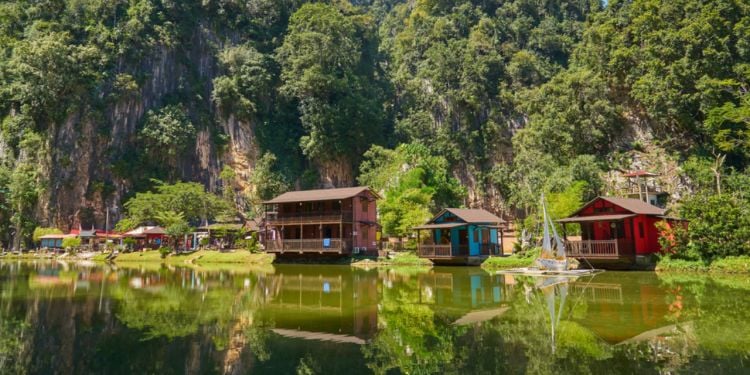
Accommodation in Ipoh
Compared to major cities in Southeast Asia, Ipoh is a more affordable choice and a dream come true for nature lovers. Ipoh is surrounded by limestone ...
Leisure, Culture, and Things to Do in Ipoh
Despite its relaxed atmosphere, Ipoh offers a wealth of cultural attractions, outdoor adventures, and culinary experiences. The city's unique geography—surrounded by ancient limestone formations—provides opportunities found nowhere else in Malaysia.
Cave Temples and Natural Wonders
Ipoh is home to nearly 30 cave temples carved into limestone hills, making it Malaysia's cave temple capital. Perak Tong Cave Temple, founded in 1926, features a magnificent 12-meter golden Buddha and over 400 steps leading to panoramic hilltop views. Sam Poh Tong, the largest cave temple in Malaysia, offers serene gardens, koi ponds, and a famous tortoise sanctuary. Kek Lok Tong (currently undergoing restoration) combines Buddhist worship with beautiful landscaped gardens. For adventure seekers, Gua Tempurung offers one of Peninsular Malaysia's longest cave systems with guided river cave tours.
Heritage and Arts
The Old Town heritage trail showcases colonial architecture including the stunning Ipoh Railway Station (nicknamed the 'Taj Mahal of Ipoh'), the Town Hall, and the Birch Memorial Clock Tower. Concubine Lane and surrounding streets feature vibrant murals and street art by local and international artists. Han Chin Pet Soo houses Malaysia's first Hakka Tin Mining Museum, offering fascinating insights into the region's history. The Darul Ridzuan Museum and Ho Yan Hor Museum provide additional cultural exploration.
Theme Parks and Recreation
The Lost World of Tambun is a major theme park featuring water attractions, a petting zoo, hot springs, and the Luminous Forest night experience. Gunung Lang Recreational Park offers lakeside relaxation with limestone cliff backdrops. For golfers, Meru Valley Golf Club and Royal Perak Golf Club provide quality courses. Bukit Kledang offers popular hiking trails with city views.
Food Scene
Ipoh's culinary reputation attracts food enthusiasts from across Malaysia. Must-try specialties include Ipoh white coffee, bean sprout chicken, Ipoh hor fun (flat rice noodles), and salted chicken. Famous establishments include Lou Wong, Thean Chun, and Sin Yoon Loong. The Ipoh Night Market offers local street food, while Kong Heng Square hosts artisan markets on weekends.
Sources: Tourism Malaysia, TripAdvisor
Daily Life in Ipoh: Transportation and Lifestyle
Life in Ipoh moves at a gentler pace than Malaysia's bustling metropolises. The city offers a comfortable, laid-back atmosphere where morning markets, leisurely coffee shop breakfasts, and evening strolls along heritage streets form the rhythm of daily life. Most errands can be accomplished without the traffic stress common in larger cities.
Getting Around Ipoh
Unlike Kuala Lumpur, Ipoh lacks a comprehensive public transit system, making private transport the most practical option. Grab (the regional equivalent of Uber) operates extensively throughout the city and is remarkably affordable—a 30-minute ride typically costs around RM 15-20 (approximately USD 3-4). Many expats choose to purchase or lease a vehicle, with second-hand cars available from around RM 25,000. Local buses connect major areas but run infrequently. For exploring Old Town and the city center, walking and cycling are pleasant options along the increasingly pedestrian-friendly streets.
Connectivity to Other Cities
The ETS (Electric Train Service) connects Ipoh to Kuala Lumpur in approximately 2.5 hours, with tickets ranging from RM 20 (Silver class) to RM 60 (Platinum Business class). Trains depart hourly from the historic Ipoh Railway Station. Sultan Azlan Shah Airport, located 6 km from the city center, offers daily flights to Singapore. Long-distance buses from Amanjaya Bus Terminal connect to destinations throughout Peninsular Malaysia.
Lifestyle and Cultural Considerations
Ipoh reflects Malaysia's multicultural society, with Malay, Chinese, and Indian communities contributing to the city's character. The majority of residents are ethnically Chinese, particularly Hakka and Cantonese, which influences the local food culture and traditions. English is widely spoken in business settings and tourist areas. Shops and restaurants typically operate from 9 AM to 9 PM, though the nightlife scene is modest—most establishments close by 10 PM. This suits those seeking a quieter lifestyle focused on daytime activities, good food, and community connection.
Sources: KTMB (Malaysian Railways), Grab
Cost of Living in Ipoh: Budgeting Your New Life
Ipoh stands out as one of Malaysia's most affordable cities, offering excellent value across housing, food, and daily expenses. The following estimates are based on a comfortable lifestyle—costs can be reduced further by embracing local markets and eateries.
Monthly Budget for a Single Person
A single professional can live comfortably in Ipoh on approximately RM 2,500 to RM 4,000 per month (USD 560-900). This includes modern accommodation, regular dining out, and leisure activities. Those on tighter budgets can manage on less by choosing more modest housing and cooking at home.
Expense Category | Monthly Cost (RM) | Approx. USD |
Rent (1-bedroom, city center) | 1,500 | 340 |
Utilities (electricity, water, internet) | 350 | 80 |
Groceries | 600 | 135 |
Dining out | 500 | 115 |
Transportation (Grab/fuel) | 300 | 70 |
Mobile phone plan | 50 | 11 |
Entertainment/leisure | 300 | 70 |
Total (Single Person) | 3,600 | 820 |
Monthly Budget for a Family of Four
Families with children should budget for larger accommodation and education costs. International school fees represent the most significant expense and vary considerably by institution.
Expense Category | Monthly Cost (RM) | Approx. USD |
Rent (3-bedroom, good area) | 2,500 | 565 |
Utilities (electricity, water, internet) | 500 | 115 |
Groceries | 1,200 | 270 |
Dining out | 800 | 180 |
Transportation | 600 | 135 |
International school (2 children, avg.) | 3,000 | 680 |
Health insurance (family) | 800 | 180 |
Entertainment/activities | 600 | 135 |
Total (Family of 4) | 10,000 | 2,260 |
Sources: Numbeo (July 2025), LivingCost.org
In Short
Ipoh offers a rare combination that few cities can match: authentic Malaysian culture, stunning natural beauty, world-famous cuisine, and an exceptionally affordable cost of living. Whether you're seeking a peaceful retirement destination, a family-friendly environment with quality schools, or simply a slower pace of life while staying connected to the wider region, this charming city delivers. The ease of reaching Kuala Lumpur in under three hours by train means you're never far from international connections, while the surrounding limestone landscapes and cave temples provide endless weekend adventures. Ipoh isn't trying to compete with Malaysia's megacities—and that's precisely its appeal. Ready to explore life in Ipoh? Connect with other expats, ask questions, and share experiences on the Expat.com Ipoh Forum.
We do our best to provide accurate and up to date information. However, if you have noticed any inaccuracies in this content, please contact us.


Essential services for your expat journey



