

Living in Tibet: the ultimate expat guide
Everything you need to know for a successful life in Tibet.
Tibet, officially the Tibet Autonomous Region (TAR) of China, offers one of the most unique living experiences on Earth. Perched at an average elevation of 4,500 meters above sea level, this remote region combines breathtaking Himalayan landscapes with a rich Buddhist cultural heritage. The capital, Lhasa, serves as the political, economic, and cultural center, home to approximately 870,000 residents. Known as the "City of Sunshine" for its 3,000+ hours of annual sunlight, Lhasa attracts those seeking spiritual fulfillment, adventure, and an extraordinary lifestyle far removed from conventional urban living.
Important Considerations for Foreigners
Living in Tibet as a foreigner presents significant challenges. The region requires special permits for entry, and long-term residency options are extremely limited. Foreigners cannot travel independently within Tibet and must be accompanied by licensed guides. Most foreign residents are employed by universities, NGOs, or travel agencies. Despite these restrictions, those who do establish themselves here find a profoundly rewarding experience immersed in Tibetan culture and natural beauty.
5 Good Reasons to Move to Tibet
- Unparalleled natural beauty – From Mount Everest to sacred lakes like Namtso, Tibet offers some of the world's most spectacular landscapes.
- Rich spiritual heritage – As the heart of Tibetan Buddhism, the region provides unique opportunities for meditation, learning, and spiritual growth.
- Low cost of living – Daily expenses in Lhasa remain significantly lower than in major Chinese cities like Beijing or Shanghai.
- Unique cultural immersion – Experience traditional festivals, monasteries, and a way of life largely unchanged for centuries.
- Growing economy – Tibet's GDP has grown at an average of 9.5% annually over the past decade, creating new opportunities in tourism, e-commerce, and services.
Working in Tibet: Employment Opportunities and Work Permits
Employment opportunities for foreigners in Tibet are limited but do exist in specific sectors. The region's economy has been growing rapidly, with GDP reaching 239.3 billion yuan (approximately USD 33.6 billion) in 2023. The service sector now accounts for 54.1% of economic output, with tourism being a major driver. However, securing legal employment requires navigating both Chinese work visa requirements and Tibet-specific regulations.
Key Employment Sectors
The most common employment opportunities for foreigners include English teaching at Tibet University or language schools, positions with international NGOs focused on development or conservation, and roles with travel agencies catering to international tourists. Some opportunities also exist in hospitality at international hotels. The tourism industry received over 23 million visitors in 2019, creating demand for multilingual staff. Tibet's growing e-commerce sector, which saw 75.4% growth in online retail sales in 2024, may also present new opportunities.
Work Visa Requirements
To work legally in Tibet, foreigners must obtain a Chinese Work Visa (Z Visa) through their employer. This requires a Foreigners Work Permit Notification Letter issued by Chinese authorities, a valid passport with at least six months validity, and relevant qualifications (typically a bachelor's degree minimum for teaching positions). After entering China, workers must convert their Z Visa to a Temporary Residence Permit. Additionally, to enter Tibet, work visa holders must obtain a Tibet Travel Permit through a licensed travel agency, providing proof of employment.
The following table summarizes key employment indicators for Tibet:
Minimum Monthly Wage (Lhasa) | CNY 1,650 (approximately USD 230) |
Average Monthly Net Salary | CNY 8,500 (approximately USD 1,190) |
Key Industries | Tourism, Services, Construction, Mining, Tibetan Medicine |
Per Capita GDP (Lhasa, 2023) | CNY 96,329 (approximately USD 13,500) |
Sources: Numbeo, MS Advisory, CEIC Data
Higher Education and Universities in Tibet
Tibet offers limited but unique higher education opportunities, primarily centered around Tibet University in Lhasa. While the region historically had few options for international students, the situation has evolved, with certain programs now accepting foreign learners, particularly in Tibetan language and cultural studies. Education is delivered in both Mandarin Chinese and Tibetan, reflecting the region's bilingual policy.
Tibet University
Tibet University (TU), established in 1985, is the region's flagship institution and a member of China's prestigious Project 211 and Double First-Class University Plan. Located in Lhasa with a secondary campus in Nyingchi, the university enrolls approximately 7,500 students. Nearly 20% of students study in the renowned Department of Tibetan Studies, which attracts both local and international students. TU began accepting foreign students in 1993, offering programs in Tibetan language (emphasizing the Lhasa dialect), Tibetan music, fine arts including traditional Thangka painting, and cultural studies. All students must pass a Tibetan language examination before graduation.
Other Institutions
Tibet has five institutions of higher learning in total. Beyond Tibet University, these include Tibet Minzu University (located in Xianyang, Shaanxi Province but under Tibetan administration), Tibet University of Traditional Tibetan Medicine in Lhasa, Tibet Vocational Technical College, and Tibet Police Officers Institute. The Tibet University of Traditional Tibetan Medicine offers specialized programs in traditional Tibetan medical practices, attracting students interested in this ancient healing system.
Admission for International Students
International students wishing to study in Tibet should note that opportunities remain limited compared to other Chinese provinces. Applications are typically submitted through the university's International Students Department. Required documents include a valid passport, academic transcripts, and proof of language proficiency (Chinese or Tibetan depending on the program). The China Scholarship Council (CSC) offers scholarships for study in China, though placement in Tibet is not guaranteed. For more information, contact Tibet University directly at Jiangsu Road No. 36, Lhasa, Tibet 850000.
Sources: Wikipedia - Tibet University, Study in China - Tibet University
Schooling for Children: Education Options in Tibet
Education for expatriate children in Tibet presents unique challenges, as the region lacks the international schools commonly found in major Chinese cities. The local education system follows China's national curriculum with Tibetan language integration. Families considering relocation should carefully evaluate schooling options and may need to consider alternatives such as boarding schools elsewhere in China or homeschooling arrangements.
Local Education System
Tibet's public education system has expanded significantly, with enrollment rates reaching 99.5% in primary school and 99.51% in middle school as of 2018. The region operates a 15-year publicly funded education system covering kindergarten through senior high school, with free meals, lodging, and tuition for local students. Primary education in rural areas is primarily conducted in Tibetan, while middle and high schools increasingly use Mandarin Chinese as the medium of instruction for subjects like mathematics, physics, and chemistry. By 2017, there were approximately 2,200 schools across Tibet serving around 663,000 students.
Options for Expatriate Families
Tibet does not have dedicated international schools offering curricula such as the International Baccalaureate, British A-Levels, or American programs. Expatriate families typically choose from the following options: enrolling children in local Chinese schools (requiring Mandarin proficiency), arranging homeschooling programs with accredited distance learning providers, or sending children to international schools in larger Chinese cities like Chengdu, Beijing, or Shanghai as boarders. Some families opt for bilingual private schools in Lhasa that offer enhanced English instruction, though these primarily serve Chinese families.
Practical Considerations
In Lhasa, there are approximately 71 primary schools, 22 middle schools, and 266 kindergartens. Private kindergarten fees average around CNY 3,000 per month, while international primary school tuition (where available) costs approximately CNY 45,000 annually. Given the altitude (3,650 meters) and the adjustment required for children, families should ensure proper acclimatization before beginning school. Most expatriate families with school-age children consider Tibet more suitable for short-term assignments rather than long-term family relocation.
Sources: Wikipedia - Education in Tibet, Numbeo, China Daily
Housing and Neighborhoods in Lhasa
Finding suitable housing in Lhasa requires patience and local connections, as the rental market is less developed than in major Chinese cities. Most expatriates live in or near central Lhasa, close to key landmarks like the Potala Palace, Jokhang Temple, and Barkhor Street. Rental prices are considerably lower than in Beijing or Shanghai, making Lhasa affordable despite its remote location. However, housing standards and amenities may differ from Western expectations.
Popular Neighborhoods
The Chengguan District is the heart of Lhasa and home to most expatriates. The area around Beijing Road offers modern apartments, hotels, and convenient access to services. The Barkhor area near Jokhang Temple provides a more traditional Tibetan atmosphere with narrow streets, local markets, and authentic character. For those seeking modern amenities, areas near major hotels like the St. Regis Lhasa Resort or Shangri-La Hotel offer higher-end residential options. Serviced apartments at Shangri-La include one-bedroom units (86 square meters) and two-bedroom deluxe units (171 square meters) with full kitchens and laundry facilities, requiring a minimum three-month lease.
Rental Prices
Lhasa offers relatively affordable housing compared to major Chinese cities. The following table provides average monthly rental prices:
1-Bedroom Apartment (City Centre) | CNY 4,400 (approximately USD 615) |
1-Bedroom Apartment (Outside Centre) | CNY 4,000 (approximately USD 560) |
3-Bedroom Apartment (City Centre) | CNY 7,200 (approximately USD 1,010) |
3-Bedroom Apartment (Outside Centre) | CNY 7,000 (approximately USD 980) |
Sources: Numbeo
Finding Accommodation
Rental properties in Lhasa are typically found through local contacts, employer assistance, or hotel referrals. Online platforms used elsewhere in China may have limited listings for Tibet. Most apartments come furnished and include basic appliances. Utilities (electricity, heating, water) average around CNY 800 per month for a standard apartment. Given the cold winters and high altitude, properties with good heating systems are essential. Many expatriates initially stay in hotels or guesthouses while searching for longer-term accommodation.
Leisure, Culture and Things to Do in Tibet
Tibet offers a wealth of cultural experiences and outdoor activities unlike anywhere else on Earth. From ancient monasteries and UNESCO World Heritage Sites to breathtaking natural landscapes, the region provides endless opportunities for exploration and spiritual discovery. The combination of Tibetan Buddhist heritage, stunning Himalayan scenery, and unique local traditions creates an unforgettable living environment.
UNESCO World Heritage Sites
Lhasa is home to three UNESCO World Heritage Sites. The Potala Palace, rising 13 storeys on Red Mountain, was the winter residence of the Dalai Lama from 1649 to 1959 and contains over 1,000 rooms filled with Buddhist art, golden stupas, and historical treasures. Tickets cost CNY 200 in peak season (May-October) and CNY 100 in low season. The Jokhang Temple, founded in the 7th century, is the spiritual heart of Tibetan Buddhism, with pilgrims prostrating around its sacred circuit daily. Norbulingka, the former summer palace of the Dalai Lama, features beautiful gardens considered the finest in Tibet and hosts the annual Shoton Festival in August.
Monasteries and Spiritual Experiences
Beyond the city center, Drepung Monastery was once the world's largest monastery, housing over 10,000 monks at its peak. Sera Monastery is famous for its daily monk debates, held between 2:30 PM and 4:00 PM—a fascinating spectacle of theological discussion involving animated gestures and hand-clapping. The Barkhor kora (pilgrimage circuit) around Jokhang Temple offers a daily opportunity to walk alongside devoted pilgrims spinning prayer wheels. For those seeking deeper spiritual experiences, meditation retreats and Buddhist teachings are available at various monasteries.
Natural Attractions and Outdoor Activities
Tibet's natural beauty is extraordinary. Namtso Lake, one of Tibet's three sacred lakes, lies about 250 kilometers from Lhasa at 4,718 meters elevation. Yamdrok Lake, approximately 70 kilometers southwest of Lhasa, displays stunning shades of turquoise blue. For the adventurous, day trips to Mount Everest Base Camp (8-day tours available) offer the chance to see the world's highest peak. Local festivals include the Shoton Festival (Yoghurt Festival) in August, featuring Tibetan opera and the unveiling of a giant thangka at Drepung Monastery, and Saga Dawa celebrating Buddha's birth, enlightenment, and death.
Sources: UNESCO World Heritage Centre, Lonely Planet
Daily Life in Lhasa: Transportation and Lifestyle
Daily life in Lhasa operates at a different pace than in most modern cities. The high altitude (3,650 meters) requires an adjustment period, and activities should be planned with acclimatization in mind. The city blends traditional Tibetan culture with modern Chinese infrastructure, offering a unique living experience. Getting around is straightforward given Lhasa's compact size, and mobile payment systems like WeChat Pay and Alipay are widely accepted.
Transportation Options
Taxis are the most convenient way to travel within Lhasa. The starting fare is CNY 10 for the first three kilometers, with CNY 2.50 for each additional kilometer. Taxi-hailing apps like Didi are also available. Public minibuses operate fixed routes for just CNY 2 per ride, though signage is primarily in Chinese and Tibetan. Key bus routes include No. 3 and 5 to Drepung Monastery, No. 4 to Sera Monastery, and No. 91 connecting the city center to the railway station. Pedicabs offer a leisurely way to explore central Lhasa at CNY 3-7 per trip. Bicycles can be rented for independent exploration, though the altitude makes cycling more strenuous.
Air and Rail Connections
Lhasa Gonggar International Airport is located approximately 60 kilometers south of the city center. Airport shuttle buses cost CNY 30-35 and take about one hour to downtown, departing every 15 minutes. Taxis cost approximately CNY 200-300. The airport connects Lhasa to major Chinese cities including Beijing, Shanghai, Chengdu, Xi'an, and Kunming, as well as international flights to Kathmandu, Nepal. The Qinghai-Tibet Railway, the world's highest railway, links Lhasa to Xining, Beijing, Shanghai, Chengdu, and other cities, offering a scenic journey across the Tibetan plateau.
Lifestyle and Practical Tips
Lhasa enjoys over 3,000 hours of sunshine annually, but UV radiation is intense at high altitude—sunscreen, sunglasses, and hats are essential. Winters are cold (-10°C to 10°C), while summers are mild (10°C to 25°C). The air quality is excellent, with Lhasa ranking among China's cleanest cities with 99.7% of days meeting good or excellent air quality standards. Daily routines should include rest periods during the first few days to prevent altitude sickness. Shopping is concentrated around Barkhor Street and modern shopping centers along Beijing Road. Supermarkets stock both local and imported goods, though variety is more limited than in larger cities.
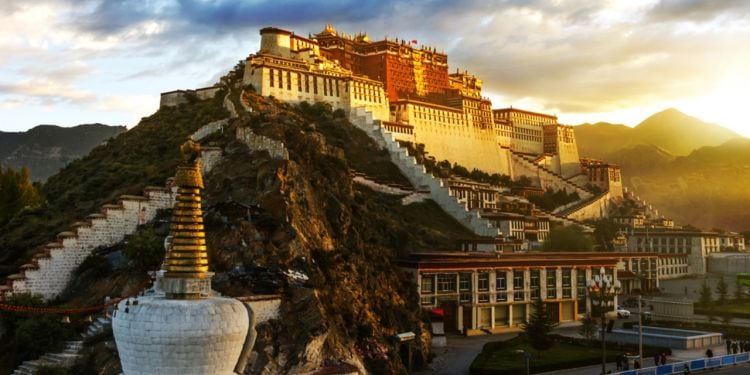
Discovering Tibet
Mysterious, spiritual and perched 4,900 meters (16,000 ft) above sea level, Tibet has been nicknamed “The Roof of the World” and attracts ...
Cost of Living in Lhasa: Budget Planning for Expats
The cost of living in Lhasa is approximately 9% lower than in Beijing, making it one of China's more affordable cities despite its remote location. However, certain imported goods and specialty items may cost more due to transportation logistics. The following estimates are based on 2024 data and should help with budgeting for a move to Tibet.
Monthly Budget for a Single Person
A single expatriate can expect the following approximate monthly expenses:
Category | Low Estimate | High Estimate |
Rent (1-bedroom, city centre) | USD 560 | USD 615 |
Utilities (electricity, heating, water) | USD 100 | USD 120 |
Groceries | USD 200 | USD 300 |
Dining Out | USD 100 | USD 200 |
Transportation | USD 30 | USD 60 |
Mobile Phone + Internet | USD 25 | USD 30 |
Health Insurance | USD 100 | USD 200 |
Total (Single Person) | USD 1,115 | USD 1,525 |
Monthly Budget for a Family of Four
Category | Low Estimate | High Estimate |
Rent (3-bedroom, city centre) | USD 980 | USD 1,100 |
Utilities | USD 150 | USD 200 |
Groceries | USD 400 | USD 550 |
Dining Out | USD 150 | USD 300 |
Transportation | USD 50 | USD 100 |
School Fees (Private Kindergarten x2) | USD 840 | USD 1,000 |
Mobile Phone + Internet | USD 25 | USD 30 |
Health Insurance (Family) | USD 300 | USD 500 |
Total (Family of Four) | USD 2,895 | USD 3,780 |
Sources: Numbeo, LivingCost.org
In Short
Tibet offers one of the world's most extraordinary expatriate experiences, combining spiritual depth, natural grandeur, and cultural richness found nowhere else. While living in the Tibet Autonomous Region presents unique challenges—including permit requirements, limited employment options, and the demands of high-altitude life—those who make the journey discover a profoundly rewarding lifestyle. Lhasa provides affordable living costs, excellent air quality, and daily immersion in one of humanity's most distinctive cultures. Whether you're drawn by the majestic Potala Palace, the sacred monasteries, or the call of the Himalayas, Tibet rewards the adventurous spirit with experiences that last a lifetime. Ready to explore life at the Roof of the World? Connect with fellow expatriates, share your questions, and get practical advice on the Tibet forum on Expat.com.
We do our best to provide accurate and up to date information. However, if you have noticed any inaccuracies in this content, please contact us.


Essential services for your expat journey



