If you are a tea aficionado in Thailand, fear not, as it turns out Thailand has a unique tea culture — from Bangkok to Chiang Mai, there is no shortage of places and types of tea to experience. As the adoration of tea is spreading worldwide, popular culture has come to embrace teas such as the matcha green tea and the Taiwanese speciality bubble tea-based beverage. John, an American expat in Thailand, guides us through Thailand's tea culture and gives us tips on where to find the finest teas in the country.
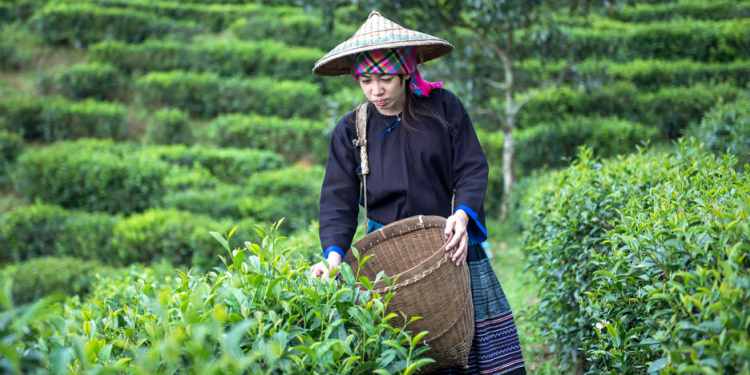
The main category of tea made in Thailand is lightly oxidised rolled oolong, a tea style common in Taiwan. These are produced mainly from two separate plants that are cultivars/hybrids from Taiwan — the Jin Xuan (#12) and Bai Lu (#17). The tea is produced in the north, with most oolong growing near Doi Mae Salon, an area outside of Chiang Rai.
Ready to drink (bottled tea) is popular, with most styles originating from Japanese influence, so mainly based on green teas. Bubble tea (flavoured black tea with milk) is also popular — a trend imported from Taiwan. The traditional Thai tea is a reddish coloured sweetened and flavoured milk tea, often made from black tea powder. Other versions are made from loose black tea with sweetened condensed milk added.
Already you can distinguish a reference to three of the main categories of tea: black, green, and oolong. These categories are mostly defined by the degree of oxidation in processing. Black tea, for example, is fully oxidised, green tea is at the other end of the spectrum, least oxidised, and oolong spans the middle range. There are also other main types, such as white and pu'er, or hei cha, which is typically compressed tea.
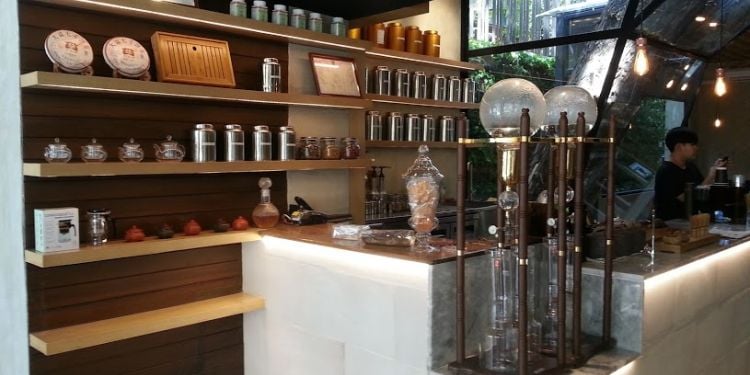
You will find teas in Thailand in small shops, in the malls, or in stores in Chinatown. There are also tea-themed cafés for those who are looking for a bit of ambience as well. It's advisable never to buy tea sold from open-air bins, and avoid large jar-stored teas, since air exposure removes the flavour and aroma. However, keep in mind that rolled oolongs might endure poor storage better than teas that are more sensitive to air contact, like versions of green teas. Chinatown shops will sometimes keep Longjing — a popular Chinese green tea type — in a separate refrigerated location.
Local shops are a good alternative for browsing, tasting, and learning more about the different types by talking to vendors in person. Grocery stores do sell tea, but it's best to avoid buying any teas there since much better quality options in the same cost range can be found elsewhere.
An outlet at the Chiang Mai airport sells Thai-produced teas, along with a Royal Project shop that sells Thai oolongs. Monsoon Teas is a café specialising in selling “wild” local teas, flavoured teas, and blends, with some plain tea types available. Tea Village in Pattaya sells online, and it's a nice shop for basic or mid-level teas.
Royal Project stores (located throughout Thailand, not just in Bangkok) are a good resource for buying ordinary grades of Thai oolong , which are great options for someone new to tea. Small booths sell tea in grocery store complexes, with more extensive stores in some malls (for example, there are two shops in the Paradise Park mall). Ong's in the Paragon Mall is a higher profile option, focused on more traditional types and the upper grade range, so it comes as no surprise that it's a bit expensive.Tea Dee Zhang in the Thanya Park mall is one of the best standard shops in Bangkok, for the variety available, located on Srinakarin road. This shop specialises in and sources their own pu'er brand (a Chinese type of compressed tea).
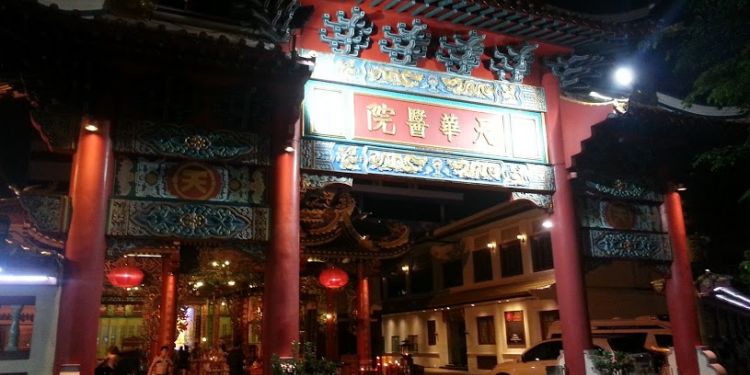
Jip Eu is my favourite Bangkok Chinatown shop. It specialises in Wuyi Yancha (Wuyishan, Fujian roasted oolongs), but they do sell Anxi area Tie Kuan Yin (Chinese light rolled oolong) and Dan Cong (another oolong). There are many other shops in Chinatown; Sen Xing Fa has a broad selection, including Chinese types, Thai teas, pu'er, and compressed white teas.
Teeta Talk Tae Tea outlet in the Belle Condominiums sells factory pu'er (Tae Tea/Menghai Dayi) and compressed white tea, shou mei.Other factory pu'er/Tae Tea outlets are located beside the Don Meuang airport and in IT Square Laksi, with some pu'er available in the Central Embassy speciality grocery store.
Double Dogs is the main Chinatown café, with a broad selection of dry loose tea. The quality of the loose teas is above average, but the relative cost is also well above online pricing levels. Luka Café and Ceylon carrier (Sri Lankan tea) in Sathorn are a higher end since Chinese teas get more focus in this area. Seven Suns isan Ekamai café that sells standard range Mei Leaf vendor teas, and cold blended teas. Another café in Ekamai isPeace Oriental, which focuses on specialty, higher-end teas, including matcha; it is one of the costliest places to buy tea in Bangkok. Matcha booths are turning up in lots of places, with better matcha versions harder to find. However, Japanese grocery stores like Fuji could work as a starting point for both. Peony is a chain of cafés and loose tea stores, including one in the Silom Complex. They sell inexpensive mid-range plain teas and blends — options best suited for those newer to tea.
Great article! I've been many times in Double Dogs and Peace Oriental. But if you go out of Bangkok there are almost no shops. There is one in Pattaya, it called Tea Village. There you also can stop by and drink some teas So it's really difficult to try to find some nice teas in Thailand because locals don't drink teas like that.