Living in Canberra: the ultimate expat guide
Everything you need to know for a successful life in Canberra.
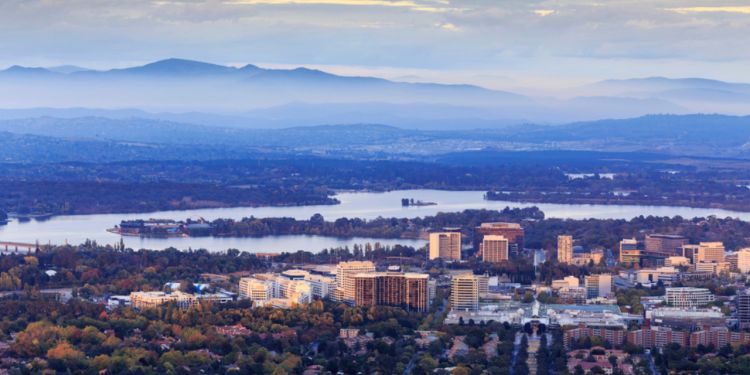
Canberra is Australia's national capital and the country's largest inland city, home to approximately 482,000 residents. Nestled between the Brindabella Ranges and surrounded by native bushland, Canberra offers a unique blend of political significance, cultural richness, and natural beauty. The city was purpose-built in the early 20th century following a design competition won by American architects Walter and Marion Griffin, resulting in a thoughtfully planned urban environment with wide boulevards, green spaces, and the iconic Lake Burley Griffin at its heart.
A City of Opportunity
Unlike Australia's coastal metropolises, Canberra provides a distinct lifestyle characterised by low unemployment, high average incomes, and exceptional access to national institutions. The city consistently ranks among Australia's most liveable cities, offering residents proximity to world-class museums, galleries, and educational institutions while maintaining a relaxed pace of life. The population is highly educated, with 49% of residents holding a bachelor's degree or higher, the highest proportion in Australia.
5 Good Reasons to Move to Canberra
- Strong job market – With an unemployment rate of just 3%, Canberra offers excellent employment opportunities, particularly in the public sector, technology, and professional services.
- High earning potential – Canberra residents earn significantly above the national average, with median weekly incomes around AUD 917 compared to the national average of AUD 577.
- Quality education – Home to the Australian National University, ranked among the world's top 30, and over 130 schools including international options.
- Safe and family-friendly – Low crime rates and excellent healthcare make Canberra ideal for families and professionals alike.
- Nature at your doorstep – Enjoy hiking, skiing (within 2 hours), and coastal escapes (under 2 hours to beaches) while living in a modern city.
Working in Canberra: Career Opportunities in the Capital
Canberra's economy is anchored by the Australian Public Service (APS), which employs approximately 40% of the workforce. This provides exceptional stability, with the city consistently recording Australia's lowest unemployment rates. However, the private sector has grown significantly in recent years, particularly in technology, defence, higher education, and professional services.
Key Industries and Employment Sectors
The dominant sectors include public administration and safety (25.9% of gross value added), healthcare and social assistance (11%), and professional, scientific and technical services (8.7%). The technology sector has experienced remarkable growth, supported by government initiatives like the Canberra Innovation Network. Defence-related industries also contribute substantially, with several major contractors operating in the region. Education services, driven by international student enrollment, generate over AUD 750 million annually to the local economy.
Work Permits and Visa Requirements
Skilled professionals seeking to work in Australia can apply through the General Skilled Migration program. The main visa pathways include the Subclass 189 Skilled Independent visa (permanent residency without sponsorship), the Subclass 190 Skilled Nominated visa (requiring state nomination), and the Subclass 491 Skilled Work Regional visa (for regional areas). Applicants must score at least 65 points on the points-based assessment, though competitive rounds often require 80+ points. All applicants need a positive skills assessment from a relevant authority and must demonstrate English language proficiency.
The following table summarises key employment indicators in Canberra:
Unemployment rate | 3.0% (June 2025) |
Average weekly earnings | AUD 917 |
Workforce participation rate | 72% (vs. 66.8% nationally) |
Top employing sector | Public administration (30%+) |
Sources: Australian Bureau of Statistics, economy.id
Higher Education in Canberra: World-Class Universities
Canberra is home to some of Australia's most prestigious higher education institutions. The city's academic landscape attracts over 17,000 international students annually, contributing significantly to the multicultural character of the capital. Both major universities offer strong research programs and maintain close ties with government and industry.
Australian National University (ANU)
The Australian National University is Australia's top-ranked institution and consistently places among the world's top 30 universities. Established in 1946 by the Australian Parliament, ANU is the only university created by federal legislation. The university excels in fields including politics, international relations, law, science, and engineering. With over 17,300 students, including 6,500+ international students from 100+ countries, ANU offers a truly global academic environment. International tuition fees range from AUD 43,000 to AUD 53,000 per year depending on the program. Admission is competitive, with an acceptance rate of approximately 35%. English language requirements include IELTS 6.5-7.0 or equivalent.
University of Canberra (UC)
The University of Canberra is ranked in the top 9% of young universities globally and offers 127 programs across diverse disciplines. UC is particularly strong in health sciences, education, and design. The university maintains an excellent reputation for graduate employment outcomes. International tuition fees range from AUD 26,800 to AUD 38,700 for undergraduate programs and AUD 25,000 to AUD 59,250 for postgraduate studies. The campus is located in the suburb of Bruce, approximately 10 kilometres from the city centre.
Vocational Education
For technical and vocational training, the Canberra Institute of Technology (CIT) serves over 28,000 students across five campuses. CIT offers certificates and diplomas in trades, hospitality, business, and IT.
Sources: Australian National University, University of Canberra
Schools for Expat Children: Education Options in Canberra
Canberra offers a comprehensive education system with 132 schools, including 87 government-operated and 45 private institutions. The ACT education system consistently produces strong academic results, with many international students achieving ATAR scores of 90 or above. The Australian Capital Territory has its own curriculum structure, with primary school (K-6), high school (years 7-10), and college (years 11-12).
Public Schools
ACT public schools are tuition-free for Australian residents and welcome international students on student visas. International student fees for public schools are AUD 16,200 per year for college (years 11-12). Schools are assigned based on Priority Enrolment Areas (PEA), determined by your residential address. The International Education Unit manages enrollment for overseas students. Several public schools offer the International Baccalaureate (IB) program, including Forrest Primary School, North Ainslie Primary School, and Gold Creek School.
Private and International Schools
Canberra has excellent private school options for expat families. Canberra Grammar School is a leading independent Anglican school offering co-education from pre-school to Year 12, with tuition fees ranging from AUD 25,750 to AUD 32,600 annually. The school offers both the NSW Higher School Certificate and IB Diploma Programme. Canberra Girls Grammar School provides education from Year 3 to Year 12 with fees from AUD 37,500 to AUD 47,200 per year. Both schools offer boarding facilities for students from regional areas or overseas.
Enrollment Process
For international students on subclass 500 student visas, applications must be processed through a registered education agent. Students must hold valid visas before enrollment is confirmed. The academic year runs from late January to mid-December, divided into four terms.
Housing and Neighbourhoods: Finding Your Home in Canberra
Canberra's housing market offers diverse options across well-planned suburbs and districts. The city is organised into distinct areas, each with its own character, from the inner-city precincts of Braddon and New Acton to family-friendly suburbs in Belconnen and Gungahlin. The rental market remains tight, with vacancy rates around 1.6% to 2.5%, so starting your housing search early is advisable.
Popular Neighbourhoods for Expats
Inner North (Braddon, Dickson, Turner) – Trendy areas with cafés, restaurants, and proximity to the city centre. Popular with young professionals. Inner South (Kingston, Manuka, Griffith) – Established suburbs near embassies and national institutions, ideal for diplomatic staff and families. These areas have higher rents but excellent amenities. Belconnen – A large district in Canberra's north offering affordable housing, shopping centres, and access to Lake Ginninderra. Median rent is approximately AUD 645 per week. Gungahlin – A newer, rapidly growing area in the north with modern housing, good schools, and light rail access. Woden and Weston Creek – Established suburbs in the south with good schools and community facilities.
Rental Costs
The Canberra rental market has stabilised recently, though rents remain among Australia's highest. The following table provides current median weekly rents:
Median rent (all dwellings) | AUD 693/week |
Median house rent | AUD 721/week |
Median unit/apartment rent | AUD 588/week |
Median house price (purchase) | AUD 1,020,000 |
Sources: CoreLogic, SQM Research
Accommodation in Canberra
Canberra is the capital city of Australia and the heart of Australian politics. Construction began on this purpose-built capital in 1913, with almost ...
Leisure, Culture and Things to Do in Canberra
Despite its reputation as a government town, Canberra offers a rich cultural scene with world-class museums, vibrant festivals, and outstanding outdoor recreation. The city is home to Australia's national institutions, providing free access to collections that rival any major city. The wine region, bushwalking trails, and proximity to ski fields add to the recreational appeal.
Museums and Cultural Attractions
The Australian War Memorial is one of the world's finest military museums, combining a shrine, museum, and archive honouring those who served. The National Gallery of Australia houses over 160,000 artworks, including the world's largest collection of Aboriginal and Torres Strait Islander art. Parliament House offers daily tours of Australia's seat of government. The National Museum of Australia showcases Indigenous culture and Australian history, while Questacon is an interactive science centre perfect for families. Most national institutions offer free admission.
Festivals and Events
Canberra's event calendar includes Floriade (September-October), Australia's largest flower festival with over one million blooms. Enlighten Festival (late February-March) transforms national buildings with architectural light projections. The National Multicultural Festival (February) celebrates 170+ nationalities with food, music, and performances. The National Folk Festival at Easter attracts music lovers from across Australia.
Outdoor Recreation
Lake Burley Griffin offers kayaking, paddleboarding, and cycling around its 28-kilometre shoreline. Mount Ainslie and Black Mountain provide popular hiking trails with panoramic city views. Tidbinbilla Nature Reserve offers wildlife encounters and bushwalking just 40 minutes from the city. In winter, ski fields at Thredbo and Perisher are under two hours away. The surrounding wine region includes cellar doors in districts like Murrumbateman and Hall.
Sources: VisitCanberra
Daily Life in Canberra: What to Expect
Life in Canberra moves at a gentler pace than Sydney or Melbourne, though the city offers modern conveniences and a high quality of life. The compact layout means most destinations are reachable within 20-30 minutes by car. With four distinct seasons, including cold winters and warm summers, residents enjoy varied outdoor activities year-round.
Getting Around
Canberra is a car-oriented city, though public transport has improved significantly with the introduction of light rail connecting Gungahlin to the city centre. Transport Canberra operates buses across all districts. A single adult fare costs AUD 6.38 on weekdays and AUD 3.91 on weekends. Concession fares are available for students, seniors, and pensioners at AUD 1.45 on weekends. Many residents cycle, with an extensive network of dedicated bike paths. Ride-sharing services including Uber operate throughout the city. Taxis are available via Canberra Elite and other operators.
Lifestyle and Culture
Canberrans embrace the outdoors, with hiking, cycling, and watersports on Lake Burley Griffin popular weekend activities. The city has a thriving café culture, particularly in Braddon and New Acton, and award-winning restaurants. The wine region surrounding Canberra includes 140 vineyards and 50+ cellar doors within 35 minutes of the city. Weekend farmers' markets are a local institution. The community is diverse, with 28.7% of residents born overseas and significant populations from China, England, India, and New Zealand.
Climate
Canberra has a continental climate with warm to hot summers (December-February) reaching 25-35°C and cold winters (June-August) dropping to 0-12°C, often with frost. Spring brings spectacular blooms during the Floriade festival, while autumn features stunning colours across the city's many deciduous trees.
Cost of Living in Canberra: Monthly Budget Guide
Canberra ranks among Australia's more expensive cities, though higher average incomes often offset living costs. Monthly expenses vary significantly based on lifestyle, housing choices, and family size. The tables below provide realistic budget estimates for newcomers based on current prices.
Monthly Budget: Single Person
A single professional can expect the following approximate monthly expenses:
Expense | Monthly Cost (AUD) | Notes |
Rent (1-bedroom apartment) | 2,350 – 2,550 | City centre vs outer suburbs |
Utilities | 180 – 250 | Electricity, gas, water |
Groceries | 400 – 550 | Woolworths, Coles, Aldi |
Transport | 100 – 200 | Public transport or fuel |
Mobile + Internet | 120 – 150 | 60+ Mbps internet |
Total (excl. leisure) | 3,150 – 3,700 |
Monthly Budget: Family of Four
A family with two children will require a higher budget:
Expense | Monthly Cost (AUD) | Notes |
Rent (3-bedroom house) | 2,800 – 3,500 | Varies by suburb |
Utilities | 280 – 380 | Higher for larger homes |
Groceries | 900 – 1,200 | Family of 4 |
Transport (2 cars) | 400 – 600 | Fuel, registration, insurance |
Private school fees (2 children) | 4,000 – 7,000 | Varies by school/grade |
Health insurance (family) | 400 – 600 | Private hospital + extras |
Total | 8,780 – 13,280 |
Sources: Numbeo, Australian Bureau of Statistics
In Short
Canberra offers a compelling lifestyle for those seeking career opportunities, quality education, and a balanced way of life. With Australia's lowest unemployment, highest average incomes, and world-class universities, the capital provides an ideal environment for professionals and families. The city's planned layout ensures excellent amenities across all suburbs, while its compact size means everything is within easy reach. Nature lovers will appreciate the surrounding bushland, wineries, and proximity to both ski fields and beaches. Newcomers quickly discover that Canberra punches well above its weight in dining, culture, and community spirit. Ready to make the move? Connect with others who have made the journey on the Expat.com Canberra forum, where you can ask questions, share experiences, and find support from the expat community.
We do our best to provide accurate and up to date information. However, if you have noticed any inaccuracies in this content, please contact us.


Essential services for your expat journey