

Living in Ottawa: the ultimate expat guide
Everything you need to know for a successful life in Ottawa.
Ottawa, the capital of Canada, is a bilingual city of over 1.1 million residents located along the scenic Ottawa River in eastern Ontario. As the nation's political heart, the city blends historic grandeur with modern amenities, offering a unique mix of government institutions, world-class museums, and natural beauty. The Rideau Canal, a UNESCO World Heritage Site, winds through the city center, transforming into the world's largest skating rink each winter. Ottawa's diverse population, representing over 60 nationalities, creates a welcoming environment for newcomers seeking a high quality of life at a more affordable cost than Toronto or Vancouver.
5 Good Reasons to Move to Ottawa
- Stable job market — The federal government and thriving tech sector provide consistent employment opportunities with competitive salaries.
- Lower cost of living — Housing and daily expenses are approximately 20% lower than Toronto while maintaining excellent services.
- Bilingual culture — Nearly 45% of residents speak both English and French, offering unique cultural and career advantages.
- Excellent education — Home to two major universities and quality public and private schools at all levels.
- Four-season outdoor lifestyle — Over 850 km of cycling paths, ski resorts nearby, and abundant green spaces provide year-round recreation.
Working in Ottawa: Opportunities in Government and Tech
Ottawa's economy is anchored by two major pillars: the federal government and a dynamic technology sector. As Canada's capital, the city hosts numerous federal departments and agencies, providing stable employment for thousands of workers. Beyond government, Ottawa has earned the nickname "Silicon Valley North" with over 1,700 tech companies calling the region home, including global giants like Shopify, Nokia, and Adobe Systems.
Key Industries and Employers
The Kanata North Technology Park is Canada's largest tech hub, home to more than 540 companies employing over 33,000 workers and contributing approximately $13 billion annually to Canada's GDP. Major employers include Nokia, Ciena, Ericsson, and Shopify. The healthcare sector employs over 18,000 people across institutions like The Ottawa Hospital, CHEO, and the University of Ottawa Heart Institute. Tourism supports approximately 30,600 jobs, generating over $2.2 billion in annual revenue.
Work Permits and Employment
Foreign nationals typically need a work permit to work in Canada. The most common pathways include employer-specific permits backed by a Labour Market Impact Assessment (LMIA) or open work permits for eligible applicants such as spouses of skilled workers or post-graduation work permit holders. Processing times typically range from 60 to 120 days. The Express Entry system and Provincial Nominee Program (PNP) offer pathways to permanent residency for skilled workers.
The following table summarizes Ottawa's current employment indicators:
Unemployment Rate (Ottawa-Gatineau) | 7.2% (October 2025) |
Average Annual Salary | CAD 65,000 – CAD 74,000 |
Top Sectors | Government, Technology, Healthcare, Tourism |
Sources: Ontario Government Labour Market Report, Job Bank Canada
Higher Education and Universities in Ottawa
Ottawa is home to two major research universities and several colleges that attract students from around the world. The city's bilingual environment offers unique opportunities for academic programs in both English and French, with many institutions providing pathways to post-graduation work permits and permanent residency.
University of Ottawa
The University of Ottawa (uOttawa) is the world's largest bilingual university, offering programs in both English and French. With over 45,000 students, uOttawa excels in law, medicine, engineering, and social sciences. International undergraduate tuition fees range from approximately CAD 36,000 to CAD 55,000 per year depending on the program. The university offers a Differential Tuition Fee Exemption Scholarship for international Francophone students and an International Doctoral Scholarship valued at CAD 45,000 over five years. For detailed tuition information, visit uOttawa International Tuition.
Carleton University
Carleton University enrolls approximately 30,000 students, including over 4,200 international students. Known for engineering, journalism, public affairs, and international business, Carleton offers extensive co-op programs with employers like Microsoft, IBM, Amazon, and Shopify. International undergraduate tuition averages CAD 35,000 to CAD 40,000 annually. Graduate students have access to research funding and teaching assistantships. The university's riverside campus provides modern facilities and strong career support services. For admissions information, visit Carleton Admissions.
Algonquin College
Algonquin College offers career-focused diplomas and certificates in fields including animation, business, health sciences, and technology. With strong industry connections and practical training programs, graduates enjoy high employment rates. International tuition ranges from CAD 15,000 to CAD 20,000 per year depending on the program.
Sources: University of Ottawa, Carleton University
Study in Ottawa
Ottawa isn't among Canada's biggest cities like its neighbors Toronto and Vancouver. However, it has been recognized as the 46th best student ...
Schools for Children: Public and International Options
Ottawa provides excellent educational options for families with children. The city operates four public school boards offering instruction in English and French, alongside private and international schools following various curricula. Competition for places in top schools can be fierce, so early application is recommended.
Public Schools
The Ottawa-Carleton District School Board (OCDSB) is the largest board, serving over 70,000 students across 147 schools. The Ottawa Catholic School Board operates 85 schools with faith-based education. French-language options include the Conseil des écoles publiques de l'Est de l'Ontario and Conseil des écoles catholiques du Centre-Est. Public education is free for Canadian citizens and permanent residents. International students pay approximately CAD 14,500 to CAD 16,000 per year through the OCDSB International Education Program.
International and Private Schools
Ashbury College is a prestigious co-educational day and boarding school in Rockcliffe Park offering the International Baccalaureate (IB) Diploma. With students from over 60 countries, it provides a truly international environment. Day tuition ranges from approximately CAD 30,000 to CAD 38,000 annually, while boarding fees total around CAD 69,000. Elmwood School is an all-girls school offering the complete IB continuum from preschool through Grade 12, making it the only school in Ottawa with all three IB program levels. Tuition ranges from CAD 20,000 to CAD 30,000 depending on grade level. Lycée Claudel follows the French national curriculum and prepares students for the French Baccalaureate, ideal for families seeking continuity with European education systems.
Several public schools also offer the IB Programme, including schools within the OCDSB network, providing globally recognized education at no cost for residents.
Sources: OCDSB, Ashbury College, Elmwood School
Housing and Neighborhoods: Where to Live in Ottawa
Ottawa offers diverse housing options from downtown condos to suburban family homes. Rental prices are notably lower than Toronto, with the average rent around CAD 2,190 per month as of late 2025. Understanding the city's neighborhoods helps newcomers find the right fit for their lifestyle and budget.
Popular Neighborhoods for Newcomers
Centretown sits in the heart of Ottawa, offering walkable access to Parliament Hill, restaurants, and cultural venues. Primarily condos and apartments, rentals range from CAD 1,600 to CAD 2,500 monthly. The Glebe is a charming residential area with tree-lined streets, boutique shops on Bank Street, and proximity to the Rideau Canal. Popular with young professionals and families, expect rents from CAD 1,800 to CAD 2,600. Westboro offers a trendy, village-like atmosphere along the Ottawa River with excellent cycling paths, restaurants, and boutiques. Family-friendly with good schools, rents range from CAD 1,900 to CAD 2,800. Kanata is the tech hub suburb, ideal for those working in the technology sector. More affordable with detached homes and townhouses, average rents are CAD 2,000 to CAD 2,500 for family-sized units.
Rental Prices Overview
The following table shows average monthly rents in Ottawa:
1-Bedroom Apartment | CAD 1,800 – CAD 2,000 |
2-Bedroom Apartment | CAD 2,300 – CAD 2,600 |
3-Bedroom Townhouse | CAD 2,500 – CAD 3,200 |
Rental agreements typically require first and last month's rent as deposit. Credit checks and references are standard. Newcomers without Canadian credit history may need to provide additional documentation or pay several months upfront.
Sources: Nesto Ottawa Housing Report, Numbeo
Leisure, Culture and Things to Do in Ottawa
As Canada's capital, Ottawa offers an exceptional array of cultural institutions, outdoor activities, and entertainment options. Most national museums offer free admission on Thursday evenings, and many attractions are within walking distance of downtown.
Museums and Cultural Attractions
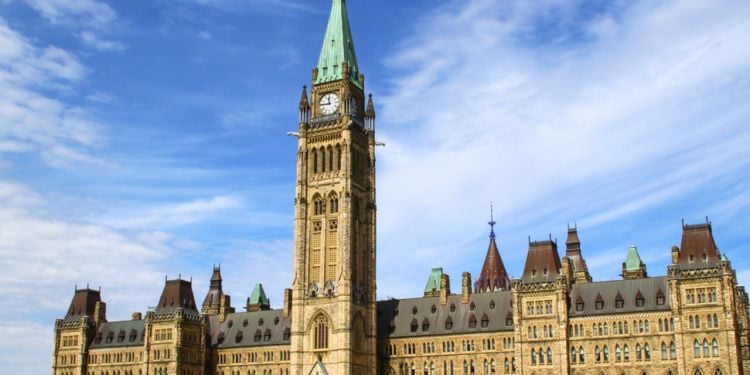
Parliament Hill is the iconic centerpiece of Ottawa, featuring stunning Gothic Revival architecture and the Peace Tower. Free guided tours are available, and summer brings the daily Changing of the Guard ceremony and evening Sound and Light Show. The National Gallery of Canada houses an impressive collection of Canadian, Indigenous, and international art, including works by the Group of Seven. The Canadian Museum of History, located across the river in Gatineau, is Canada's most-visited museum with over 1.2 million annual visitors, featuring exhibits spanning 20,000 years of history. Other notable museums include the Canadian War Museum, Canada Aviation and Space Museum, and Canadian Museum of Nature.
Outdoor Activities and Recreation
The Rideau Canal, a 202 km UNESCO World Heritage Site, offers boating and cycling in summer and transforms into the world's largest skating rink (7.8 km) each winter during Winterlude. Gatineau Park provides 361 km² of wilderness just minutes from downtown, with hiking, swimming, and cross-country skiing. The ByWard Market neighborhood buzzes with farmers' markets, restaurants, bars, and boutiques—a must-visit for dining and nightlife. The National Arts Centre hosts world-class performances in music, dance, and theater. Ottawa's culinary scene has gained recognition, with several restaurants featured on Canada's 100 Best Restaurants lists for 2024 and 2025.
Sources: Ottawa Tourism, Destination Canada
Daily Life in Ottawa: Getting Around and Living Well
Ottawa offers a comfortable, safe lifestyle with excellent public services and a strong sense of community. The city's bilingual character means services are available in both English and French. Four distinct seasons bring varied activities, from summer festivals to winter skating on the Rideau Canal.
Public Transportation
OC Transpo operates Ottawa's public transit network, including buses and the O-Train light rail system. The Confederation Line connects the east and west ends of the city through downtown. A single adult fare is CAD 4.00, while a monthly pass costs CAD 135 (2025 prices). Senior passes cost CAD 78.50 monthly, and reduced-fare options like the EquiPass (CAD 58.25) are available for low-income residents. The PRESTO card is the electronic payment system used across the network. Many employers and universities offer discounted transit passes. Cycling is popular, with over 850 km of pathways throughout the city. The O-Train continues to expand, improving connectivity across the region.
Lifestyle and Culture
Ottawa enjoys a high quality of life with short average commute times compared to larger Canadian cities. The city hosts numerous festivals throughout the year, including Winterlude in February, the Canadian Tulip Festival in May, and RBC Bluesfest in summer. Outdoor enthusiasts benefit from Gatineau Park's hiking and skiing trails just 15 minutes from downtown. The ByWard Market, operating since 1826, offers fresh produce, restaurants, and nightlife year-round. Healthcare is accessible through the provincial OHIP system for permanent residents, while newcomers should arrange private health insurance during the initial waiting period.
Sources: OC Transpo Fares, Ottawa Tourism
Cost of Living in Ottawa: Budget Planning Guide
Ottawa offers a more affordable cost of living than Toronto while maintaining excellent services and quality of life. The Harmonized Sales Tax (HST) of 13% applies to most purchases in Ontario. Basic groceries like dairy, eggs, vegetables, and meat are tax-exempt. Planning a realistic budget helps newcomers transition smoothly.
Monthly Budget for a Single Person
The following table outlines typical monthly expenses for a single person renting in Ottawa:
Expense Category | Monthly Cost (CAD) |
Rent (1-bedroom apartment) | 1,800 – 2,000 |
Utilities (electricity, heating, water) | 180 – 240 |
Groceries | 400 – 500 |
Public Transit (monthly pass) | 135 |
Internet & Mobile Phone | 100 – 150 |
Health Insurance (private, if applicable) | 100 – 200 |
Total (Single Person) | 2,715 – 3,225 |
Monthly Budget for a Family of Four
Expense Category | Monthly Cost (CAD) |
Rent (3-bedroom apartment/townhouse) | 2,500 – 3,200 |
Utilities | 250 – 350 |
Groceries | 1,000 – 1,300 |
Transportation (2 monthly passes) | 270 |
Private School Fees (if applicable) | 1,500 – 3,000 |
Health Insurance (family) | 300 – 500 |
Internet, Mobile & Miscellaneous | 200 – 300 |
Total (Family of Four) | 6,020 – 8,920 |
Sources: Numbeo Ottawa, OC Transpo
In Short
Ottawa combines the opportunities of a capital city with the warmth of a welcoming community. With stable government employment, a thriving tech sector, and lower living costs than Toronto, the city offers excellent career prospects alongside a high quality of life. The bilingual environment enriches daily life, while world-class museums, the beautiful Rideau Canal, and abundant green spaces provide endless opportunities for exploration and recreation. Whether you're drawn by professional opportunities, educational excellence, or a family-friendly lifestyle, Ottawa delivers on its promise as one of Canada's most livable cities. Connect with other newcomers and long-term residents on the Expat.com Ottawa forum to share experiences, ask questions, and build your network in Canada's capital.
We do our best to provide accurate and up to date information. However, if you have noticed any inaccuracies in this content, please contact us.


Essential services for your expat journey