Living in Düsseldorf: the ultimate expat guide
Everything you need to know for a successful life in Düsseldorf.
Düsseldorf, the capital of North Rhine-Westphalia, is one of Germany's most dynamic and cosmopolitan cities. Situated on the banks of the Rhine River, this city of 640,000 residents seamlessly blends business prowess with cultural richness. Known as "Little Paris" for its fashion industry and elegant shopping districts, Düsseldorf offers expats a high quality of life with excellent infrastructure, a thriving international community, and easy access to the rest of Europe.
A City of Contrasts
From the historic charm of the Altstadt (Old Town) to the cutting-edge architecture of the MedienHafen, Düsseldorf presents a fascinating mix of old and new. The city ranks among Germany's wealthiest, yet maintains a welcoming atmosphere with a strong sense of community. With over 5,000 foreign companies calling Düsseldorf home, including a significant Japanese presence, the city has developed into a truly international hub.
5 Good Reasons to Move to Düsseldorf
- Strong job market: Home to major corporations in telecommunications, fashion, advertising, and finance, with competitive salaries and low unemployment.
- International community: One in seven companies has an international background, and the city hosts the third-largest Japanese community in Europe.
- Central location: Germany's fourth-largest airport, excellent rail connections, and proximity to Cologne, Amsterdam, and Brussels.
- High quality of life: Green parks, Rhine promenades, world-class museums, and one of Germany's best nightlife scenes.
- Family-friendly: Excellent international schools, safe neighborhoods, and abundant recreational options.
Working in Düsseldorf: Career Opportunities in Germany's Business Hub
Düsseldorf's economy thrives on diversity, making it an attractive destination for skilled professionals from around the world. The city serves as headquarters for major German and international corporations, and its strategic location in the heart of Europe provides access to markets serving 30% of the EU's population within 500 kilometers.
Key Industries and Employers
The city's economic backbone spans several sectors. Telecommunications and IT is particularly strong, with companies like Vodafone, Huawei, and Ericsson maintaining significant operations. The fashion and advertising industries employ thousands, with over 400 advertising agencies and 200 publishing houses based here. Major employers include E.ON, Henkel, Metro, ERGO Insurance, and Rheinmetall. The Messe Düsseldorf trade fair center hosts over 50 international events annually, generating substantial economic activity.
Work Permits and Visas
Non-EU professionals typically require a work visa or EU Blue Card. The Blue Card requires a job offer with a minimum gross annual salary of €48,300 (or €43,759.80 for shortage occupations like IT, engineering, and healthcare). The new Opportunity Card (Chancenkarte), introduced in 2024, allows skilled workers to enter Germany for up to 12 months to seek employment without a prior job offer.
The following table provides key employment indicators for Düsseldorf:
Average gross annual salary | €54,478 |
Average net monthly salary | €2,827 |
Unemployment rate (Germany) | 6.0% |
Minimum wage (hourly) | €12.41 |
Sources: Federal Employment Agency, Make it in Germany
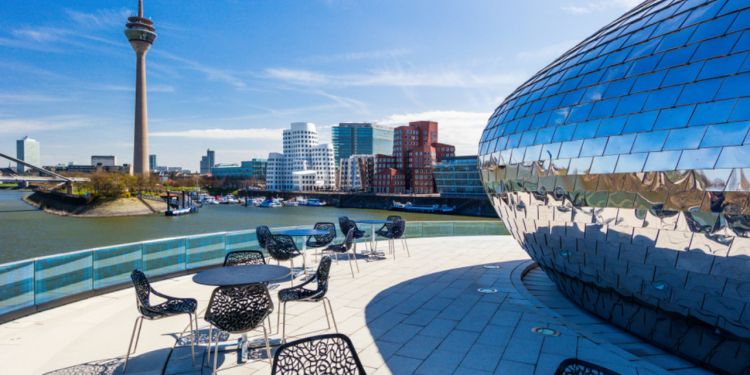
Working in Düsseldorf
As the capital city of North Rhine-Westphalia state (which borders Belgium and the Netherlands to the West), Düsseldorf is one of Germany's ...
Higher Education in Düsseldorf: Universities and International Programs
Düsseldorf offers excellent opportunities for higher education, with several universities and over 20 institutions providing diverse programs. The city attracts students from around the world, drawn by quality education, affordable tuition, and a vibrant student life.
Heinrich Heine University Düsseldorf (HHU)
Heinrich Heine University, named after the famous German poet, is the city's main public research university. Founded in 1965, HHU enrolls approximately 36,500 students across five faculties: Medicine, Arts and Humanities, Mathematics and Natural Sciences, Business and Economics, and Law. The university has particular research strengths in life sciences, plant biology, and interdisciplinary collaborative research.
As a public university in Germany, HHU charges no tuition fees for most programs. Students pay only a semester fee of approximately €300, which includes a transit pass valid throughout North Rhine-Westphalia. Several master's programs offer courses in English, particularly in Business Administration and Economics.
Admission and International Support
International students apply through uni-assist for credential evaluation. The main intake is the winter semester (application deadline: July 15 for international students), with some programs also offering summer semester starts (deadline: January 15). German-taught programs require C1-level German proficiency, typically proven through the DSH exam. HHU's International Office and Welcome Center (JUNO) provide comprehensive support for incoming students and researchers.
Other institutions include the Hochschule Düsseldorf (University of Applied Sciences), Robert Schumann Hochschule for music, and various private business schools. Monthly living costs for students typically range from €1,000 to €1,300.
Schools for Expat Children: International and Bilingual Education Options
Düsseldorf provides excellent schooling options for expatriate families, ranging from prestigious international schools to German public institutions. The city's strong international business presence has fostered a robust network of schools catering to globally mobile families.
International Schools
The International School of Düsseldorf (ISD) is the premier choice for English-language education. Founded in 1968 as one of the first IB World Schools, ISD serves approximately 950 students from over 54 countries, ages 3 through grade 12. The school offers the complete International Baccalaureate curriculum: Primary Years Programme (PYP), Middle Years Programme (MYP), and Diploma Programme (DP). Located in the international community of Kaiserswerth, ISD is accredited by the Council of International Schools (CIS), NEASC, and the State of North Rhine-Westphalia. Annual tuition ranges from €18,970 to €26,250 depending on grade level.
British and Other Options
St. George's, The British International School Düsseldorf Rhein-Ruhr combines the British curriculum with the International Baccalaureate, serving students from ages 2 to 18. The school emphasizes academic excellence alongside character development. International School on the Rhine (ISR) operates campuses in Neuss, Düsseldorf, and Meerbusch, offering education from kindergarten through grade 12 in a multilingual environment.
German Public Schools
German public schools (Grundschule for primary, Gymnasium/Realschule/Hauptschule for secondary) offer free education. While instruction is in German, some schools offer bilingual programs. Children typically begin primary school at age 6 and complete 4 years before transitioning to secondary education. Registration requires proof of residence (Anmeldung) and vaccination records.
Sources: International School of Düsseldorf, U.S. Department of State
Housing in Düsseldorf: Neighborhoods and Rental Market
Finding accommodation in Düsseldorf can be competitive, as the city's economic prosperity drives strong housing demand. Understanding the rental market and popular neighborhoods will help you secure suitable accommodation.
Rental Prices
Düsseldorf's rental market has seen consistent growth, with prices varying significantly by location. In city center areas, expect to pay approximately €1,068 to €1,125 per month for a one-bedroom apartment. Outside the center, one-bedroom apartments average around €850 to €900 monthly. For families, three-bedroom apartments in the city center range from €1,800 to €2,200, while suburban options cost approximately €1,400 to €1,650. The average rent per square meter is approximately €12.12.
Popular Neighborhoods for Expats
Oberkassel, across the Rhine, offers elegant Art Nouveau architecture, upscale dining, and a village-like atmosphere favored by affluent families. Kaiserswerth in the north attracts international families due to its proximity to the International School and historic charm. Pempelfort combines residential calm with easy access to the city center, popular among young professionals. Bilk, home to Heinrich Heine University, offers a vibrant student scene with affordable options. Flingern has emerged as a trendy district with galleries, cafes, and creative industries.
Rental Process
To rent an apartment, you'll typically need: proof of income (payslips or employment contract), a SCHUFA credit check, valid ID or passport, and potentially a reference from a previous landlord. Deposits typically equal 2-3 months' rent. After moving in, you must register your address (Anmeldung) at the local Bürgeramt within two weeks—this is a legal requirement.
Sources: Numbeo, ImmoScout24
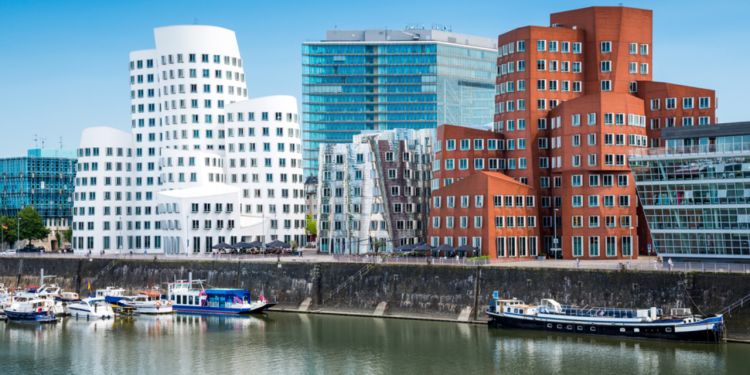
Accommodation in Düsseldorf
Düsseldorf is one of Germany's most popular cities among expats thanks to its diverse economy and attractiveness to international ...
Leisure, Culture, and Things To Do in Düsseldorf
Düsseldorf offers an impressive cultural scene and diverse leisure options that punch well above its weight for a city of its size. From world-class art museums to Germany's famous nightlife, there's something for everyone.
Museums and Culture
Art enthusiasts will find plenty to explore. The Kunstsammlung Nordrhein-Westfalen comprises two museums: K20 houses 20th-century masterpieces by Picasso, Klee, and the German Expressionists, while K21 focuses on contemporary art from the 1980s onward. The Museum Kunstpalast features 600 years of European art in a beautiful setting near the Rhine. For something different, visit the Neanderthal Museum just outside the city, located in the valley where the first Neanderthal fossils were discovered.
The Altstadt and Nightlife
Düsseldorf's Altstadt (Old Town) is nicknamed the "longest bar in the world" with over 300 pubs, bars, and restaurants packed into a compact area. This is where you'll sample Altbier, the city's distinctive dark, top-fermented beer served in small 200ml glasses. Traditional brewpubs like Uerige, Füchschen, and Schumacher brew their own versions. Beyond the Old Town, Flingern offers a hipper, more alternative scene.
Parks and Recreation
The Rheinuferpromenade stretches along the Rhine with stunning views, perfect for walking, jogging, or cycling. Hofgarten, one of Germany's oldest public parks, provides a green retreat in the city center. Nordpark features a beautiful Japanese Garden donated by the Japanese community. For families, Wildpark Grafenberger Wald offers free encounters with deer and wild boar, while Aquazoo Löbbecke Museum combines an aquarium with natural history exhibits. The iconic Rheinturm (Rhine Tower) offers panoramic city views from its observation deck at 240 meters.
Sources: Düsseldorf Tourism
Daily Life in Düsseldorf: Transportation, Culture, and Practicalities
Düsseldorf offers a comfortable daily life with efficient infrastructure, excellent public services, and a manageable city size. The city's compact layout means most destinations are reachable within 10-15 minutes by public transport or bicycle.
Public Transportation
The Rheinbahn operates an integrated network of U-Bahn (subway/light rail), trams, buses, and connections to the regional S-Bahn. The U-Bahn system has 11 lines (U70-U79, U83) running underground in the city center and above ground in outer areas. A single ticket within Düsseldorf (Zone A) costs €2.70, while a 24-hour ticket is €6.80.
The game-changing Deutschlandticket costs €58 per month and provides unlimited travel on all regional and local public transport throughout Germany—including Düsseldorf's entire network plus trains to Cologne, the airport, and beyond. Düsseldorf Airport, Germany's fourth-largest, is just 8 kilometers from the city center, reachable in minutes by S-Bahn S11 or regional trains.
Lifestyle and Cultural Habits
Düsseldorf residents enjoy a balanced lifestyle. Shops typically close at 8 PM on weekdays and remain closed on Sundays (except bakeries and some convenience stores). Supermarket chains like REWE, Edeka, and Aldi are widespread. The city is extremely bicycle-friendly, with dedicated lanes throughout. Germans value punctuality—arriving on time for appointments is expected.
The city hosts a substantial Japanese community, resulting in excellent Japanese restaurants, shops in the Immermannstraße area ("Little Tokyo"), and cultural events. English is widely spoken in business settings and tourist areas, though learning basic German helps with daily interactions and bureaucratic processes.
Sources: Rheinbahn, VRR Transport Association
Cost of Living in Düsseldorf: Budgeting for Your New Life
Düsseldorf ranks as Germany's sixth most expensive city, behind Munich and Frankfurt but offering good value compared to many international financial centers. Understanding typical costs will help you budget appropriately for your move.
Monthly Budget: Single Person
A single professional can expect the following monthly expenses (excluding rent):
Rent (1-bedroom, city center) | €1,070 - €1,125 |
Utilities (electricity, heating, water) | €250 - €330 |
Groceries | €250 - €350 |
Public transport (Deutschlandticket) | €58 |
Health insurance (public) | ~€200 (employee share) |
Internet and mobile | €40 - €60 |
Total estimated (single) | €1,870 - €2,125 |
Monthly Budget: Family of Four
Families should budget for higher costs, particularly if opting for international schooling:
Rent (3-bedroom, city center) | €1,800 - €2,200 |
Utilities | €350 - €450 |
Groceries | €600 - €800 |
Transport (2 adults) | €116 |
International school (per child, annual) | €18,970 - €26,250 |
Health insurance (family) | €400 - €600 |
Total estimated (family, excl. school) | €3,270 - €4,170 |
Sources: Numbeo 2025, HousingAnywhere
In Short
Düsseldorf offers a compelling package for expats: a strong job market across diverse industries, high salaries balanced by manageable living costs, and a quality of life that rivals much larger cities. The international community here is welcoming and well-established, making the transition smoother than in many German cities. Whether you're drawn by career opportunities in finance, fashion, or tech, by excellent schools for your children, or by the unique blend of Rhine-side charm and metropolitan convenience, Düsseldorf delivers.
The city's compact size means you can walk to the office, cycle along the river, and toast with an Altbier in the Old Town—all in the same day. For those ready to make the move, join the Expat.com Düsseldorf forum to connect with fellow expats, get insider tips, and start building your network before you arrive.
We do our best to provide accurate and up to date information. However, if you have noticed any inaccuracies in this content, please contact us.


Essential services for your expat journey