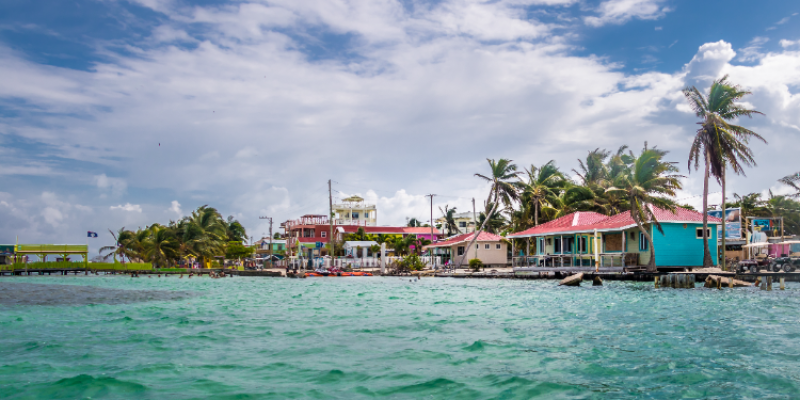
Belize, nestled along the eastern edge of Central America, is bordered by Mexico to the north, Guatemala to the west and south, and the Caribbean Sea to the east. It spans approximately 22,966 square kilometres, offering a landscape rich in biodiversity, coastline, and cultural heritage. Though geographically situated in Central America, Belize's language, culture, and identity are deeply rooted in the Caribbean, a legacy of its British colonial past and its continued regional affiliations. This unique blend makes Belize one of the few countries that bridges two cultural worlds, where Caribbean rhythm meets Central American geography.
Belize is the only English-speaking country in Central America
Situated in Central America, Belize is bordered by Mexico to the north, Guatemala to the west and south, and the Caribbean Sea to the east. Despite its geography, its culture and identity align closely with the Caribbean, shaped by its colonial history, linguistic diversity, and ethnic makeup. English is the official language, making it uniquely accessible in the region for Anglophone expatriates.
Six small districts showcase Belize's geographic and cultural diversity
Covering around 22,966 km², Belize is divided into six administrative districts: Belize, Cayo, Corozal, Orange Walk, Stann Creek, and Toledo. There are only two cities, the capital city, Belmopan and Belize City, which is older, larger and more developed . Other key urban areas include San Ignacio, Orange Walk Town, Dangrig, Corozal Town, Punta Gorda and the island town of San Pedro. Villages and communities, with their small population and remote locations, are considered rural areas. Each district offers a unique blend of landscapes, communities, and lifestyles, from jungle interiors to beachside villages.
Cities, towns and villages
Generally, the quality of infrastructure in Belize is based on location type. Belize City, built in a low-lying area, developed from a settlement to a town to a city. This evolution is evident in the colonial wooden buildings and narrow streets that were designed for carriages. Besides, the historic architecture, at times, are modern residential or commercial buildings. All of the utility companies have their headquarters in Belize City, so access to these remains constant. The top schools in the country, hospitals, engineers, professionals, stadiums, business complexes, restaurants, large libraries, hotels and clubs are all in Belize City. The country's only movie theater is there. The streets are all paved, but all receive maintenance at a different rate. Each administration has sought to mitigate the issue of seasonal flooding in its own way, including cleaning the drains, upgrading the streets, redirecting traffic, and implementing zoning policies, but the problems persist. The cost of rent/living is higher in Belize City than in other parts of non-tourism inland urban areas. There is a public transportation system, including an eco-bus that has wifi. At $3 a ride, the bus passes through the city's main arteries.
Belmopan is distinct as one of the least populated capital cities in the world. Although it started out as a planned city, Belmopan has sprawled in every cardinal direction from the core area around the Ring Road that opened to residents in 1970. Outside of the central part of the city, there are still many unpaved streets. Like Belize City, all utilities are available constantly. There are areas that flood in Belmopan. They do not disrupt the flow of traffic in the core commercial and residential areas. There are few opportunities for entertainment and a smaller selection of restaurants.
Towns may have an equal or lesser amount of paved streets than unpaved streets. Leading professionals reside there but in a smaller number than in the cities. The upkeep of infrastructure depends on the agency of the local government. Like the infrastructure, public services, the quality of the educational institutions and the level of economic activity are based on the interest of the citizens. Utilities are constant. The options for entertainment and restaurants are limited, unless the towns are in a tourism or culturally diverse area.
The infrastructure of villages vary from well-resourced to under-resourced. Most, in tourism areas, have two or three main fully paved streets and walkways. Based on their location, the utilities may not be available throughout the village. For example, not all areas are well lit, have plumbing or mobile service. Entertainment options are nature-based and people-driven instead of technology driven. Since the pace in a village is quite slow, extreme heat, rain or flooding is accepted as a part of life that will soon pass instead of an inconvenience.
Get regular tips and advice to make the most of your expat life
Most Belizeans are under 30
Belize's population is estimated to have reached approximately 422,924 people in 2025, with a large proportion under 30. This youthful demographic contributes to a dynamic social and labour environment. Belize is also popular with foreign nationals, particularly from the United States and Canada, drawn to its relaxed pace, English-speaking population, and warm climate.
Belize is a nation of many languages and ethnic identities
While English is the official language, many Belizeans speak a second or even third language at home. Spanish, Belizean Kriol, Maya (Kekchi, Mopan, Yucatec), German, Garifuna, and Chinese are all widely spoken. Mestizos, Spanish-speaking Belizeans, make up 51.7% of the population, some of whom are recent migrants from the neighboring countries of Guatemala, El Salvador and Honduras. Spanish is also taught in all levels of education, making it the second most widely spoken language. Mennonite communities speak German and maintain traditional customs. In towns and villages across the country, ethnic enclaves preserve their heritage, from language and dress to food and religious practices.
A growing number of Belizeans identify as non-religious
Religious identity in Belize is shifting. While Christianity remains dominant, particularly Catholicism and Pentecostalism, census data from 2022 shows a significant rise in the nonreligious population, from 15.5% in 2010 to 31%. Nevertheless, Christianity still influences public life, especially in schools and legislation, where religious leaders have an active role in shaping policies and values.
Belize's economy is small but growing at a healthy pace
Belize remains a developing nation, and its economy reflects the challenges of scale, external dependency, and fiscal policy. In 2024, the country's GDP reached over USD $1.23 billion, with an impressive growth rate of 8.6%. However, Belize relies heavily on imports (BZD 2.9 billion), with far lower export volumes (BZD 459.9 million), creating a trade imbalance. Additionally, generous tax and duty breaks granted to large corporations limit revenue collection. Despite this, the unemployment rate remained low at 2.1% as of September 2024. The government is the largest employer. The salaries are generally low, but contract positions open from time to time that do not start at the beginning of the pay scale. Management positions in the NGO sector and key industries may be filled by non-Belizeans and negotiations are possible to be paid in a different currency than Belize dollars. Networking and following the social media pages of companies in the preferred sector is the best way to find out where and when applications are open.
Agriculture, tourism, and services are the backbone of the economy
Key industries in Belize include agriculture, tourism, fishing, retail, telecommunications, government services, real estate, and manufacturing. The economy is highly sensitive to sector-specific downturns; when one area suffers, the effects are quickly felt across the country. Tourism, in particular, plays a vital role, drawing visitors to Belize's coral reefs, Mayan ruins, and lush rainforests.
Belize's main trade allies span the Americas, the Caribbean, and Europe
Belize maintains strong economic ties with the United States, the Republic of China (Taiwan), the European Union, Mexico, Central America, and the Caribbean. These partnerships are essential for both exports and development aid, and they reflect the country's position as a cultural and geopolitical bridge between the Caribbean and Latin America.
The Belize dollar is fixed to the US dollar
Currency exchange in Belize is stable and predictable, with the Belize dollar (BZD) pegged at a fixed rate of BZD 2 to USD 1. This simplifies financial planning for expatriates earning or receiving funds in U.S. dollars, particularly retirees and foreign investors.
Belize is a constitutional monarchy with a parliamentary democracy
Belize is one of the few nations in the Americas to maintain a constitutional monarchy. King Charles III is Head of State, represented by the Governor General. The executive power lies with the Cabinet, under the leadership of the Prime Minister. Hon. John Briceño is the current Prime Minister of Belize. The National Assembly is made up of 31 elected members in the House of Representatives and 12 appointed senators. The political structure follows the Westminster model, inherited from British colonial rule. Prior to August 2025, all Belizean paper dollars had the image of Queen Elizabeth II.
Belize is active in regional and international communities
Belize holdsmembership in the Commonwealth, CARICOM (Caribbean Community), and the Central American Integration System (SICA). These affiliations support Belize's regional cooperation on trade, security, and environmental policies, while also shaping visa agreements and residency options for foreign nationals.
Belize has a sub-tropical climate with distinct wet and dry seasons
Belize enjoys warm temperatures year-round, ranging from 18°C to 35°C. The climate is divided into two seasons: the dry season from January to May, and the wet season from June to December. Rainfall patterns vary regionally, but June, July, and September are generally the wettest months. April and May tend to be the hottest. Many expats enjoy the climate but must prepare for seasonal storms.
Hurricanes and flooding are serious risks in Belize
Natural disasters are a recurring threat in Belize, especially during the wet season. Hurricane Lisa, which struck the country in November 2022, caused widespread flooding and infrastructure damage. As a result, Belize was ranked the second most affected country on Germanwatch's Climate Risk Index 2025. Climate change and rising sea levels pose long-term challenges for both urban and rural areas.
ℹ️
We do our best to provide accurate and up to date information. However, if you have noticed any inaccuracies in this article, please let us know in the comments section below.
Felene is a librarian and a literary and visual storyteller. Drawing on her Garifuna heritage, Belizean roots, and meaningful dialogues with elders, she creates poetry, short stories, photography, and films that highlight the lives of women in Belize.