

Living in Da Nang: the ultimate expat guide
Everything you need to know for a successful life in Da Nang.
Da Nang is a dynamic coastal city of 1.2 million residents positioned along the South China Sea in central Vietnam. Often described as the country's most liveable city, it combines modern infrastructure with natural beauty, offering sandy beaches, mountain landscapes, and a thriving international community. The city serves as the economic hub of central Vietnam, with an international airport just 15 minutes from the beach, making it exceptionally accessible for newcomers.
Da Nang has earned recognition as one of Southeast Asia's top destinations for expatriates and digital nomads, thanks to its affordable cost of living, clean air quality, and relaxed pace of life compared to Hanoi or Ho Chi Minh City. The Han River divides the city into a bustling urban center and a laid-back beachside district, each offering distinct lifestyles for residents.
5 Good Reasons to Move to Da Nang
- Affordable living – Monthly expenses for a single person average USD 800–1,100, including rent, making it one of Asia's most cost-effective coastal cities.
- Stunning beaches – My Khe Beach stretches over 20 kilometers with soft sand and warm water year-round.
- Growing expat community – A welcoming international population creates networking opportunities and familiar amenities.
- Strategic location – Easy access to UNESCO World Heritage sites including Hoi An Ancient Town and My Son Sanctuary.
- Modern infrastructure – Wide streets, reliable internet, and international-standard healthcare facilities.
Working in Da Nang: Opportunities and Requirements
Da Nang's economy has experienced robust growth, with GDP increasing by 8.1% in 2024. The city is positioning itself as a technology and innovation hub while maintaining strong tourism, manufacturing, and service sectors. For expatriates, employment opportunities exist across multiple industries, though remote work and entrepreneurship are increasingly popular options.
Key Employment Sectors
The tourism and hospitality industry remains a major employer, with hotels, resorts, and tour operators hiring foreign staff for management and guest-facing roles. The information technology sector is rapidly expanding, with companies like FPT Software and international tech firms establishing offices in Da Nang's high-tech parks. English teaching positions are widely available at language centers such as ILA Vietnam, which operates multiple locations throughout the city.
The manufacturing sector, particularly electronics and textiles, has attracted significant foreign direct investment from Japan and South Korea. Da Nang's government actively supports startups and innovation, with plans to host 3,000 startups and attract 1,000 foreign professionals by 2035.
Work Permit Requirements
Foreign employees must obtain a work permit to legally work in Vietnam. Requirements include being at least 18 years old, holding relevant qualifications (bachelor's degree or equivalent), having at least 3 years of experience in your field, and providing a clean criminal record and health certificate. Work permits are valid for up to 2 years and can be extended once. Processing takes approximately 20 working days after document submission. The employer must sponsor the application and demonstrate that no qualified Vietnamese candidate is available for the position.
Average monthly salary (local) | USD 293 (after tax) |
Expat salary range (IT/Management) | USD 1,500–3,500/month |
Work permit fee | USD 100–150 |
Sources: Livingcost.org, Vietnam Briefing

Working in Da Nang
Da Nang is pivotal to the coastal development and central security of Vietnam. Over the next few years, shipbuilding, logistics, oil, and gas are ...
Higher Education and Universities in Da Nang
Da Nang is home to one of Vietnam's major regional university systems and serves as an educational hub for central Vietnam. The city hosts over 32 universities and colleges along with 61 vocational training institutions, creating a comprehensive educational infrastructure that attracts both domestic and international students.
University of Da Nang
The University of Da Nang (UD) is the largest university in central Vietnam, established in 1994. It comprises 11 member universities and affiliated units, offering programs in engineering, technology, economics, education, and foreign languages. The university has achieved recognition in the QS Asia University Rankings (top 401-450) and holds international accreditation from HCÉRES (France) for several programs. With approximately 55,000 full-time students including around 1,000 international students, UD provides a multicultural learning environment.
International Programs and Partnerships
The VNUK Institute for Research and Executive Education, a joint initiative between Vietnam and the United Kingdom, offers English-taught undergraduate programs in biomedical science, computer science, and international business management. Vietnamese universities increasingly partner with institutions from the United States, Australia, Singapore, and South Korea, offering joint training programs and exchange opportunities.
Tuition and Admission
Tuition fees at Vietnamese public universities range from USD 1,000–2,500 per year, while private and international programs cost USD 2,500–10,000+ annually. International students require a student visa (DH), which grants a 12-month stay connected to their enrollment. Admission typically requires proof of previous education, English proficiency scores (for English-taught programs), and a health declaration.
Public university tuition | USD 1,000–2,500/year |
International programs | USD 2,500–7,500/year |
Student visa fee | USD 25–60 |
Sources: QS Top Universities, Expat.com
Schooling Options for Expat Children in Da Nang
Da Nang offers a growing selection of international schools catering to expatriate families. While the options are more limited than in Hanoi or Ho Chi Minh City, several quality institutions provide internationally recognized curricula and English-medium instruction.
International Schools
The Singapore International School Da Nang (SIS) follows British and Singaporean curricula for students from Pre-Nursery through Year 12. The school offers the International Programme with instruction in English. First-year enrollment costs approximately VND 286 million (USD 11,400) including registration and fees.
APU American International School – Da Nang provides American-standard education with modern teaching approaches. Established in 2015, it serves students from early years through high school, with first-year costs around VND 202 million (USD 8,000).
The Odyssey International School follows the British curriculum for ages 3-18, with annual tuition ranging from VND 223–430 million (USD 8,900–17,200). Located near the coast, it offers smaller class sizes and personalized attention.
Nearby Options in Hoi An
The Hoi An International School (HAIS), located 30 kilometers south of Da Nang, offers British and Vietnamese bilingual programs. It has gained a strong reputation among expat families in the region, with first-year costs around VND 239 million (USD 9,500).
Enrollment Requirements
International schools typically require previous academic records, passport copies, immunization records, and sometimes entrance assessments. Waiting lists can apply for popular year groups, so early application is advisable. Most schools offer school bus services throughout Da Nang and surrounding areas.
Annual tuition range | USD 8,000–17,000 |
Kindergarten/preschool | USD 4,000–10,700/year |
Primary school (international) | USD 10,000–12,900/year |
Sources: International Schools Database, World Schools
Housing and Neighborhoods for Expats
Da Nang's rental market offers excellent value compared to other major cities in the region. The city is divided by the Han River, with most expatriates choosing to live on the beachside (east) while the city center (west) provides a more local Vietnamese experience. Rental transactions increased by 132% in early 2025, reflecting growing demand.
Popular Expat Neighborhoods
An Thuong and My An form the main expatriate hub, located near My Khe Beach. This area features Western restaurants, cafes, co-working spaces, and a vibrant social scene. Expect higher prices but maximum convenience, with one-bedroom apartments starting around USD 400–600/month.
Son Tra District stretches along the northern coastline, offering a quieter atmosphere with newer apartment buildings. Popular with Korean expats and those seeking better value, rentals here typically cost 10-20% less than An Thuong while providing beach access and modern facilities.
Hai Chau District is the city center, offering an authentic urban Vietnamese experience. While further from the beach (5-10 minutes by motorbike), it provides the most affordable options, with apartments starting from USD 250–350/month.
Rental Process
Most rentals require a one-year lease with one month's deposit. Landlords must register tenants with local police for temporary residence. Serviced apartments include furniture, air conditioning, and often weekly cleaning. Facebook groups like "Da Nang & Hoi An Expats" are popular for finding listings, alongside local agencies such as Central Vietnam Realty (CVR).
Studio apartment (city center) | USD 150–300/month |
1-bedroom apartment (beachside) | USD 400–600/month |
2-bedroom apartment | USD 500–800/month |
3-bedroom apartment | USD 700–1,200/month |
Sources: Expat.com, House Rental Da Nang
Accommodation in Da Nang
Are you considering living in the vibrant coastal city of Da Nang? Expat.com showcases several rental options, and we encourage you to find the space ...
Leisure, Culture and Things to Do in Da Nang
Da Nang offers a rich blend of natural attractions, cultural experiences, and modern entertainment. The city serves as a gateway to three UNESCO World Heritage Sites while providing its own array of beaches, mountains, and cultural landmarks.
Beaches and Outdoor Activities
My Khe Beach stretches over 20 kilometers along the coast, consistently ranked among Asia's finest urban beaches. The soft sand and warm water make it ideal for swimming, surfing, and morning exercise. Non Nuoc Beach further south offers a quieter atmosphere near luxury resorts. Water sports including surfing lessons (around USD 30), paddleboarding, and jet skiing are readily available.
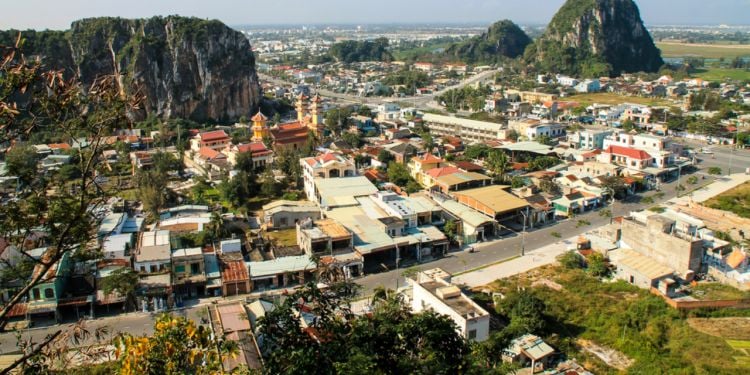
The Son Tra Peninsula rises dramatically from the coast, home to the 67-meter Lady Buddha statue at Linh Ung Pagoda and wild monkey populations. The Marble Mountains, a cluster of five limestone peaks, contain Buddhist caves, shrines, and panoramic viewpoints—just 15 minutes from the city center.
Cultural Attractions
The Museum of Cham Sculpture houses the world's largest collection of Cham artifacts, showcasing the history of this ancient civilization that once ruled central Vietnam. The iconic Dragon Bridge breathes fire and water every Saturday and Sunday at 9 PM, drawing crowds to the riverfront. Day trips to Hoi An Ancient Town (30 km south) and My Son Sanctuary offer deeper cultural immersion.
Entertainment and Nightlife
Ba Na Hills features the famous Golden Bridge held by giant stone hands, French village architecture, and various attractions including Asia's longest single-track cable car. The nightlife scene centers around An Thuong's bar street and rooftop venues like Sky36 on the 35th floor of Novotel. Bach Dang Street transforms into a walking street with night markets, food stalls, and entertainment.
Gym membership | USD 20–40/month |
Cinema ticket | USD 3–6 |
Ba Na Hills entrance | USD 35–40 |
Sources: Vietnam Tourism, TripAdvisor
Daily Life and Getting Around Da Nang
Daily life in Da Nang moves at a relaxed pace compared to Vietnam's larger cities. The combination of beach lifestyle, modern amenities, and affordable conveniences creates an appealing environment for long-term residents. Most areas of interest are reachable within 15-20 minutes, and the city's infrastructure is notably better maintained than in many Vietnamese urban centers.
Transportation
The Grab app is essential for getting around Da Nang, functioning like Uber with options for cars (GrabCar) and motorbike taxis (GrabBike). A typical ride across town costs VND 40,000–100,000 (USD 1.50–4). GrabBike is the fastest and cheapest option for solo travelers.
Motorbike rental is popular among expats, costing approximately VND 100,000–200,000 (USD 4–8) per day or VND 1–1.5 million (USD 40–60) monthly. An International Driving Permit is technically required, though enforcement varies. Traffic in Da Nang is calmer than in Hanoi or Ho Chi Minh City, but caution is still essential.
Public buses operate routes throughout the city at VND 7,000–40,000 (USD 0.30–1.60) per trip, though English signage is limited. The Dana Bus App helps navigate schedules and routes.
Practical Information
Tap water is not safe to drink; bottled water is inexpensive and widely available. Most restaurants and larger shops accept credit cards, but cash (Vietnamese Dong) is essential for street food, markets, and smaller establishments. ATMs dispense up to VND 3 million (USD 120) per transaction. High-speed internet is readily available, with fiber connections averaging VND 250,000–500,000 (USD 10–20) monthly. Mobile data plans with 10GB+ cost around VND 150,000 (USD 6) per month.
Grab motorbike (average trip) | USD 1–2 |
Monthly bus pass | USD 4 |
Petrol (per liter) | USD 0.83 |
Sources: Ahoy Vietnam, Numbeo
Cost of Living in Da Nang: Budgets for Singles and Families
Da Nang ranks among the most affordable coastal cities in Southeast Asia, with living costs approximately 84% lower than New York City and 10-16% lower than Hanoi or Ho Chi Minh City. The city offers excellent value while maintaining modern infrastructure and international amenities.
Monthly Budget for a Single Person
A comfortable lifestyle in Da Nang is achievable on USD 800–1,100 per month, covering accommodation, food, transportation, and entertainment. Budget-conscious expats can manage on less, while those seeking premium housing and frequent dining out should plan for USD 1,500+.
Expense Category | Budget | Comfortable |
Rent (1-bedroom) | USD 300 | USD 500 |
Utilities | USD 50 | USD 80 |
Groceries | USD 150 | USD 250 |
Dining out | USD 100 | USD 200 |
Transportation | USD 40 | USD 80 |
Health insurance | USD 50 | USD 100 |
Total | USD 690 | USD 1,210 |
Monthly Budget for a Family of Four
Families can expect monthly expenses of approximately USD 2,500–4,500, with international school fees representing the largest variable cost. Without school fees, family living costs remain remarkably affordable.
Expense Category | Budget | Comfortable |
Rent (3-bedroom) | USD 700 | USD 1,200 |
Utilities | USD 100 | USD 150 |
Groceries | USD 400 | USD 600 |
School fees (2 children) | USD 1,000 | USD 2,000 |
Transportation | USD 100 | USD 200 |
Health insurance | USD 200 | USD 350 |
Total | USD 2,500 | USD 4,500 |
Sources: Numbeo, VinWonders
In Short
Da Nang presents a compelling proposition for expatriates seeking an affordable coastal lifestyle without sacrificing modern conveniences. The city's combination of pristine beaches, clean air, growing international community, and low cost of living has established it as one of Southeast Asia's most attractive destinations for remote workers, families, and retirees alike. With its strategic location between UNESCO World Heritage sites, emerging tech sector, and welcoming atmosphere, Da Nang offers the opportunity to build a fulfilling life abroad while maintaining excellent quality of life.
Ready to start your Da Nang adventure? Connect with fellow expats, get practical advice, and share experiences on the Expat.com Da Nang Forum. Our community is here to help you every step of the way.
We do our best to provide accurate and up to date information. However, if you have noticed any inaccuracies in this content, please contact us.