Living in Kolkata: the ultimate expat guide
Everything you need to know for a successful life in Kolkata.
Kolkata, the capital of West Bengal, stands as one of India's most culturally rich and historically significant cities. Known affectionately as the "City of Joy," this metropolitan hub of 15.8 million people offers expats an authentic Indian experience combined with a remarkably affordable cost of living. Situated on the banks of the Hooghly River, Kolkata serves as the principal commercial, cultural, and educational center of Eastern India.
The city blends colonial-era architecture with vibrant Bengali traditions, creating a unique atmosphere that has inspired artists, writers, and intellectuals for centuries. English is widely spoken in business and among educated residents, making daily interactions manageable for newcomers. The city's tropical climate features hot summers, monsoon rains from June to September, and pleasant winters—the ideal time to explore.
5 Good Reasons to Move to Kolkata
- Affordable living costs — significantly lower than Mumbai or Delhi, with quality housing and services at a fraction of the price.
- Rich cultural heritage — home to Nobel laureates, world-class museums, and India's most spectacular festival, Durga Puja.
- Growing IT sector — expanding technology hub with multinational companies offering professional opportunities.
- Excellent education — prestigious universities and quality international schools with internationally recognized curricula.
- Safety record — consistently ranked among India's safest metropolitan cities by the National Crime Records Bureau.
Working in Kolkata: Employment Opportunities and Sectors
Kolkata's economy offers diverse employment opportunities across multiple sectors, making it an attractive destination for professionals seeking career growth in Eastern India. The city has transformed into a significant IT and technology hub, while maintaining its traditional strengths in manufacturing, trade, and services.
Key Employment Sectors
The IT and ITES sector dominates the professional job market, with major companies including TCS, Wipro, Accenture, Tech Mahindra, and Cognizant operating delivery centers in Salt Lake Sector V and Rajarhat. Beyond technology, Kolkata remains vital for manufacturing (steel, engineering, leather goods), financial services, healthcare, and education. The city hosts numerous MSME units—approximately 89 lakh enterprises employing 1.36 crore people across West Bengal.
Work Permits and Visas
Foreign nationals require an Employment Visa to work in India. Key requirements include a formal employment contract, proof of specialized skills, and a minimum annual salary of USD 25,000 (with exemptions for teaching and NGO roles). The visa is typically granted for one year and renewable up to five years. Upon arrival, registration with the Foreigners Regional Registration Office (FRRO) is mandatory within 14 days for stays exceeding 180 days.
Unemployment rate (West Bengal) | 4.14% (2024-25) |
Average annual salary | INR 420,000–510,000 (~USD 5,000–6,100) |
Major employment sectors | IT/ITES, Manufacturing, Financial Services, Healthcare |
Sources: Centre for Monitoring Indian Economy (CMIE), PayScale India
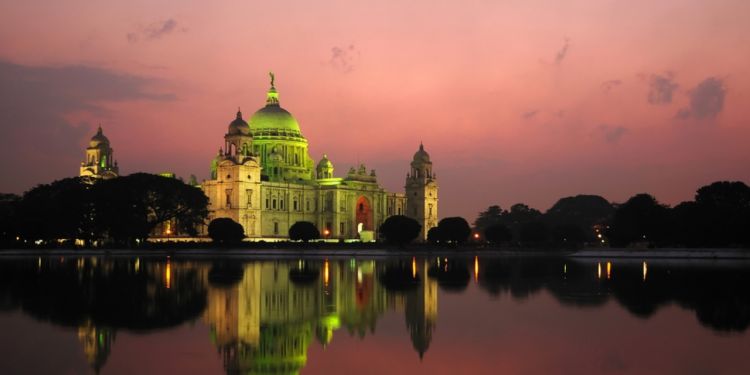
Working in Kolkata
Kolkata is the capital of west Bengal. Located on the banks of river Hoogly, Kolkata is one of the biggest cities of India. It is the primary ...
Higher Education and Universities in Kolkata
Kolkata boasts one of India's most distinguished academic traditions, home to the oldest modern university in the Indian subcontinent and institutions that have produced Nobel laureates and global thought leaders. International students benefit from affordable tuition, English-medium instruction, and diverse program offerings.
Leading Universities
The University of Calcutta, established in 1857, ranks among India's top universities with 151 affiliated colleges and 14 campuses across the city. It offers programs across arts, sciences, commerce, law, and engineering. Jadavpur University is highly regarded for engineering and sciences, consistently ranking among India's best technical institutions. For law studies, the West Bengal National University of Juridical Sciences (NUJS) is considered one of India's premier law schools. Presidency University (founded 1817) and the Indian Statistical Institute are internationally recognized for research excellence.
Admission and Fees
International students typically need to demonstrate English proficiency through TOEFL or IELTS scores. Undergraduate tuition at public universities ranges from INR 10,000–50,000 (~USD 120–600) annually, making Kolkata exceptionally affordable. Private institutions charge higher fees, typically INR 100,000–400,000 (~USD 1,200–4,800) per year. Many universities offer merit-based scholarships and financial assistance programs.
Sources: University of Calcutta, Jadavpur University, NUJS
International Schools and Education for Children
Kolkata offers quality international schooling options for expat families, with institutions providing IB, Cambridge IGCSE, and A-Level curricula. While the city has fewer international schools than Mumbai or Delhi, the available options maintain high standards and offer smaller class sizes.
International School Options
Calcutta International School (CIS), established in 1953, offers the International Baccalaureate (IB) Primary Years, Middle Years, and Diploma programmes, along with Cambridge curricula. Located in Anandapur on a 15-acre campus, it welcomes students from over 17 nationalities. The Heritage School in Anandapur provides IB and IGCSE programs with extensive sports facilities across a 9.5-acre campus. South City International School and The Cambridge School (Kalighat) offer Cambridge IGCSE curricula with strong academic records.
Fees and Enrollment
International school fees vary significantly based on curriculum and grade level. Annual tuition typically ranges from INR 120,000 to INR 500,000 (~USD 1,400–6,000), with admission fees adding INR 50,000–100,000 as a one-time payment. Enrollment requires birth certificates, previous school records, immunization documents, and passport copies. The academic year runs from April to March, with admissions typically opening in November-December.
Calcutta International School | INR 350,000–500,000/year |
The Heritage School | INR 120,000–300,000/year |
South City International | INR 150,000–280,000/year |
Housing and Neighborhoods in Kolkata
Kolkata offers remarkably affordable housing compared to other Indian metros, with expats finding quality apartments at a fraction of Mumbai or Delhi prices. The rental market includes options from modest apartments to luxury high-rises in gated communities, with most landlords requiring a security deposit of 2-3 months' rent.
Expat-Friendly Neighborhoods
Salt Lake (Bidhannagar) and New Town (Rajarhat) are the most popular choices for expats, offering modern infrastructure, proximity to IT hubs, international schools, and shopping malls. Ballygunge and Alipore represent South Kolkata's upscale residential areas with tree-lined streets, excellent civic amenities, and proximity to cultural landmarks. Park Street remains central and convenient, known for restaurants and nightlife. For families, Golf Green and Tollygunge provide quieter environments with good schools nearby.
Rental Costs and Procedures
Rental agreements typically run for 11 months (renewable) and require registration for leases exceeding this period. Most landlords prefer bank transfers for rent payments. A police verification of tenants is standard procedure. Furnished apartments command 20-40% higher rents than unfurnished units.
1-bedroom apartment (city center) | INR 12,000–20,000/month (~USD 145–240) |
3-bedroom apartment (city center) | INR 30,000–50,000/month (~USD 360–600) |
1-bedroom (Salt Lake/New Town) | INR 10,000–18,000/month (~USD 120–215) |
3-bedroom (Salt Lake/New Town) | INR 25,000–45,000/month (~USD 300–540) |
Accommodation in Kolkata
Kolkata is one of the major metropolitan cities of India. Capital of West Bengal state, the city is densely populated with nearly 5.3 million ...
Leisure, Culture, and Things to Do in Kolkata
Kolkata's cultural scene is unrivaled in India, earning its reputation as the nation's intellectual and artistic capital. From world-class museums to Asia's oldest tram rides, the city offers endless opportunities for exploration and entertainment.
Must-Visit Landmarks
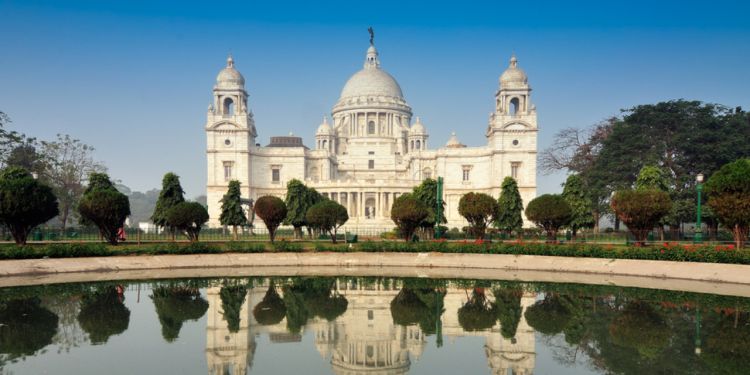
The Victoria Memorial, a magnificent white marble monument surrounded by 64 acres of gardens, houses an excellent museum of colonial-era artifacts (entry: INR 30 for Indians, INR 500 for foreigners). The Indian Museum, one of Asia's oldest (founded 1814), displays remarkable collections spanning archaeology, art, and natural history. The iconic Howrah Bridge, a cantilever engineering marvel, connects the city across the Hooghly River. Spiritual landmarks include Dakshineswar Kali Temple and Belur Math, headquarters of the Ramakrishna Mission.
Festivals and Entertainment
Durga Puja (September/October) transforms Kolkata into an open-air art gallery, with over 3,000 elaborately decorated pandals (temporary structures) and millions of visitors participating in five days of celebration. The Kolkata International Film Festival (November) attracts cinema enthusiasts worldwide. Year-round, the city offers vibrant theatre, live music, and literary events. For nightlife, Park Street remains the go-to destination with historic restaurants like Flury's and Peter Cat, alongside modern bars and clubs. Sports fans can catch cricket at the legendary Eden Gardens, one of the world's largest cricket stadiums, or football matches at Salt Lake Stadium.
Sources: Victoria Memorial, Indian Museum
Daily Life in Kolkata: Transportation and Lifestyle
Daily life in Kolkata combines the energy of a major metropolis with a distinctly relaxed Bengali pace. The city offers excellent public transportation, affordable services, and a food culture that will delight any culinary enthusiast. English and Hindi are widely understood alongside the local Bengali language.
Getting Around
The Kolkata Metro—India's first metro system, operational since 1984—serves as the city's transportation backbone. As of 2025, the network spans approximately 73 kilometers across four lines (Blue, Green, Yellow, and Orange), carrying over 700,000 passengers daily. Fares start at just INR 5 (~USD 0.06). The Green Line features India's first underwater metro tunnel beneath the Hooghly River. Kolkata also operates India's only surviving tram network, now primarily a heritage attraction. Ride-hailing apps Ola and Uber function reliably, while iconic yellow taxis remain available. Local buses and ferries across the Hooghly complete the transport options.
Everyday Essentials
Kolkata's food scene ranks among India's finest, from legendary street food (puchka, kathi rolls, jhal muri) to traditional Bengali cuisine (macher jhol, kosha mangsho) and iconic sweet shops. Modern shopping malls like South City Mall, Quest Mall, and Acropolis complement traditional markets like New Market and Gariahat. Healthcare facilities include reputable private hospitals such as Apollo Gleneagles, AMRI, and Fortis. Most neighborhoods have reliable electricity, though power fluctuations occur during peak summer months.
Cost of Living in Kolkata: Budget Planning
Kolkata consistently ranks as one of India's most affordable metropolitan cities, offering a comfortable lifestyle at costs 40-50% lower than Mumbai and approximately 25-30% lower than Bangalore. This affordability extends across housing, food, transportation, and entertainment.
Monthly Budget: Single Person
A single professional can live comfortably in Kolkata on a monthly budget of INR 30,000–45,000 (~USD 360–540), including rent in a decent neighborhood. Without rent, monthly expenses typically range from INR 25,000–30,000 (~USD 300–360).
Expense Category | Monthly Cost (INR) | USD Equivalent |
Rent (1-bedroom, city center) | 12,000–18,000 | 145–215 |
Utilities (electricity, water, internet) | 3,000–5,000 | 36–60 |
Groceries | 6,000–8,000 | 72–95 |
Transportation | 1,500–3,000 | 18–36 |
Dining out and entertainment | 4,000–8,000 | 48–95 |
Monthly Budget: Family of Four
A family of four requires approximately INR 80,000–120,000 (~USD 960–1,440) monthly, including rent for a 3-bedroom apartment. International school fees add significantly to this budget.
Expense Category | Monthly Cost (INR) | USD Equivalent |
Rent (3-bedroom apartment) | 30,000–50,000 | 360–600 |
Utilities | 5,000–7,000 | 60–85 |
Groceries and household | 15,000–20,000 | 180–240 |
International school fees (per child) | 15,000–40,000 | 180–480 |
Health insurance (family) | 3,000–8,000 | 36–95 |
Transportation | 4,000–8,000 | 48–95 |
Sources: Numbeo 2025
In Short
Kolkata welcomes expats with open arms and remarkable affordability. The "City of Joy" delivers an authentic Indian experience—rich in culture, history, and culinary delights—at costs significantly lower than other major metros. Whether you're drawn by professional opportunities in the growing IT sector, the prestigious academic institutions, or simply the unique Bengali way of life, Kolkata offers a rewarding expatriate experience. The city's improving infrastructure, including the expanding metro network, makes daily life increasingly convenient, while its warm, intellectual community ensures newcomers quickly feel at home.
Ready to explore life in Kolkata? Join the Expat.com Kolkata forum to connect with fellow expats, ask questions, and discover insider tips from those already living in this vibrant city.
We do our best to provide accurate and up to date information. However, if you have noticed any inaccuracies in this content, please contact us.


Essential services for your expat journey