

Living in Xiamen: the ultimate expat guide
Everything you need to know for a successful life in Xiamen.
Xiamen, often called the "Garden on the Sea," is a coastal city in Fujian Province that combines subtropical beauty with modern urban development. Located on China's southeastern coast, this Special Economic Zone has transformed into one of the country's most livable cities, attracting international businesses and expatriates alike. With its year-round mild climate, clean streets, excellent air quality by Chinese standards, and unique blend of Chinese and colonial architecture, Xiamen offers an appealing lifestyle for those seeking to relocate to China. The city spans across Xiamen Island and mainland districts, connected by bridges, tunnels, and an efficient metro system. Home to approximately 5 million residents, Xiamen maintains a more relaxed pace compared to megacities like Shanghai or Beijing, while still providing modern amenities and international connectivity.
5 Good Reasons to Move to Xiamen
- Outstanding Quality of Life: Xiamen consistently ranks among China's most livable cities, featuring clean beaches, lush green spaces, tropical gardens, and excellent air quality. The subtropical climate means mild winters and warm summers, perfect for outdoor activities year-round.
- Strong International Business Hub: As one of China's first Special Economic Zones, Xiamen attracts major multinational companies like ABB, Panasonic, and Dell. The city specializes in electronics, high-tech manufacturing, shipping, and emerging industries like fintech and biotech.
- Lower Cost of Living: Compared to Shanghai or Beijing, Xiamen offers significantly lower living costs while maintaining high standards. Housing, dining, and daily expenses are approximately 30-40% cheaper than in China's tier-one cities.
- Rich Cultural Heritage: The UNESCO World Heritage site of Gulangyu Island showcases stunning colonial architecture and museums. The city's unique Amoy Deco architectural style reflects its history as an international port, blending Chinese, Southeast Asian, and European influences.
- Excellent Connectivity: Xiamen Gaoqi International Airport offers connections throughout Asia and beyond. The expanding metro system, high-speed rail links to major Chinese cities, and proximity to Taiwan make it strategically positioned for both business and leisure travel.
Working in Xiamen
Xiamen's economy has evolved significantly since becoming a Special Economic Zone in 1981, developing into a sophisticated business environment that attracts international talent. The city focuses on high-tech industries, advanced manufacturing, and modern services, supported by government policies encouraging foreign investment. Major employment opportunities exist in electronics and information technology, which form a trillion-yuan industry cluster, as well as emerging sectors like biopharmaceuticals, new energy, and digital economy. The Xiamen Torch High-Tech Industrial Development Zone serves as the city's innovation hub, hosting research centers and manufacturing facilities for global companies.
Key Industries and Employment Sectors
The electronics and information technology sector dominates Xiamen's economy, with companies producing semiconductors, microelectronics, and smart manufacturing equipment. In 2025, high-tech industry output exceeded RMB 76.6 billion (approximately $11.8 billion), representing 39.8% of the city's total industrial output. The Haicang Free Trade Port Area specializes in shipping, logistics, and international trade, attracting companies like Honeywell and major distribution centers for Dell and ECCO. The city is actively developing its digital economy, with over 120 key digital economy projects designated for 2025 with total investments exceeding RMB 142 billion. Financial services, education, and business consulting also provide opportunities for qualified expatriates, particularly those with expertise in cross-border commerce and technology sectors.
Work Permits and Employment Requirements
Foreign nationals require a Z Visa (work visa) and work permit to work legally in China. The application process involves several steps: first, securing a job offer from a registered Chinese employer, then obtaining a Notification Letter of Foreigner's Work Permit from local authorities. Applicants typically need a bachelor's degree and at least two years of relevant professional experience. China uses a three-tier classification system for work permits: Class A (high-level talent) offers expedited processing and fewer restrictions, Class B (professional talent) is the standard category for most expatriates, and Class C (temporary or lower-skilled roles) has stricter quotas. The entire process typically takes 4-8 weeks and requires documents including educational certificates, criminal background checks, and health certificates. Employers handle most administrative procedures through the online Foreign Workers' Work Permit Management System.
Employment Market Overview
Unemployment Rate (China, 2025) | 5.1% |
Average Monthly Salary (Xiamen) | RMB 6,041 ($850) |
Major Employment Sectors | Electronics, IT, Manufacturing, Logistics, Finance |
Sources: National Bureau of Statistics of China, Numbeo
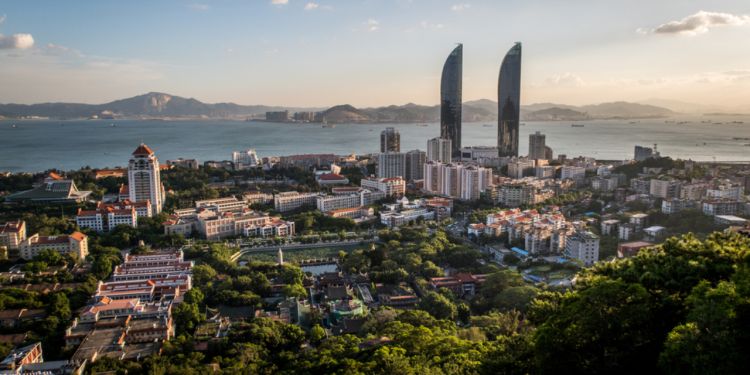
Finding work in Xiamen
Xiamen is one of the most beautiful coastal cities in southern China and has a lot to offer to expats: from its long sandy beaches to promising ...
Higher Education & Universities
Xiamen hosts several prestigious universities that welcome international students, with Xiamen University (XMU) standing out as the flagship institution. Founded in 1921 by overseas Chinese philanthropist Tan Kah Kee, XMU ranks among China's top 20 universities and is part of the Double First-Class Construction initiative. The university's stunning seaside campus is often called China's most beautiful, featuring a blend of traditional Chinese and Western architecture surrounded by tropical gardens and beaches. Beyond XMU, the city offers other institutions like Xiamen University of Technology and specialized colleges, providing diverse academic options for international students.
Xiamen University Programs and Admissions
Xiamen University currently enrolls over 46,000 students, including approximately 3,000 international students from more than 100 countries. The university offers 83 undergraduate programs, 214 master's programs, and 147 doctoral programs across 34 schools covering fields from oceanography and chemistry to economics, law, and communication. Six disciplines—Chemistry, Marine Science, Biology, Ecology, Statistics, and Pedagogy—are recognized as world-class. International students can study in English-taught programs or Chinese-language programs, with many choosing to study Mandarin through the university's dedicated Chinese language courses. The university has established partnerships with over 263 universities worldwide and operates a campus in Malaysia, offering truly global opportunities. Admission requirements typically include completion of previous education level (high school for undergraduate, bachelor's for master's), academic transcripts, language proficiency (HSK 4 for Chinese-taught programs or IELTS/TOEFL for English programs), and recommendation letters.
Tuition Fees and Scholarships
Xiamen University maintains competitive tuition rates compared to Western universities. Undergraduate programs typically cost RMB 20,000-30,000 ($2,800-$4,200) annually, master's programs range from RMB 30,000-40,000 ($4,200-$5,600) per year, and doctoral programs cost approximately RMB 40,000-50,000 ($5,600-$7,000) annually. Multiple scholarship opportunities are available for international students. The Chinese Government Scholarship (CSC) provides full tuition waiver plus monthly stipends of RMB 3,000 for master's students and RMB 3,500 for doctoral students. The Fujian Provincial Government Scholarship and Xiamen University Scholarships offer partial to full tuition coverage based on academic merit. The Xiamen Tan Kah Kee Scholarships target students from Southeast Asian countries. Applications for programs starting in September typically open in January and close in April-May, with scholarship applications processed simultaneously.
More information: Xiamen University International Admissions, Xiamen University Official Website
Retirement in Xiamen
While China has traditionally not been a primary destination for Western retirees due to visa restrictions and healthcare considerations, Xiamen's quality of life, affordable cost of living, and pleasant climate make it worth considering for those with Chinese connections or long-term residence permits. The city's relaxed pace, excellent public facilities, clean environment, and temperate weather appeal to older residents seeking comfortable coastal living. However, prospective retirees should carefully evaluate visa options, healthcare access, and language barriers before committing to relocation.
Retirement Visa Considerations
China does not offer a dedicated retirement visa like Thailand or Portugal. Foreign retirees typically need either family connections (such as marriage to a Chinese citizen or adult children working in China) to qualify for a Q or S visa, or must maintain business ties through consulting work or investments. Some retirees with previous long-term residence in China may qualify for extended residence permits, but this requires navigating complex immigration procedures. The 144-hour visa-free transit policy allows nationals from 54 countries to stay in designated regions including Xiamen for up to six days when traveling to a third country, useful for extended visits but not permanent residence. Those seriously considering retirement in Xiamen should consult immigration specialists about securing appropriate long-term visas, which may involve establishing a business entity or obtaining employment-based residence that can transition to retirement status.
Healthcare and Cost Considerations
Xiamen offers modern healthcare facilities including international clinics and major hospitals with some English-speaking staff, such as Xiamen First Hospital and international medical centers. However, for serious medical issues, many expatriates travel to Shanghai, Hong Kong, or Singapore for treatment. Healthcare costs are generally lower than Western countries for routine care, but comprehensive international health insurance is essential as China's public health system doesn't cover foreign residents. Monthly living costs for a comfortable retirement lifestyle, excluding healthcare, range from RMB 8,000-15,000 ($1,120-$2,100) for a single person depending on housing choices and lifestyle preferences. This includes rent for a quality 1-2 bedroom apartment, utilities, groceries, dining out regularly, transportation, and leisure activities. The absence of a taxation treaty with many Western countries means retirees should seek tax advice regarding pension income and potential double taxation.
The language barrier presents the most significant challenge for retirees, as fewer people speak English outside tourist areas compared to Southeast Asian retirement destinations. Learning basic Mandarin is highly recommended, and many retirees hire part-time interpreters or assistants for medical appointments and administrative tasks. The expatriate community in Xiamen is smaller and more business-focused than in traditional retirement destinations, so building social connections may require more effort. Despite these challenges, for those with adaptability and interest in Chinese culture, Xiamen offers an intriguing retirement option with significantly lower costs than Western countries, fascinating cultural experiences, and a genuinely livable environment.
Schooling for Children
Xiamen provides several quality international school options for expatriate families, ensuring children maintain continuity in their education while experiencing life in China. The city's international schools primarily follow British, American, or International Baccalaureate curricula, with instruction in English and support for children learning English as an additional language. Most schools serve the expatriate community from preschool through high school, offering small class sizes and internationally trained teachers. Chinese families with foreign passports or those from Hong Kong, Macao, and Taiwan also attend these institutions.
International Schools
Xiamen International School (XIS) is the city's oldest and most established international institution, serving students from pre-kindergarten through grade 12. As the only IB Continuum School in Xiamen, XIS offers all three International Baccalaureate programs: Primary Years Programme (PYP), Middle Years Programme (MYP), and Diploma Programme (DP). Over 80% of the faculty hold advanced degrees with an average of 11 years teaching experience. The school serves over 40 nationalities and maintains accreditation from WASC (Western Association of Schools and Colleges) for 20 years. Impressively, 74% of XIS seniors earn a bilingual IB Diploma, compared to the global average of 25%. Annual tuition for 2024-2025 ranges from approximately RMB 140,000-220,000 ($19,600-$30,800) depending on grade level. The school is located in Jimei District with modern facilities including science labs, sports facilities, and arts studios.
Achieve Xiamen International School (AXIS) offers the IB Primary Years Programme and Advanced Placement curriculum for secondary students. Operated in partnership with International Schools Services (ISS), AXIS features state-of-the-art facilities including a boarding facility with capacity for 200 students in grades 6-12. The school emphasizes Global Connections, Global Community, and Global Leadership in its educational approach. Annual fees are comparable to XIS, ranging from RMB 150,000-200,000 ($21,000-$28,000). Other options include Xiamen ITG-SUIS High School, which offers Cambridge A-Level curriculum with annual tuition around RMB 58,000 ($8,100) for Chinese curriculum programs, and Xiamen Yingcai School International Department, which combines Eastern and Western teaching methods.
Enrollment Process
International schools typically require application forms, previous school records and transcripts, passport copies, recent photos, immunization records, and recommendation letters from current teachers. Many schools conduct entrance assessments for age-appropriate grade placement and English language proficiency. Application deadlines are usually in March-May for the academic year starting in August. Waitlists can occur for popular grade levels, so early application is recommended. Some schools offer campus tours and parent information sessions throughout the year. Families should budget additional costs for school uniforms (approximately RMB 1,000-2,000), school trips, extracurricular activities, and school bus service (typically RMB 8,000-15,000 annually depending on distance).
School websites: Xiamen International School, Achieve Xiamen International School
Housing & Neighbourhoods
Xiamen's housing market offers diverse options from modern high-rise apartments to traditional low-rise communities, with most expatriates choosing accommodation on Xiamen Island for convenience and access to amenities. Rental prices are considerably more affordable than in Shanghai or Beijing, though prime locations near international schools or beach areas command premium rates. Most rental apartments come partially or fully furnished, which is convenient for international relocations. Leases typically run for one year with payment of three months' deposit plus one month's rent in advance. Property management fees, usually included in rent, cover building maintenance and security.
Popular Expat Neighborhoods
Siming District serves as Xiamen's central business and cultural hub, encompassing areas like Baicheng Beach near Xiamen University, which offers beachfront living with cafes, restaurants, and cultural attractions. The area around Bailuzhou Park and Zhongshan Road provides urban convenience with shopping, dining, and entertainment within walking distance. Housing here includes both older character buildings and modern high-rises, with good access to the metro and ferry terminals to Gulangyu Island. Jimei District is popular with families due to proximity to international schools, including XIS and AXIS. The area features the historic Jimei School Village with beautiful colonial architecture, alongside modern residential developments. Haicang District on the mainland attracts professionals working in the free trade zone and offers newer, spacious apartments at lower prices. The district has developed rapidly with shopping malls, parks, and improving public transport connections.
Huli District, home to the airport and software park, appeals to tech professionals and offers modern apartment complexes with comprehensive amenities. The Wuyuanwan (Five Yuan Bay) area stands out for its scenic wetland park, cycling paths, and beach access, attracting nature-loving expatriates. Many newer luxury developments in this area feature international-standard facilities including gyms, swimming pools, and children's play areas.
Rental Costs and Housing Market
Rental prices vary significantly by location, size, and building quality. A modern 1-bedroom apartment in central Xiamen Island (Siming District) typically costs RMB 2,444 ($340) monthly, while outside the city center, comparable apartments rent for approximately RMB 1,844 ($260) per month. Family-sized 3-bedroom apartments in prime areas average RMB 6,100 ($855) monthly, dropping to around RMB 3,678 ($515) in outer districts like Jimei or Haicang. Luxury apartments with premium amenities and locations can exceed RMB 10,000 ($1,400) monthly. For those considering purchasing property, prices in city center areas average RMB 5,698 ($800) per square foot, compared to RMB 3,314 ($465) per square foot in outer areas. Expatriates typically work with real estate agents who specialize in international relocations and can assist with lease negotiations and landlord communications.
Data sources: Numbeo Xiamen Cost of Living, Numbeo Xiamen Property Prices
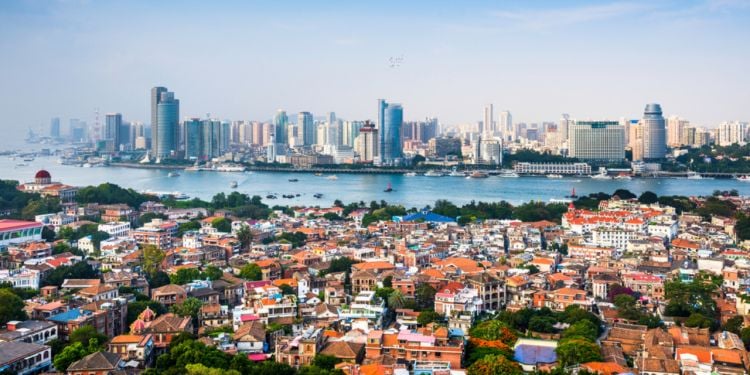
Accommodation in Xiamen
Xiamen, located in Fujian Province in China, is one of southern China's most picturesque coastal cities and has been a popular summer getaway for ...
Leisure, Culture & Things To Do
Xiamen's cultural richness and natural beauty provide endless opportunities for leisure and exploration. The city's most famous attraction, the UNESCO World Heritage site of Gulangyu Island, draws visitors with its car-free streets, colonial architecture, and musical heritage. Beyond this iconic destination, Xiamen offers pristine beaches, historic temples, vibrant markets, modern shopping districts, and cultural venues that celebrate both traditional Chinese culture and the city's unique international history. The subtropical climate means outdoor activities are enjoyable year-round, from coastal cycling to mountain hiking. The city's strong connections to overseas Chinese communities create a fascinating cultural blend reflected in architecture, cuisine, and local customs.
Cultural Attractions and Heritage Sites
Gulangyu Island remains Xiamen's crown jewel, accessible by a short ferry ride from the mainland. The pedestrian-only island showcases over 1,000 colonial-era buildings representing diverse architectural styles including British, French, German, and Japanese influences, earning it the nickname "Museum of International Architecture." Key sites include Sunlight Rock, the island's highest point at 93 meters offering panoramic views, Shuzhuang Garden, a masterpiece of Chinese garden design built in 1913 with pavilions overlooking the sea, and the Piano Museum, reflecting Gulangyu's reputation as "Piano Island" with over 200 historic pianos displayed. The Organ Museum houses one of the world's largest organ collections. Walking the narrow streets reveals charming cafes, art galleries, and specialty shops selling local delicacies like pineapple cakes and fish balls.
Nanputuo Temple, founded during the Tang Dynasty over 1,000 years ago, ranks among China's most important Buddhist temples. Nestled at the foot of Wulao Peaks adjacent to Xiamen University, the temple complex features multiple halls with impressive Buddha statues, peaceful lotus ponds, and pagodas. Visitors can climb the mountain path behind the temple for stunning city and sea views. Nearby, Xiamen University itself is worth visiting for its stunning campus combining colonial and Chinese architecture with tropical gardens, though note that entry may be restricted to registered visitors. Zhongshan Road Pedestrian Street represents Xiamen's historic commercial heart, lined with arcade buildings displaying Nanyang (Southeast Asian) architectural style. The 1.2-kilometer street bustles with shops, restaurants, and street food vendors, particularly lively after sunset when colorful lights illuminate the facades.
Outdoor Activities and Nature
Huandao Road (Island Ring Road) offers one of China's most scenic coastal routes, perfect for cycling or leisurely walks. The 31-kilometer path encircles Xiamen Island with dedicated bike lanes, passing beaches, parks, and viewpoints. Popular sections include Baicheng Beach near Xiamen University, Huangcuoan Beach with its rocky coastline, and Wuyuanwan Wetland Park featuring boardwalks through coastal wetlands with excellent birdwatching opportunities. Xiamen Botanical Garden showcases tropical and subtropical plants across themed sections including a spectacular rainforest zone, desert plant greenhouse, and rose garden. The garden's dramatic rock formations and hillside paths provide both botanical education and peaceful escape. For hiking enthusiasts, Wulao Peaks behind Nanputuo Temple and Beichen Mountain in Tong'an District offer trails with rewarding summit views.
Arts, Entertainment and Nightlife
Xiamen's arts scene blends traditional Chinese culture with contemporary creativity. The Xiamen Science and Technology Museum engages visitors with interactive exhibits on technology and innovation. The Xiamen Cultural Arts Center hosts performances from Chinese opera to international concerts and theater. Local art galleries on Gulangyu and in the Shapowei area showcase contemporary Chinese artists. Zeng Cuo An Village has transformed from a fishing village into a bohemian enclave filled with cafes, bars, boutiques, and guesthouses, popular with younger crowds and backpackers. For dining and nightlife, areas around Zhongshan Road and SM City Mall offer international restaurants, rooftop bars, and entertainment venues. The city hosts regular events including the China International Fair for Investment and Trade (CIFIT) each September, the Xiamen International Marathon in January, and various cultural festivals throughout the year. Xiamen's seafood markets, particularly the Eighth Seafood Market, provide authentic local experiences where visitors select fresh seafood to be cooked at neighboring restaurants.
Daily Life
Daily life in Xiamen offers a pleasant balance between modern urban convenience and relaxed coastal living. The subtropical climate means warm temperatures year-round, with hot, humid summers (June-September) and mild winters, making it ideal for outdoor activities and beach visits most of the year. The city's laid-back atmosphere contrasts sharply with the frenetic pace of Beijing or Shanghai, while still providing comprehensive amenities. English signage is common in expat areas, international schools, and major commercial districts, though learning basic Mandarin phrases significantly enhances daily interactions. The local Hokkien dialect is widely spoken alongside Mandarin, reflecting the city's distinct regional culture and connections to Taiwan and Southeast Asia.
Transportation and Getting Around
Xiamen boasts an efficient and modern public transportation system anchored by the Xiamen Metro, which opened in 2017 and continues expanding. As of 2025, three lines operate covering 98.4 kilometers with 70 stations, connecting Xiamen Island with mainland districts like Jimei, Haicang, and Tong'an. Line 1 (orange) runs north-south, Line 2 (green) connects east-west including an undersea tunnel, and Line 3 (cyan) serves additional island and mainland areas. Metro operates daily from 6:00 AM to 11:00 PM with clean stations featuring English signage. A single journey costs as little as RMB 1.50 ($0.21), with monthly passes available for RMB 80 ($11). The elevated Xiamen BRT (Bus Rapid Transit) system complements the metro with dedicated lanes connecting key destinations. Regular city buses serve over 370 routes around Xiamen, charging RMB 1 per journey. Taxis are abundant with starting fares of RMB 10 ($1.40), and ride-hailing apps like Didi (Chinese Uber) are widely used.
Cycling is popular and practical, particularly along the famous Huandao Road coastal route encircling the island, which offers dedicated bike lanes, stunning ocean views, and beach access. Many expatriates use bicycles for short trips and recreation. Xiamen Gaoqi International Airport provides domestic and international connections, located just 20 minutes from downtown. High-speed rail from Xiamen North Station and Xiamen Railway Station connects to major Chinese cities, with trains to Shanghai taking approximately 5 hours and to Guangzhou around 3 hours.
Lifestyle and Cultural Adaptation
Xiamen offers a relaxed, family-friendly lifestyle with abundant green spaces, beaches, and cultural venues. Weekend activities include exploring Gulangyu Island, visiting Nanputuo Temple, cycling coastal routes, hiking in nearby nature reserves, or enjoying the city's numerous parks like Zhongshan Park and Bailuzhou Park. The expat community is welcoming though smaller than in Beijing or Shanghai, with social connections often formed through international schools, business networks, and sports clubs. Shopping ranges from modern malls like SM City and Paragon Center to traditional markets selling fresh produce, seafood, and local specialties. Major international brands and Chinese retail chains are readily available. Healthcare facilities include international clinics and major hospitals with English-speaking staff, though serious medical issues may require travel to Shanghai or Hong Kong. Most expatriates maintain international health insurance. Internet access is widespread, though VPN services are commonly used to access blocked international websites and services.
Cost of Living
Xiamen offers a significantly more affordable lifestyle compared to China's tier-one cities while maintaining high living standards. Overall cost of living is approximately 35% lower than Shanghai and 30% lower than Beijing, making it an attractive option for expatriates seeking quality of life without premium costs. Housing represents the largest expense, but even here, Xiamen costs substantially less than major Chinese metros. Dining out is affordable whether at local restaurants or international eateries, and groceries are reasonably priced at supermarkets and fresh markets. Transportation costs are minimal thanks to efficient public transit. The tables below provide comprehensive cost breakdowns for single professionals and families, helping you budget effectively for life in Xiamen.
Monthly Budget for a Single Person
This budget reflects moderate lifestyle choices, including renting a 1-bedroom apartment in a central location, eating a mix of home-cooked meals and restaurant dining, using public transportation, and enjoying regular leisure activities.
Expense Category | Monthly Cost (RMB) | Monthly Cost (USD) |
Rent (1-bedroom, city center) | 2,444 | $340 |
Utilities (electricity, water, internet) | 350 | $49 |
Groceries and food at home | 1,500 | $210 |
Dining out (10-12 meals per month) | 600 | $84 |
Transportation (metro/bus pass + taxis) | 200 | $28 |
Mobile phone plan | 63 | $9 |
Entertainment and leisure | 800 | $112 |
Gym membership | 319 | $45 |
Total Monthly Budget | 6,276 | $877 |
Sources: Numbeo Xiamen
Monthly Budget for a Family of Four
This budget assumes a family with two children attending international school, living in a 3-bedroom apartment in an expat-friendly area, with moderate lifestyle including regular dining out and weekend activities.
Expense Category | Monthly Cost (RMB) | Monthly Cost (USD) |
Rent (3-bedroom, good area) | 6,100 | $854 |
Utilities (electricity, water, internet) | 550 | $77 |
Groceries and household items | 4,000 | $560 |
Dining out (family meals) | 1,500 | $210 |
Transportation (car/taxis + public transit) | 1,200 | $168 |
School fees (2 children, amortized annually) | 26,667 | $3,733 |
School bus service (2 children) | 2,000 | $280 |
Health insurance (family plan) | 3,000 | $420 |
Mobile phones and internet | 200 | $28 |
Entertainment and activities | 2,000 | $280 |
Total Monthly Budget | 47,217 | $6,610 |
Note: International school fees are amortized monthly from annual costs averaging RMB 160,000 ($22,400) per child. Sources: Numbeo Xiamen, international school websites
In short
Xiamen stands out as one of China's hidden gems for expatriates, offering an exceptional blend of subtropical coastal beauty, modern infrastructure, and affordable living. This Special Economic Zone combines professional opportunities in thriving high-tech and manufacturing sectors with a lifestyle that emphasizes outdoor activities, cultural richness, and genuine livability. From cycling along scenic coastal roads to exploring UNESCO heritage sites, from enjoying fresh seafood at local markets to benefiting from quality international schools, Xiamen provides a balanced expatriate experience that's increasingly hard to find in China's megacities. The lower cost of living compared to Beijing or Shanghai means higher quality of life without premium prices, while excellent transportation connections keep you connected regionally and globally. Whether you're relocating for career opportunities, seeking a family-friendly environment for raising children, or simply drawn to life by the sea, Xiamen welcomes you with warm subtropical weather and even warmer community spirit. Ready to make Xiamen your home? Join fellow expatriates on the Expat.com Xiamen forum to connect with others already living in the Garden on the Sea, ask questions, share experiences, and get insider tips for making your move successful.
We do our best to provide accurate and up to date information. However, if you have noticed any inaccuracies in this content, please contact us.


Essential services for your expat journey



