

 Prepared by Julien Faliu on 29 October 2025
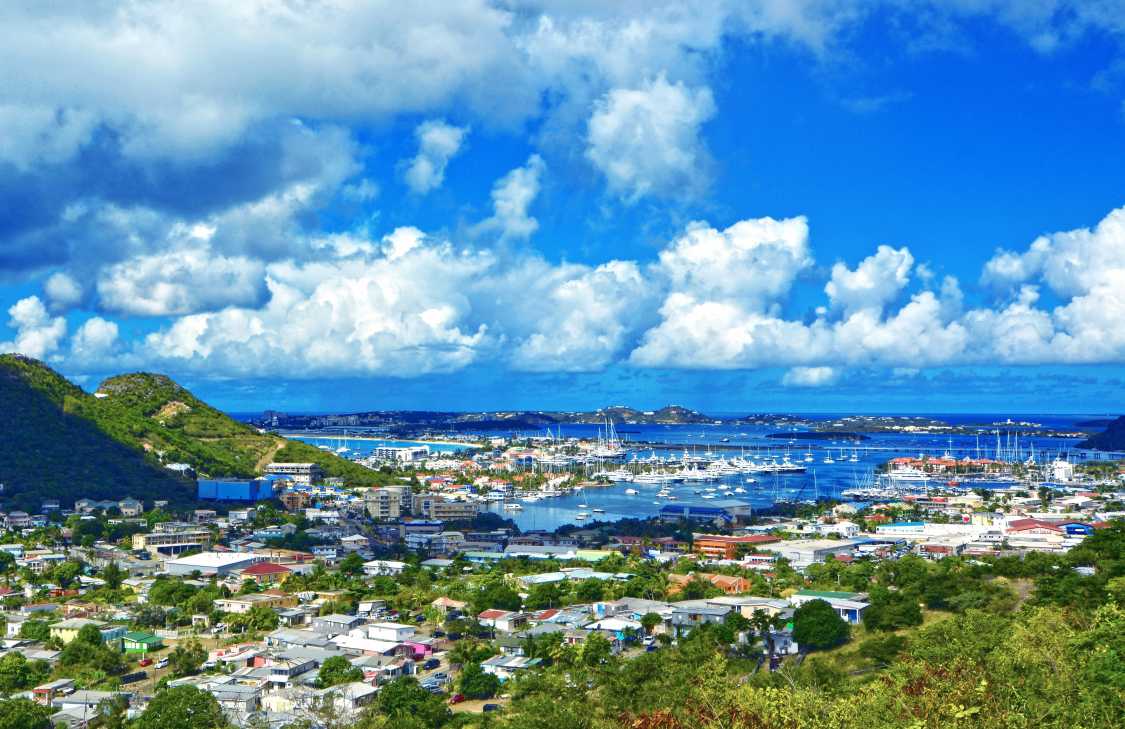
Saint-Martin stands out as the world's smallest landmass shared by two nations. The French side, covering 20.5 square miles, operates as a French Overseas Collectivity with approximately 25,000 residents as of 2025. This unique status delivers European governance paired with Caribbean lifestyle and tax advantages that attract roughly 250 expatriate families annually.
The island's dual-nation setup creates exceptional opportunities. You'll find European standards for healthcare and education alongside competitive business taxation, direct flights to major North American and European cities through Princess Juliana Airport, and a recovering real estate market following Hurricane Irma's 2017 reconstruction efforts. Whether you're launching a business, advancing your career, or planning retirement, Saint-Martin offers a compelling blend of tropical living and practical advantages.
5 compelling reasons to relocate to Saint-Martin
- Tax optimization opportunities with corporate tax rates between 10% and 20%, plus a consumption tax of just 4% instead of standard VAT
- Dual citizenship benefits from French-Dutch administration, offering flexibility in residence and business operations
- Strategic connectivity with direct flights to Paris, Amsterdam, Miami, New York, and Toronto from the shared international airport
- World-class beaches and year-round tropical climate averaging 77-88°F (25-31°C)
- Investment potential in real estate with post-hurricane reconstruction creating value opportunities
The territory combines ease of access for EU citizens with structured pathways for international residents, backed by familiar European administrative systems and English as a widely spoken second language.
Status | French Overseas Collectivity (COM) |
Population | Approximately 25,000 (2025) |
Capital | Marigot |
Area | 20.5 square miles (53.2 km²) |
Official language | French (English widely spoken) |
Currency | Euro (EUR), US Dollar widely accepted |
Climate | Tropical, 77-88°F (25-31°C) year-round |
Time zone | UTC-4 (1 hour ahead of EST) |
Sources: MacroTrends, Worldometer
Your setup journey
Guide in 11 steps. Click any step below to jump directly to the section you need.
01Where to live: finding your ideal neighborhood
Choosing where to live in Saint-Martin depends on your priorities: beach proximity, school access, neighborhood atmosphere, or budget constraints. Despite its compact size, the island offers diverse residential areas serving different lifestyles and expectations.
Marigot: administrative and commercial hub
Marigot, capital of the French territory, concentrates administrative services, retail, and dining. Downtown offers secure residence apartments with rents from EUR 800 to EUR 1,200 for two-bedroom units. Families appreciate proximity to public elementary schools and collège Mont des Accords.
The marina district attracts international clientele with duty-free boutiques and waterfront restaurants. Infrastructure is comprehensive: Carrefour supermarket, pharmacies, banks, and quick access to Princess Juliana Airport (15 minutes by car). The atmosphere is animated during daytime, calmer in evenings.
Grand Case: gastronomic village charm
Grand Case appeals through its preserved Caribbean village atmosphere. Renowned for exceptional restaurant concentration, this area offers sought-after quality of life for expatriates prioritizing calm and authenticity. Three-bedroom houses with gardens rent between EUR 1,400 and EUR 2,200 monthly.
The village maintains a public elementary school, small regional airport (L'Espérance), and family-friendly beach. Several art galleries and artisan shops contribute to the cultural ambiance. The Wednesday farmers market allows stocking up on local produce.
Orient Bay: dynamic beach resort
Orient Bay constitutes the major tourism pole on the French side with its famous two-kilometer beach. Modern residences with pools dominate, offering ocean-view apartments from EUR 1,200 to EUR 2,000 for three-room units. The area attracts young, active international populations.
Leisure infrastructure abounds: beach clubs, water sports centers, restaurants, and animated nightlife during high season. However, schooling requires travel to Marigot or Grand Case (15-20 minutes). The Galerie de la Plage groups convenience stores and services.
Terres Basses: premium residential quarter
Terres Basses, at the western tip, represents the island's most prestigious area with exceptional villas facing Baie Rouge and Baie Longue beaches. Purchase prices often exceed EUR 1,000,000 for quality villas, with long-term rentals starting at EUR 2,500 monthly for four-bedroom properties with pools.
This neighborhood offers preserved settings, optimal security, and immediate proximity to the island's finest beaches. The natural environment remains protected with limited dense construction. Distance from schools (25 minutes to Marigot) represents the main drawback for families with school-age children.
Cul-de-Sac and Quartier d'Orléans: family-friendly affordability
Cul-de-Sac and Quartier d'Orléans provide more accessible alternatives for families. Individual houses with gardens rent between EUR 1,000 and EUR 1,600 monthly. These areas benefit from nearby elementary schools and calm residential environments.
Quartier d'Orléans, further from the coastline, presents attractive rents and significant local population, favoring integration into authentic Saint-Martin life. A Leader Price supermarket and several convenience stores handle daily shopping. Beach access requires 10-15 minutes by car.
Dutch side: Simpson Bay and Maho
Though officially in the Netherlands, Simpson Bay and Maho neighborhoods on the Dutch side remain highly accessible and attract numerous expatriates. Simpson Bay combines modern marina, restaurants, and international atmosphere. Two-bedroom apartment rents start at USD 900 (approximately EUR 850).
Maho offers entertainment with casinos, shopping centers, and the famous airplane landing beach. Royal Palm Beach Resort and other residences provide furnished rentals suited to expatriates. The area's English-language international schools appeal to families prioritizing English curriculum.
The completely open French-Dutch border enables many residents to strategically choose their residence on one side while working on the other, optimizing tax advantages or living costs according to their situation.
Comparing neighborhoods
Urban professionals often prefer Marigot or Simpson Bay for convenience and shorter commutes. Families with young children typically gravitate toward Cul-de-Sac or Quartier d'Orléans for affordability and school proximity. Retirees and remote workers frequently choose Grand Case or Terres Basses for tranquility and beach access, accepting longer drives for services.
The island's compact size means no location is truly inconvenient—everywhere remains within 20-30 minutes' drive. Your choice ultimately reflects lifestyle priorities: urban convenience, family practicality, luxury seclusion, or budget optimization. Visit different areas during your initial weeks to experience their distinct characters before committing to a long-term lease.
02Visas and residency: navigating entry requirements
Immigration procedures for Saint-Martin depend on your nationality and intended length of stay. As a French Overseas Collectivity, the territory applies EU regulations for European citizens while requiring non-EU nationals to follow standard French consular procedures.
European Union citizens
EU passport holders enjoy unrestricted rights to live and work in Saint-Martin. No visa or work permit is required regardless of your length of stay. For short visits, a valid passport or EU identity card suffices.
Long-term residents should register with local authorities after arrival. This administrative step, while straightforward, facilitates banking, healthcare enrollment, and other essential services. The process typically requires proof of address and valid identification.
Non-EU nationals: short-term stays
Citizens outside the European Union need a visa for entry. For stays under 90 days, you'll require a valid passport, return ticket, accommodation confirmation, and proof of sufficient funds. Applications are processed through French embassies or consulates in your home country.
The Entry.sx online form must be completed by all travelers before arrival, regardless of nationality. This digital immigration system streamlines airport processing and tracks entries to the territory.
Long-term work authorization
Employment exceeding 90 days requires a long-stay work visa. You'll need a confirmed job offer and employer-sponsored work authorization before applying. Once in Saint-Martin, this visa must be validated as a residence permit within three months of arrival.
The application process begins at the French consulate in your country of residence. Processing times vary but typically take 4-8 weeks. Your employer will need to demonstrate that the position couldn't be filled locally, particularly for roles in hospitality and construction where local unemployment exists.
The five-year fiscal residence rule
A critical consideration for tax planning: individuals who held tax residence in metropolitan France or French overseas departments within the previous five years cannot claim Saint-Martin tax residency until completing five years of actual residence. This regulation prevents rapid tax optimization and applies automatically to all newcomers with recent French fiscal ties.
Practical considerations
While English is widely spoken in commerce and daily interactions, basic French helps with official paperwork. The open border with Dutch Sint Maarten means no passport controls between the two sides, though each maintains separate immigration policies for international arrivals.
US and Canadian citizens benefit from visa-free entry for tourism but still require proper work authorization for employment. Commonwealth citizens should check specific bilateral agreements, as some may qualify for extended stays beyond standard Schengen rules.
03Employment landscape: opportunities in a tourism-driven economy
Saint-Martin's economy centers on tourism, which represented 80% of economic activity before COVID-19. Post-Hurricane Irma reconstruction has created additional opportunities in construction and services. As of late 2024, approximately 5,105 job seekers were registered across all categories, indicating a tight but active labor market with specific skill demands.
In-demand sectors and salary expectations
The hospitality and food service industry remains the primary employer, with constant demand for bilingual staff at hotels, restaurants, and resorts. Construction and renovation projects continue post-Irma, seeking skilled tradespeople, project managers, and engineers.
Retail thrives on tourist traffic, particularly in duty-free zones around Marigot and Philipsburg. Business services including accounting, legal, marketing, and consulting find opportunities serving international companies attracted by favorable tax structures. The healthcare sector regularly recruits qualified medical professionals to support the local population and medical tourism.
Average net monthly salary stands at approximately USD 1,755 (EUR 1,650), lower than North American or Western European standards but offset by reduced taxation and lower living costs in certain areas.
Hospitality & food service | Leading employer, continuous hiring |
Construction & renovation | Strong demand post-hurricane |
Retail | Opportunities in duty-free commerce |
Business services | Consulting, accounting, marketing |
Healthcare | Qualified professionals needed |
Sources: Collectivité de Saint-Martin, Numbeo
Job search resources
France Travail, the public employment service, expanded its Saint-Martin presence in January 2025 with digital tools and automatic enrollment for certain categories including young people through Mission Locale and individuals with disabilities. The service provides job listings, training programs, and career guidance.
Starting your own business
Entrepreneurs find Saint-Martin attractive for its tax structure and support systems. Initiative Saint-Martin Active offers interest-free honor loans without collateral for business creators. In 2014, this organization supported 62 business launches or acquisitions, generating 247 jobs.
Young entrepreneurs aged 18-30 and residing in Saint-Martin can access the Projet Initiative Jeune program, providing up to EUR 9,378 in startup funding. Applications go through the local employment office (DEETS), with business activity required within three months of approval.
Business registration occurs through the Chambre Consulaire Interprofessionnelle de Saint-Martin (CCISM). Companies providing domiciliation services need prefecture approval valid for six years. An important tax advantage: external companies working on projects exceeding 12 months can establish a secondary location in Saint-Martin to benefit from local taxation rather than their home country's rates.
Working remotely
The island's infrastructure supports remote work with fiber optic deployment ongoing and reliable 4G/5G coverage. Digital nomads and remote employees find the time zone (UTC-4) convenient for coordinating with both European morning schedules and North American afternoon meetings. However, verify your work visa requirements, as remote work for foreign employers may require specific authorization depending on your visa category.
04Real estate market: rebuilding opportunities and premium locations
Saint-Martin's property market has transformed since Hurricane Irma destroyed or damaged 95% of French side structures in 2017. This situation created both challenges and opportunities, with ongoing reconstruction offering attractive pricing and appreciation potential for strategic buyers and renters.
Property types available
Housing options range from secure residence apartments to oceanview villas and modest neighborhood houses. Gated communities with pools and services (security, maintenance) attract expatriates, particularly in Terres Basses, Orient Bay, and Grand Case.
Individual villas comprise a significant portion of available housing, often positioned on hillsides with panoramic Caribbean Sea views. Most include private pools, considered standard amenities in Saint-Martin. Recent construction incorporates strengthened hurricane-resistant standards following Irma's lessons.
Rental and purchase prices
Rental costs vary significantly by location and quality. For monthly rentals, expect EUR 800 to EUR 1,500 for a two-bedroom downtown apartment, and EUR 1,500 to EUR 3,000 for a three-bedroom villa in a residence with pool.
For purchases, prices per square meter range from EUR 3,000 to EUR 6,000 depending on location and property condition. An 860-square-foot (80 m²) apartment trades between EUR 240,000 and EUR 480,000, while a quality 1,600-square-foot (150 m²) villa with pool and ocean view can reach EUR 600,000 to EUR 900,000.
The post-Irma market presents opportunities for investors, with renovation-needed properties priced 20% to 30% below pre-2017 values. Gradual territorial reconstruction suggests favorable medium-term appreciation potential.
Neighborhoods and residential areas
Marigot, the capital, concentrates administrative and commercial activity. Downtown offers practical apartments for those prioritizing service proximity, with two-bedroom units renting from EUR 800 to EUR 1,200 monthly. Grand Case, renowned for gastronomy, attracts those seeking tranquility with Creole houses and beachfront properties.
Orient Bay, a dynamic beach resort, features modern residences facing one of the island's finest beaches. Prices run high but reflect quality of life and infrastructure. Terres Basses, on the western tip, represents the most exclusive area with exceptional villas and preserved environment, though family convenience suffers from school distance.
Cul-de-Sac and surrounding areas appeal to families for their calm atmosphere and school proximity, with more affordable rents while maintaining pleasant living standards.
Buying and renting procedures
For rentals, prepare documentation including identification, income verification (pay stubs, tax returns), and possibly a bank guarantee. Landlords typically require a security deposit equivalent to two months' rent, plus one to three months' notice depending on lease type.
Property purchases follow French legal procedures with notary involvement for authentic deed signing. Notary fees represent approximately 7% to 8% of purchase price for existing properties, and 2% to 3% for new construction. EU citizens face no ownership restrictions and can freely acquire Saint-Martin property.
Local banks offer mortgage financing, though approval conditions are strict with required down payments of 20% to 30% minimum. Interest rates run slightly higher than metropolitan France. Budget for mandatory hurricane insurance, representing 0.6% to 1% of property value annually. This coverage is non-negotiable for property ownership given cyclone exposure.
Dutch side alternatives
Many expatriates consider properties on the Dutch side for potentially lower costs or different amenities. Simpson Bay and Maho offer modern developments with resort-style facilities, often with rental rates 10% to 15% below comparable French side properties. The open border makes cross-border living and working entirely practical, allowing residents to optimize location based on personal priorities.
05Cost of living: budgeting for island life
Living costs in Saint-Martin fall in the upper-middle range for Caribbean destinations, primarily due to importation of most consumer goods. However, favorable taxation and the absence of standard VAT partially offset these premiums. Budgets vary significantly based on lifestyle choices and consumption adaptation.
The following data comes from Numbeo reflecting average prices observed in July 2025. Keep in mind that rates fluctuate with tourist seasons and imported product availability.
Monthly budget for single person
Living alone in Saint-Martin requires monthly budgets ranging from EUR 1,800 to EUR 2,500 depending on your comfort level and spending habits. A single person without dependents will spend within this range based on economical versus comfortable lifestyle choices.
Expense category | Monthly budget |
Studio/1-bedroom rent (city center) | EUR 800 - 1,200 |
Groceries and food | EUR 300 - 450 |
Utilities (electricity, water, gas) | EUR 150 - 200 |
Internet and phone | EUR 80 - 100 |
Transportation (fuel, maintenance) | EUR 150 - 200 |
Entertainment and dining out | EUR 200 - 300 |
Health insurance supplement | EUR 100 - 150 |
Total monthly | EUR 1,780 - 2,600 |
Source: Numbeo (July 2025)
Monthly budget for family of four
A family with two children should prepare for significantly higher costs, particularly if choosing private schools and larger housing. Budget between EUR 3,500 and EUR 5,000 monthly depending on lifestyle preferences.
Expense category | Monthly budget |
3-bedroom house/villa rent | EUR 1,500 - 2,500 |
Groceries and food | EUR 600 - 900 |
Utilities (electricity, water, gas) | EUR 250 - 350 |
Internet and phones | EUR 120 - 150 |
Transportation (2 vehicles) | EUR 300 - 400 |
Education (public schools) | EUR 0 - 200 |
Family activities and entertainment | EUR 400 - 600 |
Health insurance (4 people) | EUR 300 - 450 |
Total monthly | EUR 3,470 - 5,550 |
Source: Numbeo (July 2025)
Daily cost benchmarks
Some practical reference points for gauging daily expenses: a meal at an inexpensive restaurant costs approximately EUR 15, while dinner for two at a quality establishment reaches EUR 80 to EUR 120. A coffee runs EUR 3, a local beer EUR 4.
At supermarkets, expect to pay around EUR 2.50 per liter of milk, EUR 4 for a dozen eggs, and EUR 10 per kilogram of chicken. Imported produce runs expensive: EUR 3 per kilogram for tomatoes, EUR 4 for apples. Local products (tropical fruits, fresh fish) remain more affordable.
Gasoline sells for approximately EUR 1.30 per liter on the French side. Movie tickets cost EUR 12, gym memberships EUR 60 to EUR 80 monthly. While these rates exceed some destinations, they're offset by higher net salaries thanks to favorable taxation.
Cost-saving strategies
Smart shoppers cross to the Dutch side for certain purchases where competition keeps prices lower. Buying local produce at markets rather than imported supermarket goods significantly reduces food costs. Many residents maintain Costco memberships on the Dutch side for bulk purchases of household goods and non-perishables.
Utility costs, particularly air conditioning in the tropical climate, represent a significant expense. Energy-efficient appliances and strategic AC use (primarily nighttime) can reduce monthly bills by 30% or more. Hurricane season timing affects insurance rates, with policies typically renewing annually at rates reflecting recent storm activity and claims.
06Healthcare system: European standards in a Caribbean setting
Saint-Martin provides healthcare through a French public system supplemented by private options, delivering European medical standards within a small island context. While routine care is readily available, complex procedures may require transfer to Guadeloupe or metropolitan France.
Public healthcare infrastructure
The primary facility, hôpital Louis-Constant Fleming in Marigot, handles general consultations, emergency services, and selected medical specialties. For major surgical procedures or highly specialized treatments, patients transfer to Centre Hospitalier Universitaire de Pointe-à-Pitre in Guadeloupe.
Residents access French social security coverage with standard reimbursement rates: 70% for general practitioner consultations, with hospitalizations and technical procedures following metropolitan schedules. The system operates similarly to healthcare in France, though with more limited specialist availability.
Private insurance considerations
Given infrastructure limitations, comprehensive private health insurance is strongly recommended. Quality international policies cover medical evacuation to Guadeloupe or beyond, which can cost thousands of euros without coverage.
International insurers offer expat-specific plans covering on-island treatment plus evacuation provisions. Many employers include group health insurance as part of compensation packages, complementing basic public coverage. Options like Cigna Global, Allianz Care, and April International provide plans designed for Caribbean residents, with annual premiums ranging from EUR 1,200 to EUR 4,000 depending on coverage level and age.
Medical facilities and practitioners
Several pharmacies operate in Marigot, Grand Case, and residential areas, dispensing prescription medications. Supply chains occasionally create delays for specialized medications compared to larger markets.
Private practice physicians and specialists maintain offices across the territory, though some specialties require consultation in Guadeloupe. Dentists, physiotherapists, and other healthcare professionals practice locally, with fees generally aligned to French metropolitan rates. Many practitioners speak English, particularly in areas with international resident concentrations.
Preparing for your move
Before relocating, complete a comprehensive health assessment and ensure adequate supply of prescription medications with accompanying documentation. Individuals with chronic conditions should verify local medication availability and consider maintaining a larger supply.
Vaccinations for yellow fever aren't required for Saint-Martin, but standard immunizations including tetanus and hepatitis A and B are recommended. Arrange private health insurance before departure when possible, as waiting periods may be shorter than post-arrival applications. Some policies exclude pre-existing conditions unless disclosed and accepted during initial enrollment.
Medical evacuation considerations
The most critical aspect of Saint-Martin healthcare planning involves evacuation coverage. Air ambulance services to Guadeloupe cost EUR 3,000-5,000, while medical transport to Miami or France can exceed EUR 30,000. Comprehensive travel or health insurance with evacuation coverage is essential, particularly for older adults or those with existing health conditions.
07Tax advantages: understanding Saint-Martin's competitive rates
Saint-Martin's tax system offers significant advantages over both metropolitan France and many Caribbean territories. The territorial tax principle means only income and profits generated within Saint-Martin face local taxation, with rates substantially lower than European standards and a consumption tax one-quarter of typical VAT rates.
Personal income tax structure
Individual income tax operates on a progressive household system similar to French taxation, using a quotient familial calculation: 1 share for singles, 2 shares for married couples without children, plus 0.5 share per child for the first two, and 1 full share from the third child onward.
The key advantage comes from a 40% reduction on calculated tax liability, capped at EUR 6,700. If your calculated tax reaches EUR 10,000, you'll pay EUR 6,000. This reduction applies automatically to all Saint-Martin tax residents.
Income tax is withheld at source through employers. Annual tax declarations are due before May 31st, with two installment payments on February 15th and May 15th, followed by final settlement before September 30th.
Corporate taxation benefits
Businesses registered in Saint-Martin benefit from corporate tax rates between 10% and 20% depending on activity type, compared to 25% or higher in most developed economies. Taxation applies only to profits generated within Saint-Martin territory, following strict territorial principles.
Additional corporate advantages include near-total exemption on dividends and capital gains from shareholdings, unlimited loss carryforward periods, a 10% rate for intellectual property rights and convertible bonds, and zero withholding tax on dividends, interest, or royalties paid abroad. These provisions make Saint-Martin particularly attractive for international business structures and holding companies.
TGCA consumption tax at 4%
The Taxe Générale sur le Chiffre d'Affaires replaces European VAT with a standard rate of just 4% applied to retail sales and services. This creates a significant competitive advantage for merchants and service providers.
The mechanism mirrors VAT operation: businesses collect the tax on behalf of the government and remit it, making it revenue-neutral for compliant companies. Territorial rules follow patterns similar to European VAT regulations.
Social security contributions
Employers pay approximately 7% to 13% for health, maternity, disability, and death benefits, 8.55% for pension insurance up to EUR 3,428 monthly salary (then 1.9% above), 0.3% solidarity contribution, 3.45% to 5.25% for family benefits depending on conditions, and 4.05% for unemployment insurance up to EUR 13,712 monthly.
Employee deductions include 6.9% pension insurance up to EUR 3,428 monthly (then 0.4% above), 9.2% social security contribution (CSG) on gross salary, and 0.5% debt repayment contribution (CRDS).
Property and local taxes
Property owners face several local levies. Property tax varies by location and property value, with different rates for vacant land versus developed properties. A vacant property tax of 8% applies to properties unoccupied for over two consecutive years.
Residence tax affects all property occupants whether owners or renters, calculated based on property size and amenities. Real estate investors pay a 19% capital gains tax on property sales, calculated on the difference between purchase and sale prices.
US citizens and FATCA compliance
American citizens should note that US tax obligations continue regardless of residence location. Saint-Martin has no specific tax treaty with the United States, though France's treaty may offer limited provisions. FATCA reporting requirements apply to US citizens holding foreign accounts, with local banks requesting W-9 forms for American account holders. Consult a tax professional familiar with both US and Saint-Martin taxation to optimize your filing strategy.
08Education options: French curriculum and international choices
Education in Saint-Martin follows the French national curriculum and calendar, providing continuity for families from France while also offering English-language options on the Dutch side. This dual system creates flexibility for international families considering bilingual education or specific academic pathways.
French public school system
Public schools cover all levels from preschool through secondary education. Elementary schools accept children from age 3, following Ministry of Education guidelines identical to metropolitan France. Education is free and maintains standards equivalent to schools throughout the French system.
For secondary education, collège Mont des Accords and lycée Robert Weinum provide instruction through the French baccalauréat. Students sit for the same national exams as their metropolitan counterparts, earning internationally recognized diplomas. Class sizes tend to be smaller than in major French cities, allowing more individualized attention.
Private and bilingual schools
Several private institutions offer French or bilingual French-English instruction with reduced class sizes and enhanced supervision. Tuition varies by institution but typically ranges from EUR 3,000 to EUR 8,000 annually depending on grade level and services.
Families prioritizing English-language education can access schools on the Dutch side, easily reached due to the open border. This option appeals to international families planning future moves to English-speaking countries or seeking globally recognized qualifications.
Dutch side school system
Sint Maarten operates a distinct educational structure taught in English. Primary schools accept children from age 4, followed by secondary schools through high school equivalency. The system follows Dutch educational models with English as the instruction language.
Several international schools offer IB (International Baccalaureate) programs, globally recognized and facilitating university admission in English-speaking countries. This diversity enables families to select pathways aligned with their children's educational objectives and future plans.
Higher education pathways
Saint-Martin has no university on its French side. Students pursuing higher education typically attend Université des Antilles in Guadeloupe or Martinique, universities in metropolitan France, or institutions on the Dutch side.
Dutch Sint Maarten hosts several universities including American University of the Caribbean School of Medicine in Cupecoy (medical education), University of St. Martin in Philipsburg, and University of Sint Eustatius School of Medicine in Cole Bay established in 2013. These English-language institutions attract international students and offer an alternative to traveling abroad for tertiary education.
Special education and support services
Students with learning differences or special needs can access support through the French public system, though resources are more limited than in larger metropolitan areas. Private tutoring and specialized support services are available in both French and English, with practitioners often serving clients on both sides of the island.
The bilingual environment provides natural language acquisition opportunities, with many children becoming fluent in both French and English through school and daily interactions. This linguistic advantage benefits long-term career prospects in increasingly globalized employment markets.
09Relocation logistics: organizing your move to the Caribbean
Moving to Saint-Martin requires careful planning, particularly when shipping household goods by sea from Europe or North America. This practical guide helps streamline your transition and avoid common pitfalls.
Complete relocation checklist
- Book international movers at least three months ahead. Companies specializing in Caribbean freight offer shared or dedicated containers based on your volume. Expect USD 2,500 to USD 7,500 for a 20-foot container, with 6-8 week transit times from North American or European ports.
- Prepare customs documentation including detailed inventories in French and English, proof of Saint-Martin residence, passport copies, and change of residence attestation. Proper documentation expedites clearance upon arrival.
- Decide what to ship. Furniture is readily available locally, often at competitive prices through duty-free provisions. Prioritize personal effects, clothing, electronics, books, and sentimental items. Note that Saint-Martin uses 110V (American plugs) on the Dutch side and 220V on the French side, requiring voltage consideration for appliances.
- Cancel home country contracts for utilities, internet, phone, and insurance. Maintain your home country bank account if possible, as it facilitates international transactions and provides backup banking options.
- Arrange vehicle import if desired. Shipping a car from North America costs USD 1,800 to USD 3,000, from Europe EUR 1,500 to EUR 2,500. However, local purchase may prove more economical. A new Volkswagen Golf equivalent costs approximately USD 18,500 (EUR 17,400) in Saint-Martin.
- Secure temporary accommodation for your initial weeks while finding permanent housing. Short-term furnished rentals or business hotels ease this transition period.
- Purchase local insurance immediately upon arrival including home insurance with mandatory hurricane coverage, auto insurance, and comprehensive health insurance. These protections are essential given natural disaster risks.
- Open a local bank account within your first days. French banks operating in Saint-Martin (BNP Paribas, Société Générale) simplify this process for existing customers. Transactions occur in euros on the French side, though US dollars are widely accepted throughout the island.
- Obtain a local driver's license. International licenses are temporarily accepted, but exchange for a Saint-Martin license is required after several months of residence.
- Register with your embassy or consulate if you wish to maintain ties with your home country. Registration provides access to emergency services and official communications.
First days and weeks
Pack lightweight clothing and sun protection for immediate use upon arrival—the tropical climate requires quick adaptation. Acquire a local mobile phone number promptly to facilitate administrative procedures and housing searches.
Join expatriate groups on social media and the Expat.com forum for practical advice and quick social network development. Saint-Martin's expat community is welcoming and freely shares recommendations for services, housing, and professional contacts.
If arriving during hurricane season (June through November), familiarize yourself immediately with alert procedures, assemble an emergency kit (water, non-perishable food, flashlights, battery radio), and learn your neighborhood's evacuation zones. Hurricane preparedness is taken seriously in Saint-Martin following Irma's impact.
Cultural adaptation tips
While English is widely spoken, learning basic French phrases aids official interactions and demonstrates respect for local culture. Business operates on a more relaxed Caribbean timeline than major metropolitan areas—patience and flexibility help avoid frustration.
The open border creates unique cultural dynamics, with residents freely moving between French and Dutch sides for work, shopping, and recreation. Embrace this flexibility rather than treating the two sides as separate entities, as most locals live and work across the entire island regardless of official boundaries.
10Lifestyle and recreation: beaches, dining, and island culture
Life in Saint-Martin centers on outstanding beaches, world-class dining, and water sports in a cosmopolitan Caribbean atmosphere. The island blends French sophistication, Dutch accessibility, and Caribbean warmth into a lifestyle that balances relaxation with active recreation.
Beaches and water activities
Saint-Martin ranks among the Caribbean's finest beach destinations. Orient Bay, the most famous, stretches nearly two kilometers of white sand with comprehensive water sports: jet skiing, paddleboarding, sailing, kitesurfing. Beach clubs host regular evening events and concerts.
Baie Rouge offers quieter atmosphere for those seeking tranquility. Grand Case Beach combines pleasant swimming with direct access to the village's renowned restaurants. On the Dutch side, Maho Beach delivers the unique spectacle of aircraft landing meters above beachgoers—essential viewing for aviation enthusiasts.
Scuba diving reveals coral-rich waters teeming with tropical fish. Several PADI-certified centers offer introductory dives and certifications, plus excursions to wrecks and surrounding reefs. Snorkeling is easily accessed from shore, particularly at Pinel Island, a small islet reached by shuttle from Cul-de-Sac.
Dining scene and nightlife
Grand Case earned its nickname as "Caribbean culinary capital" through an exceptional concentration of fine dining establishments. The village aligns roughly fifteen restaurants along its bay, offering refined French cuisine, Creole specialties, and fresh seafood.
Marigot hosts an animated local market several times weekly for tropical fruits, spices, and Caribbean crafts. Traditional beach restaurants called lolos serve typical dishes like grilled chicken, cod fritters, and curry at affordable prices in convivial atmospheres.
Nightlife concentrates primarily on the Dutch side in Maho and Simpson Bay, with casinos, nightclubs, and music venues open until early morning. The French side maintains a more relaxed vibe with oceanfront lounge bars and occasional musical evenings.
Sports and outdoor activities
Hiking enthusiasts can explore trails at Pic Paradis, the island's highest point at 1,391 feet (424 meters), offering panoramic views of both territories. The Froussards Trail traverses mangrove ecosystems, allowing observation of these fragile wetland habitats.
Golf is available at Mullet Bay Golf Course on the Dutch side, an 18-hole oceanfront layout. Tennis and fitness facilities operate at various clubs and residences, while yoga classes increasingly take place outdoors facing the ocean.
Boat excursions represent a signature activity: day trips to surrounding islands like Anguilla, Saint Barthélemy, or Tintamarre, deep-sea fishing expeditions, or sunset cruises. Numerous operators run these trips from Marigot or Simpson Bay marinas.
Cultural events and festivals
Carnival stands as the year's cultural highlight with two weeks of parades, concerts, and street celebrations between February and March. Costumed processions compete in creativity through explosions of color and Caribbean music.
The Fête de la Musique on June 21st celebrates French heritage with free concerts throughout neighborhoods. The Heineken Regatta in March attracts hundreds of sailing vessels worldwide for four days of racing and festivities. Saint Martin's Day on November 11th commemorates the island's historical division with official ceremonies and popular entertainment.
Practical lifestyle considerations
The island's small size (20.5 square miles) means most locations are within 20 minutes' drive. Traffic can be heavy during peak hours, particularly near the airport and main commercial areas. Most residents own vehicles as public transportation is limited to taxis and informal bus services.
Shopping options include duty-free stores in Marigot and Philipsburg offering electronics, jewelry, and luxury goods at competitive prices. Supermarkets stock international products, though prices run higher than mainland markets due to importation costs. Many residents cross to the Dutch side for certain purchases where costs may be lower.
This activity diversity allows Saint-Martin residents to fully enjoy the Caribbean setting while maintaining rich, varied social lives balancing beach relaxation with cultural discovery.
Join the discussion on the forum
11In brief
Saint-Martin delivers a distinctive proposition: European infrastructure and governance within a Caribbean island setting, complemented by tax structures that reward long-term residents. The dual French-Dutch administration creates flexibility for business, education, and daily life that few other destinations can match.
Beyond the spectacular beaches and tropical climate, the territory offers genuine professional opportunities in post-Irma reconstruction, quality French education, and international business development facilitated by competitive taxation. While living costs run high, tax advantages substantially offset expenses for established residents.
Connect with Saint-Martin's international expat community on the Expat.com forum to exchange practical advice and insider knowledge with those who've already made the transition. Your Caribbean chapter begins here.
Join the Saint Martin community
Get regular tips and advice to make the most of your expat life
Essential services for your expat journey




Forum topics on living in Saint Martin
Discover forums topics on expat life in Saint Martin: join the conversation, ask your questions, get advice and share your experience.