

Living in Ho Chi Minh City: the ultimate expat guide
Everything you need to know for a successful life in Ho Chi Minh City.
Ho Chi Minh City, Vietnam's largest metropolis with over 9 million residents, is a dynamic blend of traditional Vietnamese culture and rapid modernization. As the country's economic powerhouse, the city offers expatriates a unique Southeast Asian experience with affordable living costs, a thriving business environment, and an increasingly international community. From the colonial architecture of District 1 to the emerging tech hubs in District 2, the city provides diverse neighborhoods suited to different lifestyles and budgets.
5 good reasons to move to Ho Chi Minh City
- Affordable cost of living: Compared to some other regional hubs like Singapore or Hong Kong, daily expenses can often be lower, with quality apartments and local dining significantly cheaper.
- Growing job market: The city hosts expanding sectors including technology, manufacturing, finance, and education, attracting international companies and startups.
- Vibrant food scene: From street food stalls serving authentic Vietnamese cuisine to high-end international restaurants, the city satisfies every palate.
- Strategic location: The city serves as an excellent base for exploring Southeast Asia, with affordable flights to regional destinations.
- Warm climate year-round: Tropical weather means no need for winter clothing, though the rainy season from May to November brings regular afternoon showers.
Source: World Population Review
Working in Ho Chi Minh City
Ho Chi Minh City is Vietnam's economic engine, accounting for approximately 23% of the country's GDP. The city attracts both multinational corporations and innovative startups, particularly in technology, manufacturing, finance, and education sectors. Expatriates typically find opportunities in teaching English, IT development, business management, and hospitality roles, with many international companies establishing regional headquarters here.
Key employment sectors
The technology sector has grown substantially, with District 2 and District 7 hosting innovation centers and co-working spaces. Manufacturing is central to the economy, with factories in surrounding provinces employing thousands. The service industry, including hospitality, finance, and education, continues expanding as the city welcomes more international visitors and residents. English teaching remains one of the most accessible entry points for expatriates, with language centers across many districts.
Work permits and legal requirements
Foreign workers must obtain a work permit before employment, which requires a bachelor’s degree or relevant professional experience, a health certificate, and a valid employment contract. Employers typically sponsor the process. Processing can be completed in as few as 5–15 working days if documentation is correct. Once approved, a Temporary Residence Card (TRC) is issued, generally valid for up to two years. Some expatriates also work on business visas or digital nomad arrangements, though these require periodic visa renewals or border runs.
Unemployment rate (Vietnam) | 2.22% |
Average monthly salary (net) | VND13.1 million |
Key sectors | Technology, finance, retail |
Data correct as of November 2025.
Sources: Numbeo, Vietnamnet Global
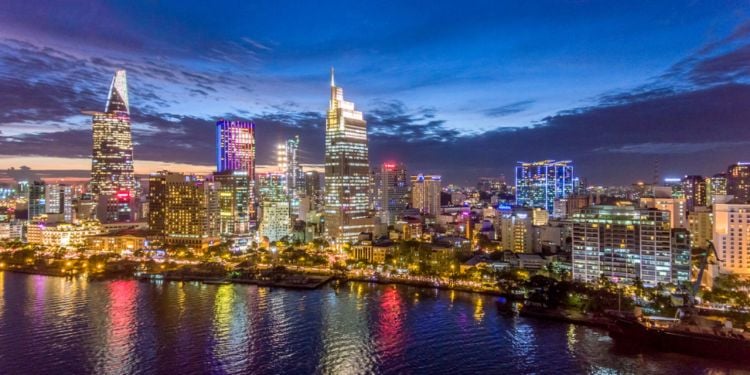
Working in Ho Chi Minh City
Ho Chi Minh City, also referred to as Sài Gòn, is the economic capital of the country. This relatively modern city has a rapidly ...
Higher education & universities
Ho Chi Minh City hosts some of Vietnam's leading universities and educational institutions, offering programs in Vietnamese and increasingly in English. International students and expatriates can pursue undergraduate and graduate degrees in various fields, with several universities partnering with foreign institutions to provide dual degrees and exchange programs.
Major universities and programs
Among the key universities in the city are Vietnam National University Ho Chi Minh City (VNU-HCM), offering comprehensive programs across multiple disciplines. RMIT University Vietnam offers Australian-accredited degrees while the University of Economics Ho Chi Minh City (UEH) specializes in business and economics. Ton Duc Thang University focuses on engineering and technology programs
Admission requirements and costs
International students generally need a high school diploma for undergraduate programs or a bachelor’s degree for graduate studies, along with proof of English proficiency for English-taught courses. Student visas require an admission letter, financial documentation, and a health certificate. Public universities charge modest tuition fees, often a few hundred to a few thousand USD per year, while private or international institutions, including RMIT Vietnam, typically range from $10,000 to $15,000 annually. Application deadlines vary by school and program, so prospective students should check each university’s website.
Sources: RMIT Vietnam, VNU-HCM, UEH
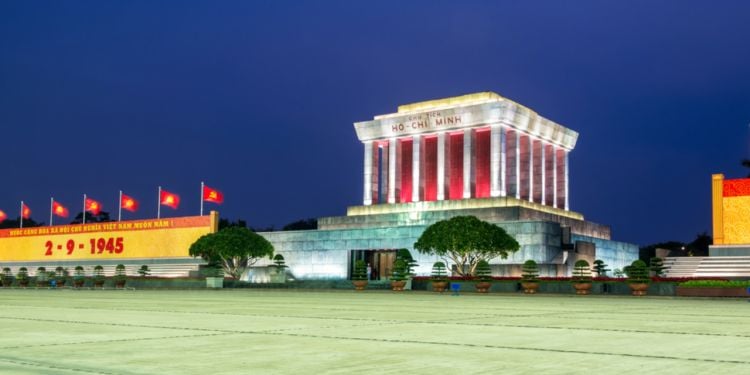
Study in Ho Chi Minh City
Although people may be unable to tell at first glance, Ho Chi Minh City is home to more than 80 universities and colleges. Although there are so ...
Schooling for children
Expatriate families in Ho Chi Minh City have access to numerous international schools offering curricula from various countries. These institutions follow British, American, International Baccalaureate (IB), or other international programs, providing continuity for children moving between countries. Among the facilities some offer are sports complexes, performing arts centers, and modern technology labs.
International schools
There are several international schools in the city, many of which are situated in Districts 2, 7, and Binh Thanh, areas favored by expatriate families. Key institutions include British International School (BIS) in District 2, International School Ho Chi Minh City (ISHCMC), Australian International School (AIS), and Singapore International School (SIS).
Enrollment and requirements
When applying, students typically need to provide previous school records, birth certificates, passport copies, and health records including vaccination certificates. Most schools conduct assessment tests and interviews. Waiting lists can be ling for popular institutions, so families should apply 6-12 months in advance. Some schools in Ho Chi Minh City offer scholarships or payment plans.
Housing & neighborhoods
Ho Chi Minh City's housing market has plenty of options from serviced apartments in central districts to spacious villas in quieter suburban areas. Expatriates typically choose neighborhoods based on proximity to international schools, workplaces, and amenities. Rental costs vary significantly by district and property type, with modern high-rise apartments increasingly popular among international residents.
Where expats live
Popular areas for expats include the busy city center, District 1 for its vibrant nightlife, entertainment, culture and business connectivity. Families favor District 2 and District 7, which offer modern compounds—gated communities with shared security and amenities.
Rental costs and rental procedures
Renting typically involves securing a trusted agent to help find a property and negotiate a standard one-year lease. Tenants usually pay an upfront security deposit equal to two months' rent, plus the first month's rent. The landlord is responsible for registering the tenant’s temporary residence with the local police.
1-bedroom apartment (city center) | VND10 million - 20 million |
3-bedroom apartment (city center) | VND20 million - 40 million |
Data correct as of November 2025.
Source: Numbeo
🔍To learn more
Leisure, culture & things to do
Ho Chi Minh City offers a rich mix of historical sites, modern entertainment venues, and green spaces. From French colonial landmarks to contemporary art galleries and traditional water puppet theaters, the city satisfies diverse cultural interests.
Cultural attractions
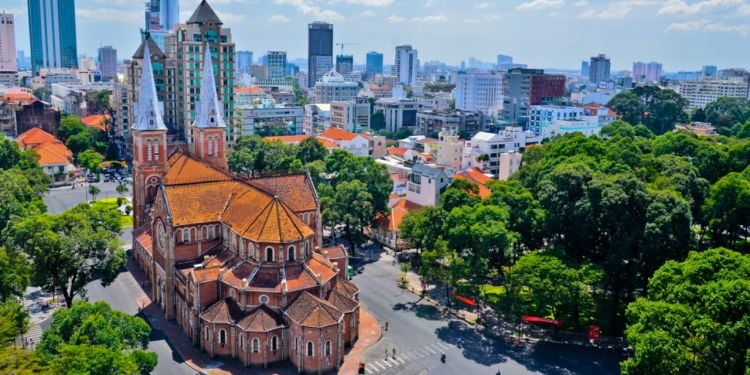
The city's key historical sites include the War Remnants Museum and Reunification Palace, complemented by the wartime Cu Chi Tunnels nearby. Meanwhile, you can find great examples of French colonial architecture at the Notre-Dame Cathedral Basilica and the Central Post Office. For a good night out, take your seat at the Saigon Opera House.
Recreation and nightlife
Tao Dan Park is a popular green space for exercise and relaxation. If you are into sports, join international rugby, football, and running clubs, or tee off at a golf course in Districts 7 and 9. If you are moving with children, they will love Dam Sen Water Park and Suoi Tien Theme Park. When it comes to nightlife in Ho Chi Minh City, there are plenty of choices, including the bars and music venues of Bui Vien Walking Street and the sophisticated rooftop bars and riverside restaurants of District 1.
Sources: War Remnants Museum, Dam Sen Water Park
🔍To learn more

Leisure activities in Ho Chi Minh City
One of the most interesting aspects of living in Ho Chi Minh City is the fact that there's ...

Sports activities in Ho Chi Minh City
While Ho Chi Minh City may not be the most nature-friendly city in its region, it certainly caters ...

The food scene in Ho Chi Minh City
One major benefit to living and working in Ho Chi Minh City is that it's an ideal spot if ...
Daily life
Ho Chi Minh City operates at a fast pace with a blend of traditional Vietnamese customs and modern urban conveniences. Daily life involves navigating motorbike-filled streets, discovering local markets, and adapting to tropical weather patterns. The city's 24-hour energy means restaurants, cafés, and shops stay open late, accommodating various schedules and lifestyles.
Getting around
The city's first metro line, Line 1, opened in late 2024, connecting Ben Thanh in District 1 to Suoi Tien Theme Park, significantly reducing travel time across the eastern corridor. However, motorbikes remain one of the most popular forms of transport. Many expatriates rent bikes monthly or use ride-hailing apps for daily travel. Taxis tend to be reliable, often using apps that display upfront pricing. Buses serve most areas, though their routes can be confusing for newcomers.
Cultural habits and lifestyle
The city wakes early, with markets and street vendors active by around 6:00 AM. Lunch breaks typically run from noon to 1:30 PM, when many offices and shops close. Afternoons bring heat and occasional rain, making indoor activities popular. Evenings buzz with activity as temperatures cool, with families dining out and socializing. Street food is a central part of the culture, with dishes like pho (fragrant beef/chicken noodle soup) and com tam (grilled pork with broken rice) available everywhere. Coffee culture thrives, with traditional ca phe sua da (iced coffee with condensed milk) and modern specialty shops.
🔍To learn more
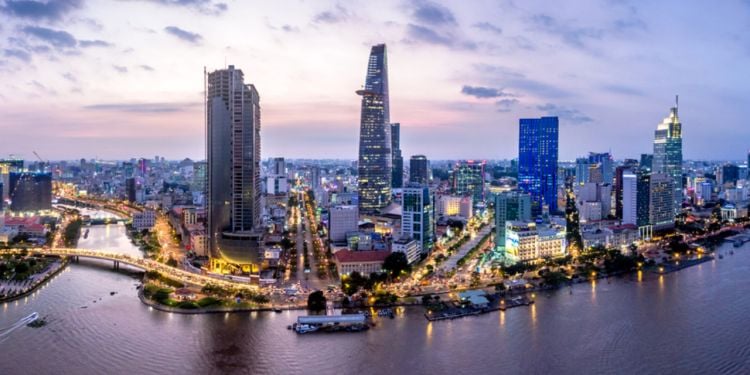
Discovering Ho Chi Minh City
A question many expats may have before relocating to Ho Chi Minh City is whether or not they'll ...

Building your social and professional circles in Ho Chi Minh City
Expats young and old may fear not being able to develop a social network when they relocate to ...
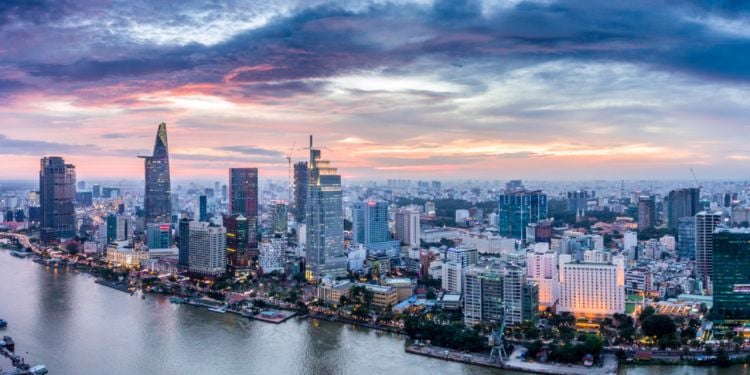
Getting around Ho Chi Minh City
Moving to Ho Chi Minh City is exciting for several reasons. Throw out your preconceived notions or fears because this will be the adventure of your ...
Cost of living
Ho Chi Minh City offers expatriates a comfortable lifestyle at costs significantly lower than several other Asian metropolitan hubs. While prices have risen in recent years, daily expenses remain affordable, with local markets, street food, and public transport providing budget-friendly options alongside upscale restaurants, imported goods, and international services.
Monthly expenses for a single person
Rent (1-bedroom apartment in the city center) | VND10 million - 20 million |
Utilities | VND1.5 million - 4 million |
Groceries | VND2.5 million - 4.5 million |
Data correct as of November 2025.
Monthly expenses for a family of four
Rent (3-bedroom apartment in the city center) | VND20 million - 40 million |
Utilities | VND3.5 million to 5.5 million |
Groceries | VND6.5 million - 10 million |
Data correct as of November 2025.
Sources: Numbeo, Vietnam Airlines
Note: Exchange rate used: 1 USD = 25,000 VND (approximate)
In short
Ho Chi Minh City offers expatriates an appealing combination of affordable living, professional opportunities, and cultural experiences in one of Southeast Asia's most dynamic urban environments. While challenges like traffic congestion and tropical heat exist, the welcoming local community, growing expatriate network, and strategic regional location make it an increasingly popular destination for those seeking career advancement or lifestyle change. To connect with fellow expatriates, share experiences, and get practical advice for your move, join the Expat.com Ho Chi Minh City forum.
We do our best to provide accurate and up to date information. However, if you have noticed any inaccuracies in this content, please contact us.


News & testimonies

Richard in Ho Chi Minh City: "People here are friendly"
Richard comes from Kuala Lumpur, Malaysia. Music teacher, he settled in Ho Chi Minh City in September 2013 following several trips. Nowadays, he also runs a trading business.

Hello Saigon
I am Lyra from the Philippines. We moved to Ho Chi Minh City, Vietnam in 2009. My husband's company set up their site in Vietnam and so, we moved.
Addison in Ho Chi Minh City: "The Vietnamese lifestyle is incredibly relaxed"
Addison comes from the USA. He moved to Ho Chi Minh City with his friend Sarah in March 2015. English teacher, Addison enjoys writing in his journal, relaxing a the cafe, in a park or by the riverfront.

Jacob in Ho Chi Minh City: "Everything is so much cheaper here"
US expat, Jacob moved to Ho Chi Minh City nearly nine months ago with his wife and daughter. Besides his consultancy work, he enjoys traveling with his family and going out with friends for a coffee or beer.
Essential services for your expat journey



