

Living in Fujairah: the ultimate expat guide
Everything you need to know for a successful life in Fujairah.
Fujairah is the only emirate of the UAE located entirely on the eastern coast, nestled between the Hajar Mountains and the Gulf of Oman. With a population of approximately 316,000 residents, it offers expatriates a quieter, more affordable lifestyle compared to Dubai or Abu Dhabi. The emirate combines stunning natural landscapes—pristine beaches, dramatic mountains, and protected wadis—with modern amenities and a rich cultural heritage dating back centuries. Fujairah's strategic position outside the Strait of Hormuz has made it a global maritime hub, while its relaxed pace of life appeals to families and professionals seeking authenticity over urban intensity.
5 Good Reasons to Move to Fujairah
- Lower cost of living – Fujairah is approximately 33% more affordable than Dubai, with significantly lower housing and daily expenses.
- Natural beauty – Access to pristine beaches, the Hajar Mountains, and the UAE's first protected mountain reserve at Wadi Wurayah.
- Rich heritage – Home to the UAE's oldest mosque (Al Bidyah, built in 1446) and historic Fujairah Fort.
- Growing economy – The world's third-largest bunkering port creates diverse employment opportunities in maritime, logistics, and energy sectors.
- Family-friendly environment – A safe, welcoming community with quality international schools and healthcare facilities.
Working in Fujairah: Employment Opportunities and Visa Requirements
Fujairah's economy has diversified significantly from its traditional fishing and agricultural roots. Today, the emirate is a major player in global maritime trade, with the Port of Fujairah serving as the world's third-largest bunkering hub after Singapore and Rotterdam. Employment opportunities span multiple sectors, though salaries typically run about 10% lower than in Dubai—balanced by the considerably lower cost of living.
Key Employment Sectors
The oil and gas industry dominates Fujairah's economy, with the Fujairah Oil Industry Zone (FOIZ) hosting 15 international storage terminals and processing over 97 million metric tonnes annually. The maritime and logistics sector employs thousands in shipping agencies, port operations, and ship services. Tourism and hospitality are growing rapidly, with beach resorts, diving centers, and adventure tourism creating new positions. Additional opportunities exist in construction, retail, healthcare, and education.
Work Visa Requirements
Foreign nationals must obtain an employment visa sponsored by a UAE-based employer. The standard work visa is valid for 2-3 years and requires passing a medical fitness test, obtaining an Emirates ID, and securing health insurance. Applicants must be at least 18 years old with a valid passport (minimum 6 months validity). The employer initiates the application through the Ministry of Human Resources and Emiratisation (MoHRE), with processing typically taking 2-4 weeks.
The following table summarizes key employment indicators for Fujairah and the UAE:
UAE Unemployment Rate (2024) | 3.10% |
Average Monthly Salary (UAE) | AED 13,450–15,000 (~USD 3,660–4,080) |
Key Sectors in Fujairah | Oil & Gas, Maritime, Logistics, Tourism, Hospitality |
Sources: UAE Government Portal, Ministry of Human Resources and Emiratisation
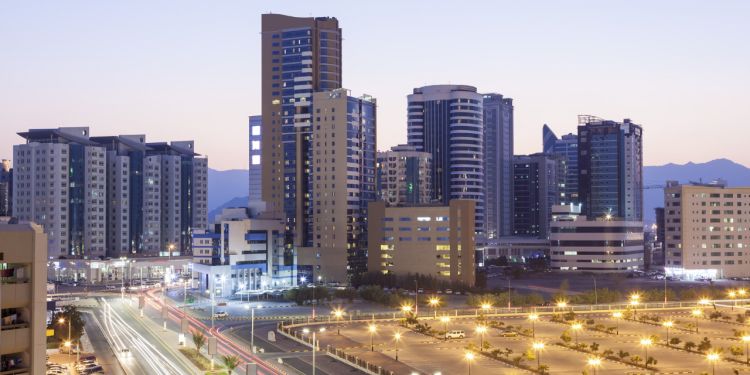
Working in Fujairah
Fujairah is one of the smaller emirates of the United Arab Emirates, located on the East coast. It is positioned as one of the most popular ...
Higher Education in Fujairah: Universities and Academic Programs
Higher education options in Fujairah continue to expand, with institutions offering internationally recognized programs at competitive tuition rates. Students benefit from smaller class sizes, personalized attention, and lower living costs compared to Dubai or Abu Dhabi campuses.
University of Fujairah (UoF)
Established in 2006 as Fujairah College and upgraded to university status in 2016, the University of Fujairah is accredited by the UAE Ministry of Education's Commission for Academic Accreditation. The university offers bachelor's and master's degrees across four colleges: College of Business Administration, College of Mass Communication and Public Relations, College of Information Technology, and College of Arts, Social Sciences and Humanities. Popular programs include Business Administration (with concentrations in HR Management, Banking, and Finance), Information Technology (Networks and Computer Security), Mass Communication (Public Relations), and Nursing.
Tuition and Admission
Tuition at UoF is AED 1,028 per credit hour (~USD 280), making a full bachelor's degree significantly more affordable than at larger UAE institutions. Admission requires a minimum 60% overall score on the UAE General School Certificate or equivalent, plus English proficiency (EmSAT, IELTS, or TOEFL). International students are welcome and can receive assistance with student visa applications. The university operates on a semester system with Fall and Spring intakes.
For students seeking additional options, several universities maintain satellite campuses or partnerships accessible within the broader UAE, with many offering online and hybrid programs.
Sources: University of Fujairah, Commission for Academic Accreditation
Schools in Fujairah: Education Options for Expat Children
Fujairah offers a range of international schools following British, American, and Indian curricula. While the selection is smaller than in Dubai or Abu Dhabi, the available schools maintain strong academic standards, and fees are generally more affordable. Most schools are concentrated in Fujairah City, with some options in nearby towns along the coast.
British Curriculum Schools
GEMS Winchester School Fujairah follows the UK National Curriculum from Foundation Stage through Year 12, offering IGCSE and A-Level qualifications. Rated "Good" by the UAE Ministry of Education, annual fees range from AED 23,100 to AED 36,300 (~USD 6,290–9,880). Fujairah Private Academy, operating under the patronage of the Ruler of Fujairah since 1983, is a not-for-profit British school with fees between AED 23,850 and AED 42,000 (~USD 6,490–11,430). The school employs predominantly UK-trained teachers and achieves IGCSE results exceeding UK national averages.
American and Indian Curriculum Schools
Diyar International Private School offers an American curriculum with modern facilities including laboratories, theaters, and swimming pools. Annual fees range from AED 18,000 to AED 29,700 (~USD 4,900–8,080). For families seeking Indian education, Our Own English High School Fujairah and Indian School Fujairah follow the CBSE curriculum at significantly lower costs—Indian School Fujairah starts at approximately AED 2,400 (~USD 650) annually. St. Mary's Catholic High School offers both CBSE and British pathways.
Enrollment Considerations
Admissions for top schools can be competitive, so early applications are recommended. Required documents typically include passport copies, visa copies, previous school records, and immunization certificates. The academic year runs from September to June.
Sources: GEMS Winchester School Fujairah, WhichSchoolAdvisor
Housing in Fujairah: Neighborhoods and Rental Prices
Housing in Fujairah is considerably more affordable than in Dubai or Abu Dhabi, with a variety of apartments, villas, and compounds available across the emirate. Rents are typically paid annually or semi-annually (rather than monthly), and tenants should budget for a security deposit and agency fees.
Popular Neighborhoods for Expats
Fujairah City is the emirate's capital and commercial center, offering the widest selection of apartments with easy access to shopping centers, restaurants, and services. Al Faseel is particularly popular among expat families for its spacious villas and proximity to international schools. Dibba Al-Fujairah, the second-largest city, attracts those working in tourism or seeking a beachside lifestyle near diving spots. Kalba offers a laid-back coastal atmosphere with the emirate's most affordable housing options.
Rental Prices
Rental costs in Fujairah are approximately 140% lower than in Dubai for equivalent properties. The following table provides indicative monthly rents:
Furnished Studio (Normal Area) | AED 2,133/month (~USD 580) |
1-Bedroom Apartment (Normal Area) | AED 2,500–3,000/month (~USD 680–820) |
3-Bedroom Apartment (Normal Area) | AED 3,400–4,200/month (~USD 925–1,140) |
Villa (3+ Bedrooms) | AED 5,000–8,000/month (~USD 1,360–2,180) |
Annual rents range from approximately AED 15,000 to AED 150,000 depending on property size, location, and amenities. Rental contracts require a valid residence visa, passport copies, and often an employer salary letter.
Sources: Bayut, Property Finder
Leisure and Culture in Fujairah: Things to Do and See
Fujairah offers a distinctive blend of natural beauty, historical heritage, and outdoor adventure. From ancient mosques and mountain trails to world-class diving spots, the emirate rewards exploration with experiences unavailable elsewhere in the UAE.
Historical and Cultural Attractions
Fujairah Fort, built around 1670, is the oldest stone fortification in the UAE and provides panoramic views over the city. Al Bidyah Mosque, constructed in 1446, is the oldest mosque in the UAE—its unique four-domed design draws visitors from around the world. The modern Sheikh Zayed Mosque, opened in 2015, is the second largest in the UAE (after Abu Dhabi's Grand Mosque) and welcomes non-Muslim visitors for tours. The Fujairah Museum displays artifacts spanning 4,500 years, including a remarkable 2,200-year-old bowl crafted from an ostrich egg.
Outdoor Activities and Natural Attractions
Snoopy Island (named for its distinctive rock formation) offers some of the UAE's best snorkeling and diving, with colorful reefs, sea turtles, and reef sharks. Wadi Wurayah National Park is the UAE's first mountain protected area, featuring waterfalls, freshwater pools, and rare wildlife including the Arabian tahr. The Hajar Mountains provide excellent hiking trails, including routes at Masafi and the Fujairah Adventure Park with ziplining, kayaking, and archery. Al Aqah Beach and Dibba Beach are perfect for swimming and water sports. For a unique cultural experience, attend the traditional bull butting events held on Friday evenings during cooler months at Fujairah Corniche.
Sources: Tripadvisor, Fujairah Government
Daily Life in Fujairah: Transportation and Local Customs
Daily life in Fujairah moves at a gentler pace than in Dubai or Abu Dhabi. The emirate maintains strong connections to Emirati traditions while welcoming its diverse expatriate community. Understanding local customs and transport options will help you settle in smoothly.
Getting Around
Public transportation in Fujairah is limited compared to larger emirates. Most residents rely on private vehicles, and car ownership is common. Taxis are available with starting fares around AED 5.50 (~USD 1.50) plus AED 1.90 per kilometer. Ride-sharing apps like Uber and Careem operate in the area. The emirate is compact, with most destinations within a 20-minute drive from Fujairah City center. Fujairah International Airport offers regional connections, while Dubai International Airport is approximately 130 km away (about 90 minutes by car) for international flights. An Etihad Rail connection is planned for the future.
Cultural Customs and Lifestyle
Fujairah follows Islamic traditions, and residents should dress modestly in public spaces. During Ramadan, eating, drinking, and smoking in public during daylight hours is prohibited. Alcohol is available only in licensed hotels and restaurants. Friday is the main prayer day, with many businesses adjusting hours. English is widely spoken alongside Arabic. The climate is hot and humid in summer (temperatures exceeding 40°C from June to September), with pleasant winters ideal for outdoor activities. Shopping options include Fujairah City Centre mall and the traditional Friday Market at Masafi.
Sources: Fujairah Government, UAE Government Portal
Cost of Living in Fujairah: Monthly Budget Breakdown
Fujairah offers one of the most affordable lifestyles among UAE emirates. With no personal income tax, your salary stretches further here than in most countries. The following estimates help you plan your monthly budget based on a moderate lifestyle.
Monthly Costs for a Single Person
A single professional can expect to spend approximately AED 5,800–6,500 (~USD 1,580–1,770) per month including rent:
Rent (1-Bedroom Apartment) | AED 2,500–3,000 |
Utilities (Electricity, Water, Cooling) | AED 400–600 |
Groceries | AED 1,000–1,200 |
Transportation (Fuel/Taxi) | AED 400–600 |
Mobile & Internet | AED 500–550 |
Dining & Leisure | AED 800–1,000 |
Monthly Costs for a Family of Four
A family of four (two adults, two children) should budget approximately AED 12,000–15,000 (~USD 3,270–4,080) per month:
Rent (3-Bedroom Apartment/Villa) | AED 4,000–6,000 |
Utilities | AED 700–900 |
Groceries | AED 2,500–3,000 |
School Fees (per child, monthly average) | AED 1,500–3,500 |
Health Insurance (Family) | AED 800–1,200 |
Transportation | AED 600–800 |
Sources: Expatistan, LivingCost.org
In Short
Fujairah offers expatriates a rare combination in the UAE: modern amenities and economic opportunity within a setting of natural beauty and authentic Arabian culture. With housing costs 33% lower than Dubai, quality international schools, and employment driven by the world's third-largest bunkering port, the emirate provides genuine value for professionals and families. Whether you're drawn by the diving at Snoopy Island, the trails of the Hajar Mountains, or simply a more relaxed pace of life, Fujairah delivers a distinctive expat experience. The welcoming community and rich heritage—from the ancient Al Bidyah Mosque to the dramatic mountain landscapes—create a quality of life that balances work and leisure beautifully. Ready to explore? Connect with fellow expats and discover more about life in Fujairah on the Expat.com Fujairah forum.
We do our best to provide accurate and up to date information. However, if you have noticed any inaccuracies in this content, please contact us.


Essential services for your expat journey