Finding a place to rent is one of the most challenging steps for newcomers to Stockholm. The city's housing market is competitive, tightly regulated, and often difficult to navigate without local knowledge. This guide explains how the rental market works, what to expect when setting a budget, and how to approach your search.
Stockholm is one of the fastest-growing regions in Europe. While the city itself has a population of just under one million, housing demand is shaped by the wider metropolitan area, which includes much of Stockholm County and is now home to over 2.4 million people. As a result, rental housing in and around the city is limited, and competition is extremely high.
The rental market in Stockholm is governed by a regulated system known as the utility value system (bruksvärdessystemet), which is designed to keep rents stable by linking them to factors such as location, size, and standard rather than market demand. While this system helps prevent extreme rent increases, it also restricts supply. First-hand rental contracts (förstahandskontrakt) are therefore scarce, especially in the inner city, and are rarely accessible to newcomers.
Because of this imbalance, many residents rely on second-hand rental contracts (andrahandskontrakt), where an apartment is sublet by an existing tenant with the landlord's approval. Second-hand rentals are common, particularly among expats and new arrivals, but they are usually time-limited and may require frequent moves.
When first arriving in Stockholm, it is common to use temporary accommodation such as short-term rentals or serviced apartments while continuing the search for longer-term housing. Long-term solutions are rarely secured immediately, and flexibility is often required during the first months or even years in the city.
Most first-hand rental contracts in Stockholm are allocated through a central housing queue operated by Bostadsförmedlingen i Stockholm. Applicants earn queue points over time, typically accruing one point per day. Apartments are offered to those with the highest number of points who meet the landlord's criteria.
In practice, this means that waiting times for first-hand contracts in central neighbourhoods can span many years and, in some cases, decades. For this reason, it is common for residents to register for the housing queue early, sometimes even by their parents during childhood, with the intention of accessing a rental apartment later in life, around university age or adulthood.
Shorter waiting times may be found in outer suburbs or less central municipalities within the county, but even these options often also require several years in the queue. As a result, expats and recent arrivals should generally not expect to obtain a first-hand rental contract in the short term and should plan around second-hand rentals or other temporary housing arrangements.
Join the Stockholm community
Get regular tips and advice to make the most of your expat life
Rent prices in Stockholm
Rental prices in Stockholm are high, particularly in central neighbourhoods. If you are set on living in the city centre, it is not uncommon for rent to account for a significant share of monthly income, especially for single occupants. Studio apartments and one or two-room options are quite expensive (9,000 - 13,000 SEK for one-room; 11,000 -16,000 SEK for two-rooms), while shared housing options are much more affordable.
Larger apartments suitable for families are costly within the city itself (15,000+ SEK), although suburban and residential areas typically offer more space at lower prices. These areas are often well-connected by public transport, making commuting a practical option for many households.
When planning a housing budget, it is important to account for costs beyond base rent.
Things to consider when renting accommodation in Stockholm
Before signing a lease in Stockholm, consider the following:
Is the apartment furnished, and are white goods such as a refrigerator, stove, oven, and washing machine included?
How much do utilities cost per month?
What is the duration of the lease contract?
What is the notice period for terminating a lease?
Are pets/smoking allowed in the building?
Are there public transport options nearby?
Good to know:
Stockholm has a large start-up and tech community, which has contributed to the growth of co-living and shared housing concepts. These arrangements typically involve furnished rooms in shared apartments or purpose-built properties and are aimed at short- to medium-term stays. For single people or couples without children or pets, co-living can be a practical way to secure housing quickly while also meeting others and building a social network.
How to find accommodation in Stockholm
Before starting your search, take time to understand Stockholm's different neighbourhoods and how they relate to your budget, commute, and lifestyle. Once you have identified a few suitable areas, you can begin looking at available housing options.
Personal networks are often one of the most effective ways to find accommodation in Stockholm. Asking colleagues or classmates for leads can help uncover listings that may never reach public platforms. Many apartments are also advertised through Facebook groups and other online communities, particularly for second-hand rentals and shared housing. In addition, a range of housing websites and listing services are commonly used when searching independently, including Blocket Bostad, Bostads Portal, Qasa, HomeQ and Hyresmäklaren.
Stockholm spans across 14 different islands. Before deciding where to rent a place in Stockholm, you need to understand the different neighbourhoods to determine which will meet your requirements.
When choosing a neighbourhood in Stockholm, consider the following:
Distance to your school/work
Budget
Requirements of your family/children
Availability of schools in the area
Inner-city neighbourhoods
Gamla Stan
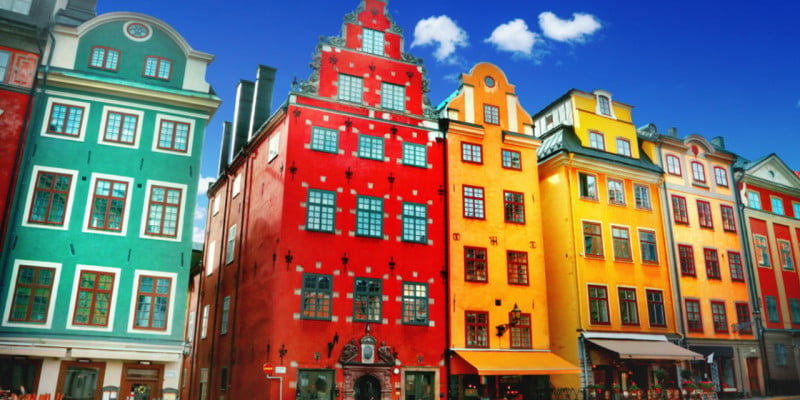
Included mainly for context, as rental opportunities here are extremely limited. Gamla Stan is best experienced on foot, with its narrow cobblestone streets and historic buildings, rather than as a realistic long-term housing option.
Norrmalm
Norrmalm is home to Stockholm Central Station. Aside from the many shopping streets like Drottninggatan that house Stockholm's largest retail stores, this neighbourhood is also home to the National Parliament building. Accommodation options here are sparse and are typically among the most expensive in the city.
Södermalm
If you're looking for a trendy area with everything from boho chic to artistic flair, Söder is a great place to start your search. Apartments around the main street, Götgatan, are pricey, while the southern parts are more affordable and perfect for forward-thinking youngsters who enjoy city life and its accompanying sounds. Some of the outer Söder areas are more residential and suited to families.
Kungsholmen
Kungsholmen is located on an island across the water from Norrmalm. If you're fine with a bit of a commute to the city centre, it's a nice residential neighbourhood with everything you need in terms of restaurants, cafés, and grocery stores, and public transport connections to the other islands.
Djurgården
Djurgården is a small, green island known for museums, parks, and attractions such as Skansen. Housing options are very limited and typically expensive, and the area is better known as a leisure and cultural destination than a practical place to live.
Vasastaden
Vasastaden has some great residential areas that are great for expats with families. This quiet neighbourhood is a good blend of quaint architecture and modern cafés; perfectly suited to expats who want more affordable options while avoiding the touristy areas in Stockholm.
Östermalm
One of Stockholm's most affluent neighbourhoods, Östermalm is known for upscale retail, grand architecture, and high-end dining. Rental prices are among the highest in the city, but the area also offers well-maintained parks such as Humlegården and access to cultural institutions.
Suburban and residential areas outside Stockholm
Bromma
To the northwest of central Stockholm is Bromma, a residential area with lots of opportunities for sports and those with active lifestyles. The neighbourhood has sports arenas and a large stadium, as well as an international school.
Danderyd (including Djursholm and Stocksund)
Home to another international school, this area includes the suburbs of Djursholm and Stocksund. A 20-minute commute will have you back in the city for work while your family can enjoy the water views and child-friendly surrounds.
Solna and Sundbyberg
Just outside of Stockholm, the residential neighbourhoods of Solna and Sundbyberg can be found. It takes no more than a 20-minute commute to the city centre, yet rental and purchase prices are considerably lower. There are lots of parks and recreational areas for families with kids or young crowds who want to get away from the busy city.
If none of these areas meet your needs, other options include Lidingö, Helenelund, and Kista, Stockholm's main ICT hub. These areas involve longer commute times but may offer better availability and value depending on your priorities.
We do our best to provide accurate and up to date information. However, if you have noticed any inaccuracies in this article, please let us know in the comments section below.
I've spent the past 15+ years living and working across different countries in Asia, Africa, Europe, and North America. I enjoy learning from new cultures, adapting to new environments, and connecting with people who share a curiosity about the world.