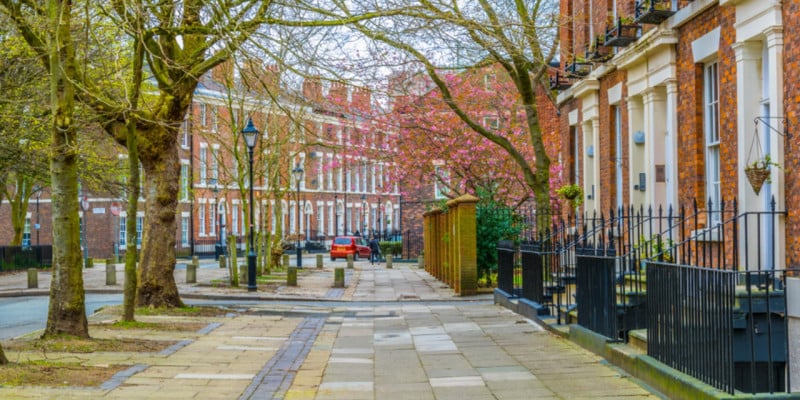
Liverpool is one of the liveliest cities in England, with a vibrant and eclectic lifestyle. Located in the North of England in the Merseyside region, it ranks as the sixth-largest city in the country. Its population is 509,000, which includes a large number of expats and immigrants from around the world. Most of them are drawn to this city by its rich cultural heritage, bustling social life, and countless professional opportunities. Plus, as a student city, Liverpool also caters to the needs of the younger population.
Liverpool is divided into several areas, with many parts still undergoing regeneration, so be careful when picking your neighbourhood. Here are the top areas to consider.
Liverpool City Centre
Liverpool City Centre is the most popular place to live. The centre has a bustling social life and offers top-notch apartments and one of the best transportation links in town. Notably, apartments here are cheaper than in other northern cities such as Leeds and Manchester. This neighbourhood is particularly popular with students, professionals and families.
Liverpool Waterfront
Liverpool Waterfront is home to the popular Pierhead and Albert Dock. It boasts a rich cultural heritage and vibrant nightlife. The area includes several museums, restaurants and bars across the docks.
You'll find unique accommodation options here, such as converted factories and spacious storage units, which offer modern-day apartment settings. Rent in this area is higher but still affordable. Most of its inhabitants are young people and professionals.
Crosby
Crosby has an impressive marine lake and miles of sandy shores. Many refer to it as the seaside for city lovers. It also comprises a lot of independent shops and restaurants. Crosby is close to Liverpool City Centre (about half an hour's drive away) and is home to many schools, making it the best choice for families. This area is also popular with professionals and upcoming artists.
Sefton Park is a green area named after the 235-acre Sefton Park, one of the country's National Heritage sites, and hosts a boating lake. The area is home to many good schools and is close to the city centre, with quality shops, eateries and cafes. However, the cost of living is relatively high compared to other neighbourhoods in Liverpool.
Aigburth
Close to Sefton Park, Aigburth is one of the city's upscale areas with Victorian mansions and a bohemian identity. It includes markets, shops, galleries and top-notch eateries. It is the perfect spot for families, thanks to its excellent schools. If you are an avid traveller, Aigburth is only twenty minutes from Liverpool John Lennon Airport.
Woolton
Located in the city's south, Woolton is a desirable area to live in for families. This location is just six miles away from the city centre and is home to many pubs, restaurants and some of the city's loveliest residences.
Liverpool offers various accommodation types, from apartments to detached, semi-detached, and terrace houses. There's particularly high demand for apartments. Houses are available at pocket-friendly prices, ranking among the lowest in the country, though costs vary by accommodation type and area.
Rent in Liverpool is significantly more affordable than in major cities, making it an attractive option for both buyers and tenants.
Get regular tips and advice to make the most of your expat life
Rental costs in Liverpool
The average monthly private rent in Liverpool was £860 in July 2025, representing a 9.5% increase from £785 in July 2024. Rental costs vary significantly based on property type, starting from around £400 for a single room and reaching up to £1,300 for larger houses with four or more bedrooms.
Based on ONS findings, property prices have increased over recent years, with the following prices as at now:
Detached properties: £366,000;
Semi-detached properties: £219,000;
Terraced properties: £163,000;
Flats and maisonettes: £125,000.
The most expensive area to buy a property in Liverpool is Crosby, which is close to the beach, followed by family-oriented Aigburth. Certainly, the City Centre is a pricier choice, but its value is undeniable given its proximity to essential services, entertainment, educational institutions, and employment prospects.
Liverpool is home to three universities: the University of Liverpool, Liverpool John Moores and Liverpool Hope University. In addition, there are three colleges in Liverpool: The City of Liverpool College, Liverpool Institute for Performing Arts, and Knowsley Community College.
With the University of Liverpool alone having more than 22,000 students, student accommodation demand is high. Popular student areas include:
Mossley Hill
This area is very popular among students for its shops, cafes, and bars. The suburb is within walking distance of the LJMU campus and University of Liverpool student halls, with Liverpool Hope University in Childwall just a short bus ride away.
Liverpool City Centre
Unsurprisingly, the city centre is great for students wanting to be in the heart of social life, though it can be more costly than other options.
Toxteth (L8)
An excellent option for students preferring shared accommodation, featuring large terraced houses dating back to the 17th century. The area was transformed from a hunting forest and a Royal Park to industrial land, and many 1960s replacement buildings now provide great accommodation options.
Smithdown Road
Highly recommended for students and solo expats, beloved by residents for its vibe and numerous dining, entertainment and shopping options.
Consider a hall of residence on campus during your first university year to ease into university life and make friends easily.
If your expat journey has taken you to Liverpool, familiarising yourself with the city's culture is essential before choosing a neighbourhood to live in.
First and foremost, Liverpool is diverse and inclusive. The city comprises people from different backgrounds and ethnicities and ensures that all residents contribute to and influence its functioning. You will find Europe's oldest established Chinese community, which arrived in the late 1850s as employees in Liverpool's shipping industry. Today, Liverpool has a thriving Chinese society and its self-sufficient Chinatown - the first in Europe - with Chinese restaurants, supermarkets and a rich cultural heritage.
The city also has one of the oldest Black communities in Europe and the oldest in England, dating back 300 years when Black people arrived at Liverpool's busy port as sailors, soldiers and slaves. This intercultural community includes people from the Caribbean, the Americas and Africa. Lawrence Road exemplifies Liverpool's multicultural character, where minority ethnic groups actually make up a substantial majority.
History enthusiasts will appreciate that Liverpool has the most national museums and art galleries after London. Under the National Museums Liverpool umbrella, there are seven museums, including the Museum of Liverpool, dedicated to the city's history, the International Slavery Museum, and the World Museum with an aquarium and a planetarium. The collection houses around 80,000 artifacts from Egyptian, Greek, and Anglo-Saxon collections.
At Calderstones Park, beyond enjoying the Harthill Botanical Gardens, you can admire the ancient megaliths called The Calder Stones, estimated to be older than Stonehenge.
Liverpool is well-connected through Merseyrail. If you live and work in Liverpool, it's worth buying the Merseyrail Only Railpass for cheaper journeys. Weekend trips to nearby Manchester (less than an hour by train, running until just before midnight) are easily accessible and popular with locals for weekend days out.
Liverpool John Lennon Airport is the city's airport and provides convenient regional and international travel options right within the city.
If there's one thing Liverpool is famous for - besides The Beatles and the city's two football teams - it's shopping.
The thriving shopping culture here extends from the country's largest open-air shopping center, Liverpool ONE, to the Red Brick Market, all the way up Lord Street towards Bold Street. There's also the Metquarter shopping mall that offers a more upmarket experience, or you can visit the cinema and food hall if high-end brands aren't your preference.
Of course, we can't talk about Liverpool without mentioning The Beatles. Home of the fab four, visitors and residents in Liverpool can embark on the Magical Mystery Tour - a top attraction, which celebrates the city's heritage as the birthplace of the iconic band.
We do our best to provide accurate and up to date information. However, if you have noticed any inaccuracies in this article, please let us know in the comments section below.
Rebecca Roberts is a Senior Content Editor, writer and content marketing expert based in Leeds, UK. With over 15 years of professional experience, she specialises in female-focused topics including health, wellness, work, travel, motherhood and education.
As a British expatriate who lived in Dubai for six years before returning to England in 2020, Rebecca has first-hand experience of relocating to the UK. This personal journey, combined with her professional background, gives her unique insight into the practical and emotional aspects of settling into life in England.