

Living in Okayama: the ultimate expat guide
Everything you need to know for a successful life in Okayama.
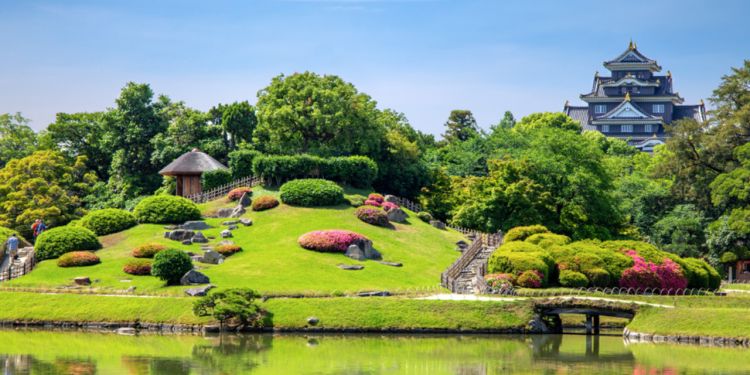
Okayama is the capital city of Okayama Prefecture, located in the Chūgoku region of western Honshu. With a population of approximately 700,000 residents, it serves as the largest urban employment zone in western Japan. Known as the "Land of Sunshine" due to having the most rain-free days of any city in Japan, Okayama offers a mild climate year-round that even supports olive tree cultivation. The city blends rich historical heritage with modern urban amenities, featuring one of Japan's top three traditional gardens, Kōraku-en, and the iconic black-walled Okayama Castle.
A Strategic Location
Okayama enjoys an exceptional position as a transportation hub connecting the Chūgoku and Shikoku regions. The city is just 45 minutes from Osaka via Shinkansen bullet train and directly linked to Shikoku Island via the Seto-Ōhashi Bridge. This strategic location makes it ideal for those seeking access to major Japanese cities while enjoying a more relaxed pace of life than Tokyo or Osaka.
5 Good Reasons to Move to Okayama
- Exceptional climate – The sunniest city in Japan with mild temperatures year-round, perfect for outdoor activities.
- Lower cost of living – Housing and daily expenses are significantly more affordable than Tokyo or Osaka, with rent approximately 40% lower.
- Strategic connectivity – Shinkansen access to major cities, international airport, and the Seto Bridge to Shikoku make travel convenient.
- Quality healthcare – Home to Okayama University Medical School, one of Japan's foremost medical institutions, with numerous excellent hospitals.
- Rich cultural heritage – World-class gardens, historic castle, famous Momotarō folklore, and proximity to the art islands of the Seto Inland Sea.
Working in Okayama: Industries and Opportunities
Okayama Prefecture boasts a diverse economy anchored by major manufacturing, agriculture, and service industries. The nearby Mizushima Industrial District in Kurashiki City hosts leading companies in petroleum, chemicals, steel, and automobile manufacturing, accounting for nearly 50% of the prefecture's industrial output. The city itself features a thriving medical and healthcare sector, advanced precision machinery companies, and a growing IT industry.
Key Employment Sectors
Major employers in Okayama include companies in automotive manufacturing, medical equipment, textiles and denim production (Kojima is famous for Japanese jeans), and agricultural machinery. The city also hosts regional headquarters for service and commercial enterprises. Notable companies include Advanet (computer hardware), Olba Healthcare Holdings (medical equipment), and Metakote (automotive parts). The retail sector has grown significantly since AEON opened its major shopping mall in 2014.
Work Permits and Employment
Foreign nationals require a valid work visa sponsored by a Japanese employer. The most common category is the Engineer/Specialist in Humanities/International Services visa, requiring a university degree or 10+ years of relevant experience. Employers must first obtain a Certificate of Eligibility (COE) from Japan's Immigration Bureau, typically taking 1-3 months. Japan also offers a Digital Nomad Visa (launched 2024) for remote workers earning at least ¥10 million annually, valid for 6 months.
The following table summarizes key employment indicators:
National unemployment rate | 2.6% (2024) |
Average annual salary (Okayama) | ¥4,832,556 (~USD 32,000) |
Main industries | Manufacturing, healthcare, agriculture, textiles |
Sources: Japan Statistics Bureau, Salary Expert
Finding a job in Okayama
Ideally located between Fukuoka, Hiroshima, Tottori, Osaka, and Kyoto, Okayama is a hot business spot. It is an excellent opportunity for locals ...
Higher Education and Universities in Okayama
Okayama is a well-established educational hub in western Japan, home to several universities offering programs for international students. The city joined the UNESCO Global Network of Learning Cities in 2016, reflecting its commitment to lifelong learning and sustainable development. Universities here benefit from a lower cost of living compared to Tokyo while maintaining high academic standards.
Okayama University
Okayama University is the city's flagship national university, established in 1870. It ranks among Japan's leading institutions with approximately 14,000 students, including around 935 international students from 57 countries. The university offers 10 faculties, 7 graduate schools, and 4 research institutes across humanities, sciences, medicine, dentistry, pharmacy, engineering, and agriculture. Its Discovery Program for Global Learners offers a four-year undergraduate degree entirely in English, making it particularly accessible for international students. Okayama University is recognized for its UNESCO Chair in Education for Sustainable Development and received Japan's SDGs Partnership Award in 2017.
Tuition and Admission
National university tuition in Japan is standardized. At Okayama University, annual tuition is approximately ¥535,800 (~USD 3,600), with an admission fee of ¥282,000 (~USD 1,900) paid once upon enrollment. The university offers tuition exemption programs for students with excellent academic records who face financial difficulties—full or partial waivers may be granted. International students can also apply for MEXT scholarships and other financial aid through the university.
Other institutions include Okayama University of Science, Notre Dame Seishin University, Shujitsu University, and Kawasaki University of Medical Welfare, offering programs in science, education, social welfare, and healthcare.
Sources: Okayama University, Discovery Program
Schools and Education for Expat Children
Families relocating to Okayama will find educational options ranging from Japanese public schools to international programs. While the city has fewer international schools than Tokyo or Osaka, quality options exist for children seeking English-language or bilingual education. Japanese public schools are free and provide excellent education, though instruction is entirely in Japanese.
International Schools
Abroad International School Okayama is the primary international option, serving children ages 1-5 (nursery through kindergarten). This IB World School was authorized for the International Baccalaureate Primary Years Programme (PYP) in January 2020. The school offers a comprehensive English-based curriculum with low student-to-teacher ratios. Classes are taught by native English speakers alongside bilingual Japanese staff. Programs include full-day nursery, kindergarten, Saturday School, after-school English clubs, and summer/spring camps.
Japanese Schools and Bilingual Options
For older children, Okayama Gakugeikan High School accepts international students and offers programs with strong English education, including preparation for Japanese university entrance. The school has partnerships with institutions in over 12 countries including Australia, Canada, the USA, and the UK. Japanese public elementary and junior high schools (shōgakkō and chūgakkō) accept foreign children residing in the city. While instruction is in Japanese, some schools offer supplementary Japanese language support for non-native speakers.
Enrollment Considerations
International school fees in Japan typically range from ¥1,500,000 to ¥2,500,000 (~USD 10,000-17,000) annually. For Japanese public schools, registration is done at your local ward office (ku-yakusho) based on your residential address. The school year runs from April to March, with three terms separated by summer, winter, and spring breaks.
Sources: Abroad International School Okayama, Okayama Gakugeikan
Housing and Neighborhoods in Okayama
Okayama offers affordable housing compared to major Japanese cities, with a variety of options from modern apartments near the station to traditional houses in quieter neighborhoods. Rent in Okayama is approximately 40-50% lower than Tokyo, making it attractive for families and professionals seeking better value. The rental market is accessible to foreigners, though some landlords may require a guarantor or use of a guarantor company.
Popular Neighborhoods
Kita-ku (North Ward) is the central district containing Okayama Station, major shopping areas, and business centers. It offers excellent transport links and urban amenities, making it popular with working professionals. Naka-ku (Central Ward) and areas near Okayama Castle and Kōraku-en provide a blend of history and convenience. Minami-ku (South Ward) offers more suburban living with larger properties and family-friendly environments. For those working in the Mizushima Industrial District, Kurashiki City (20 minutes away) offers the charming historic Bikan Quarter alongside modern housing.
Rental Prices
Private apartments in Okayama typically rent between ¥30,000 and ¥60,000 per month for standard units. When signing a lease, expect to pay a security deposit (2-3 months' rent), key money (a non-refundable gift to the landlord), and agency fees. A guarantor is usually required; foreigners often use private guarantor companies specified by real estate agencies.
1-bedroom apartment (city center) | ¥45,000-60,000/month (~USD 300-400) |
3-bedroom apartment (city center) | ¥80,000-120,000/month (~USD 530-800) |
1-bedroom apartment (outside center) | ¥30,000-45,000/month (~USD 200-300) |
Leisure, Culture and Things to Do
Okayama offers a rich cultural scene centered on its historical landmarks and natural beauty. The city is famous as the setting for the beloved Japanese folktale of Momotarō (Peach Boy), and you'll find Momotarō statues and motifs throughout the city. From world-class gardens to the contemporary art islands of the Seto Inland Sea, there's much to explore.
Top Attractions
Kōraku-en Garden is Okayama's crown jewel—one of Japan's Three Great Gardens alongside Kenroku-en (Kanazawa) and Kairaku-en (Mito). Created in 1700 by Lord Ikeda Tsunamasa, this 13-hectare strolling garden features expansive lawns, ponds, tea houses, and beautiful borrowed scenery including Okayama Castle. It earned a three-star rating from the Michelin Green Guide Japan. Admission is ¥500 (adult) or ¥720 combined with the castle.
Okayama Castle, nicknamed the "Crow Castle" for its distinctive black exterior, dates to 1597. Though the main tower was reconstructed after WWII bombing, it houses fascinating exhibits and offers city panoramas. Visitors can try on samurai and princess costumes for free. The castle is particularly beautiful when illuminated at night during special events.
Day Trips and Experiences
The nearby Kurashiki Bikan Historical Quarter (20 minutes by train) features beautifully preserved Edo-period warehouses along willow-lined canals, now converted into museums, cafes, and boutiques. Art enthusiasts should visit Naoshima Island in the Seto Inland Sea, home to the famous Chichu Art Museum designed by Tadao Ando and outdoor installations by Yayoi Kusama.
The Kibiji cycling route takes riders through the ancient Kibi region, past historic shrines, burial mounds, and temples. For nature lovers, the northern mountains offer onsen (hot springs) resorts and hiking trails. Sports fans can support Fagiano Okayama (J.League football) or the Okayama Seagulls (women's volleyball).
Sources: Japan National Tourism Organization, Kōraku-en Official Site
Daily Life in Okayama
Daily life in Okayama combines Japanese efficiency with a relaxed provincial atmosphere. The city offers modern amenities, excellent public transportation, and a safe environment while maintaining a slower pace than metropolitan areas. The mild climate—with Japan's highest number of rain-free days—makes outdoor activities enjoyable year-round, with temperatures ranging from 4°C in winter to 33°C in summer.
Getting Around
The Okayama Electric Tramway (Okaden) operates two tram lines departing from Okayama Station, providing convenient access to the city center and major attractions like Okayama Castle and Kōraku-en. At just 4.7 km, it's Japan's shortest tram system but highly efficient. Fares are ¥100-140 per ride, with a day pass available for ¥400. Trams run every 5-10 minutes during daytime hours. The system accepts IC cards including Suica, PASMO, and ICOCA, plus the local Hareca card.
Multiple bus companies serve the city and prefecture, while JR Okayama Station is a major Shinkansen hub with connections to Tokyo (3.5 hours), Osaka (45 minutes), and Hiroshima (40 minutes). Okayama Airport offers domestic flights to Tokyo, Sapporo, and Naha, plus international routes to Seoul, Shanghai, Hong Kong, and Taipei.
Shopping and Services
The area around Okayama Station features the massive AEON Mall Okayama and numerous department stores. The Omotechō Shopping Arcade offers covered shopping streets with restaurants, boutiques, and traditional shops. Supermarkets, convenience stores (konbini), and drug stores are abundant throughout residential areas. Most services, from banking to healthcare, are available in Japanese, though English support is limited outside major institutions.
Cost of Living in Okayama
Okayama offers a cost of living approximately 4% below Japan's national average and significantly lower than Tokyo or Osaka. This makes it an attractive option for those seeking quality of life without metropolitan expenses. The median after-tax salary of approximately ¥220,000/month (~USD 1,490) provides comfortable coverage of basic expenses.
Monthly Budget: Single Person
The following table outlines typical monthly expenses for a single person living in Okayama:
Expense Category | Monthly Cost (¥) | Monthly Cost (USD) |
Rent (1-bedroom, city center) | ¥50,000 | ~USD 335 |
Utilities (electricity, gas, water) | ¥15,000 | ~USD 100 |
Groceries | ¥40,000 | ~USD 270 |
Transportation | ¥8,000 | ~USD 55 |
Health insurance (NHI) | ¥15,000-25,000 | ~USD 100-170 |
Mobile phone | ¥5,000 | ~USD 35 |
Total (excluding leisure) | ¥133,000-143,000 | ~USD 895-965 |
Monthly Budget: Family of Four
Expense Category | Monthly Cost (¥) | Monthly Cost (USD) |
Rent (3-bedroom apartment) | ¥100,000 | ~USD 670 |
Utilities | ¥25,000 | ~USD 170 |
Groceries | ¥80,000 | ~USD 535 |
Transportation | ¥15,000 | ~USD 100 |
Health insurance (family) | ¥40,000 | ~USD 270 |
International school (1 child) | ¥150,000 | ~USD 1,000 |
Total (excluding leisure) | ¥410,000 | ~USD 2,745 |
Sources: Numbeo, Living Cost
In Short
Okayama stands out as an exceptional destination for expatriates seeking the best of Japan without big-city stress. The "Land of Sunshine" offers Japan's mildest climate, world-class cultural attractions including the magnificent Kōraku-en Garden, and a strategic location with Shinkansen access to Osaka, Hiroshima, and beyond. With housing costs 40% below Tokyo, a thriving economy in manufacturing and healthcare, quality universities with English programs, and a safe, welcoming community, Okayama provides an ideal balance of opportunity and quality of life. Whether you're drawn by career prospects, educational opportunities, or simply a desire to experience authentic Japan, Okayama welcomes you.
Connect with fellow expatriates, get local advice, and share experiences on the Expat.com Okayama Forum. Our community is here to help you settle in and make the most of your new life in this remarkable city!
We do our best to provide accurate and up to date information. However, if you have noticed any inaccuracies in this content, please contact us.


Essential services for your expat journey



