

Living in Fukui: the ultimate expat guide
Everything you need to know for a successful life in Fukui.
Fukui is the capital city of Fukui Prefecture, located on Japan's Sea of Japan coast in the Hokuriku region. With a population of approximately 255,000 residents, this mid-sized city offers an authentic Japanese lifestyle away from the tourist crowds of Tokyo or Osaka. Known as the "Phoenix City" for rebuilding after World War II bombing and a devastating 1948 earthquake, Fukui combines resilience with tradition. The city serves as a gateway to world-class attractions including one of the planet's best dinosaur museums and the head temple of Soto Zen Buddhism.
Five Good Reasons to Move to Fukui
- Exceptional quality of life – Fukui Prefecture has been ranked Japan's happiest prefecture three consecutive times, with strong community ties and work-life balance.
- Affordable living costs – Housing and daily expenses are significantly lower than Tokyo or Osaka, stretching your salary further.
- Direct Shinkansen access – Since March 2024, the Hokuriku Shinkansen connects Fukui directly to Tokyo in under 3 hours.
- Rich cultural heritage – From Eiheiji Temple to traditional crafts like Echizen washi paper and lacquerware, history surrounds you.
- Natural beauty – Mountains, coastline, hot springs, and four distinct seasons create an outdoor enthusiast's paradise.
Working in Fukui: Career Opportunities and Employment
Fukui's economy blends traditional manufacturing with modern industries, creating diverse employment opportunities for skilled professionals. The region is particularly famous for its eyeglass frame manufacturing, producing over 95% of all frames made in Japan. Foreign workers are increasingly welcomed as Japan addresses labor shortages, with Fukui Prefecture experiencing rapid growth in international employment.
Key Industries and Sectors
The eyeglass and optical industry centered in nearby Sabae City leads global innovation in titanium frame technology. Textile manufacturing has deep roots dating to the Nara period, now focusing on technical fabrics for automotive, medical, and aerospace applications. The traditional crafts sector includes Echizen lacquerware, washi paper, cutlery, pottery, and tansu chests. Nuclear energy plays a significant role, with Fukui hosting 14 reactors along Wakasa Bay. The food processing industry capitalizes on excellent local seafood, particularly the prized Echizen crab.
Work Permits and Visas
Foreign nationals require a valid work visa sponsored by a Japanese employer. Common categories include the Engineer/Specialist in Humanities/International Services visa for professionals and the Specified Skilled Worker visa for designated shortage sectors. The process begins with obtaining a Certificate of Eligibility (COE) from Japan's Immigration Services Agency, typically taking 1-3 months. Employers must provide sponsorship and stable employment contracts.
Unemployment Rate (Japan) | 2.5% (2024) |
Average Monthly Salary (Japan) | ¥335,000 (~USD 2,275) |
Key Sectors in Fukui | Eyewear, Textiles, Traditional Crafts, Nuclear Energy |
Sources: OECD Employment Outlook 2024, Ministry of Health, Labour and Welfare
Higher Education and Universities in Fukui
Fukui offers quality higher education options with growing international programs. The universities emphasize practical skills and strong industry connections, particularly in engineering and medical sciences. International students benefit from smaller class sizes and personalized attention compared to larger metropolitan institutions.
University of Fukui
The University of Fukui is the prefecture's flagship national university with approximately 5,100 students across two campuses. The Bunkyo Campus houses the School of Education, School of Engineering, and School of Global and Community Studies. The Matsuoka Campus hosts the School of Medical Sciences. The university offers degree programs in English and Japanese, with exchange programs available through partnerships with institutions worldwide including the University of Ottawa and Electric Power University of Vietnam. International students can apply for the Japanese Government (MEXT) Scholarship and receive Japanese language education support.
Fukui Prefectural University
Fukui Prefectural University provides programs in economics, biotechnology, marine biosciences, and nursing. The university maintains exchange agreements with universities in China, Korea, Taiwan, and Vietnam. Short-term overseas study programs are available in English, Chinese, and Korean language areas.
Fukui University of Technology
Fukui University of Technology offers bilingual courses taught in both Japanese and English for international students. Programs span engineering, environmental studies, sports and health sciences, and management. Admission applications are accepted for both spring (April) and fall (September) semesters.
Sources: University of Fukui, Fukui Prefectural University, Fukui University of Technology
Schooling for Children in Fukui
Education in Fukui Prefecture consistently ranks among Japan's best, with students achieving top scores nationally in academic performance and physical fitness. The prefectural education system emphasizes collaborative learning through lesson study programs that attract educators from across Japan and internationally.
Japanese Public Schools
Foreign children residing in Fukui can enroll in local public elementary and junior high schools free of charge. The school year runs from April to March. Students who need Japanese language support receive instruction from specialized teachers several hours per week. Fukui's education board provides multilingual enrollment guides in English, Chinese, and other languages. After-school clubs (Hokago Jido Club) provide childcare for elementary students whose parents work during the day.
International and Alternative Options
Fukui Prefecture does not have a dedicated international school within its borders. Families seeking English-medium education typically consider options in nearby cities. Fukuoka International School in Kyushu offers IB programs from early years through grade 12, though it requires relocation. For families remaining in Fukui, Assistant Language Teachers (ALTs) work throughout local schools to foster English conversation skills and international awareness. Some families opt for supplementary English tutoring or online international curricula alongside Japanese schooling. The Hokuriku Korean Elementary and Junior High School in Fukui City serves the Korean community.
Sources: Fukui Prefectural Government, Study in Japan
Housing and Neighborhoods in Fukui
Housing in Fukui is remarkably affordable compared to major Japanese cities, with costs approximately 10% below the national average. The rental market offers apartments (mansion/apato), detached houses, and traditional Japanese homes. Most residents live in the compact central area near Fukui Station, though suburban areas provide more space at lower prices.
Popular Areas for Expats
The central Fukui Station area offers the best access to transportation, shopping, and services. Apartments here suit professionals who value convenience. Bunkyo area near the University of Fukui attracts students and academics. Suburban neighborhoods like Maruoka and areas along the Echizen Railway provide larger homes suitable for families, often with parking included. Many expats working in the eyeglass industry settle in or near Sabae City, approximately 20 minutes from Fukui by train.
Rental Costs and Procedures
Renting in Japan involves upfront costs beyond the first month's rent. Expect to pay key money (reikin) equivalent to 1-2 months' rent as a non-refundable gift to the landlord, plus a security deposit (shikikin) of 1-2 months' rent. Many landlords require a guarantor (hoshounin) or use of a guarantor company. Real estate platforms like GaijinPot Apartments and wagaya Japan specialize in foreigner-friendly listings with English support.
1-Bedroom Apartment (City Center) | ¥45,000–55,000/month (~USD 305–375) |
1-Bedroom Apartment (Suburbs) | ¥35,000–45,000/month (~USD 240–305) |
3-Bedroom Apartment (City Center) | ¥80,000–100,000/month (~USD 545–680) |
3-Bedroom Apartment (Suburbs) | ¥60,000–80,000/month (~USD 410–545) |
Sources: LivingCost.org, GaijinPot Apartments
Leisure, Culture and Things to Do in Fukui
Fukui Prefecture punches well above its weight in cultural attractions and outdoor experiences. From world-class museums to ancient temples and dramatic coastal scenery, the region offers diverse activities for all interests. The relatively uncrowded destinations allow for genuine immersion in Japanese culture and nature.
Must-Visit Attractions
The Fukui Prefectural Dinosaur Museum ranks among the world's top three dinosaur museums, featuring over 50 dinosaur skeletons, animatronic displays, and hands-on fossil experiences. The museum is located in Katsuyama City, Japan's dinosaur capital where six new species have been discovered. Eiheiji Temple, founded in 1244 by Zen master Dogen, is one of two head temples of Soto Zen Buddhism. Over 200 monks train here among 70 historic buildings connected by covered walkways. Visitors can participate in zazen meditation sessions or arrange overnight temple stays. Tojinbo Cliffs present dramatic basalt columns rising 30 meters above the Sea of Japan, formed by volcanic activity 12-13 million years ago. The site is designated a national natural treasure and offers spectacular sunset views.
Hot Springs, Food, and Festivals
Awara Onsen, established in 1883, features over 70 hot spring sources with each ryokan offering unique mineral waters. The town serves as a relaxing base for exploring northern Fukui. Food lovers celebrate Echizen crab season (November-March) when the premium male crabs and affordable female seiko-gani appear on menus throughout the region. Local specialties include Echizen oroshi soba (buckwheat noodles with grated radish), sauce katsudon, and fresh sashimi. The Mikuni Festival in May features massive floats and has been celebrated since 1697. Maruoka Castle houses Japan's oldest original castle keep, built in 1576.
Sources: Discover Fukui Official Tourism, Japan Guide
Daily Life in Fukui: Transportation and Lifestyle
Daily life in Fukui moves at a relaxed pace compared to Japan's megacities. The city offers modern conveniences while maintaining strong community bonds and traditional customs. Residents enjoy access to fresh seafood, mountain produce, and a lifestyle closely connected to nature's rhythms across four distinct seasons.
Getting Around
The Hokuriku Shinkansen extension opened in March 2024, connecting Fukui Station directly to Tokyo in approximately 2 hours 50 minutes (around ¥16,000 one way). For regional travel, Hapi Line Fukui operates local trains, while Echizen Railway serves the dinosaur museum area and Tojinbo coast. Keifuku buses provide city and intercity connections. However, owning a car is highly recommended for daily life in Fukui, as public transport frequency is limited compared to major cities. The nearest commercial airport is Komatsu Airport in Ishikawa Prefecture, approximately 55 km north, with domestic and some international flights.
Climate and Seasonal Life
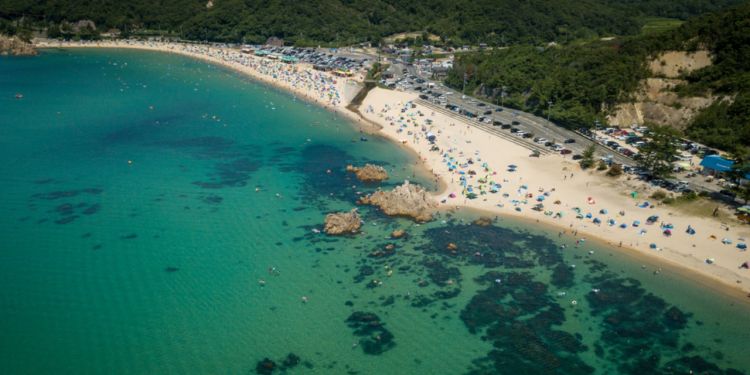
Fukui has a humid subtropical climate with hot, humid summers averaging 32°C (89°F) and cold, snowy winters that can drop to -5°C (23°F). The city lies within Japan's "snow country," receiving significant winter snowfall. Spring brings cherry blossoms along the Asuwa River in late March-early April. Summer offers beach activities along the Sea of Japan coast. Autumn foliage peaks in November, and winter transforms Eiheiji Temple and the mountains into snowy wonderlands. The Echizen crab season runs November through March, drawing food lovers to the region.
Sources: Japan Guide, Discover Fukui
Discover Fukui Prefecture
Located in the North-east of the Chubu region on the island of Honshu, Fukui Prefecture, Fukui-ken, where ken means "prefecture" or ...
Cost of Living in Fukui
Fukui offers one of Japan's most affordable urban lifestyles. The cost of living is approximately 10% below the national average, with particularly significant savings on housing, food, and healthcare. The median after-tax salary of around ¥280,000 (~USD 1,900) comfortably covers monthly expenses with room for savings.
Monthly Budget for a Single Person
Category | Monthly Cost (JPY) | Monthly Cost (USD) |
Rent (1-bedroom) | ¥45,000 | ~$305 |
Utilities | ¥15,000 | ~$102 |
Groceries | ¥35,000 | ~$238 |
Transportation | ¥10,000 | ~$68 |
Health Insurance | ¥20,000 | ~$136 |
Total | ¥125,000 | ~$850 |
Monthly Budget for a Family of Four
Category | Monthly Cost (JPY) | Monthly Cost (USD) |
Rent (3-bedroom) | ¥85,000 | ~$578 |
Utilities | ¥25,000 | ~$170 |
Groceries | ¥80,000 | ~$544 |
Transportation | ¥20,000 | ~$136 |
Health Insurance | ¥45,000 | ~$306 |
School/Childcare | ¥30,000 | ~$204 |
Total | ¥285,000 | ~$1,938 |
Sources: LivingCost.org, Numbeo, ERI SalaryExpert
In Short
Fukui offers a rare opportunity to experience authentic Japan with exceptional quality of life at affordable costs. The 2024 Shinkansen extension has transformed access to this hidden gem, connecting it directly to Tokyo while preserving its uncrowded character and genuine hospitality. Whether you're drawn by career opportunities in world-leading industries like eyewear manufacturing, the spiritual depth of Eiheiji Temple, or simply seeking a balanced lifestyle surrounded by mountains and sea, Fukui welcomes you warmly. The strong community bonds, excellent education system, and abundance of natural beauty create an ideal environment for individuals and families ready to embrace life beyond the megacity rush. Ready to explore your future in Fukui? Connect with fellow expats, ask questions, and share experiences on the Expat.com Fukui Forum.
We do our best to provide accurate and up to date information. However, if you have noticed any inaccuracies in this content, please contact us.


Essential services for your expat journey



